
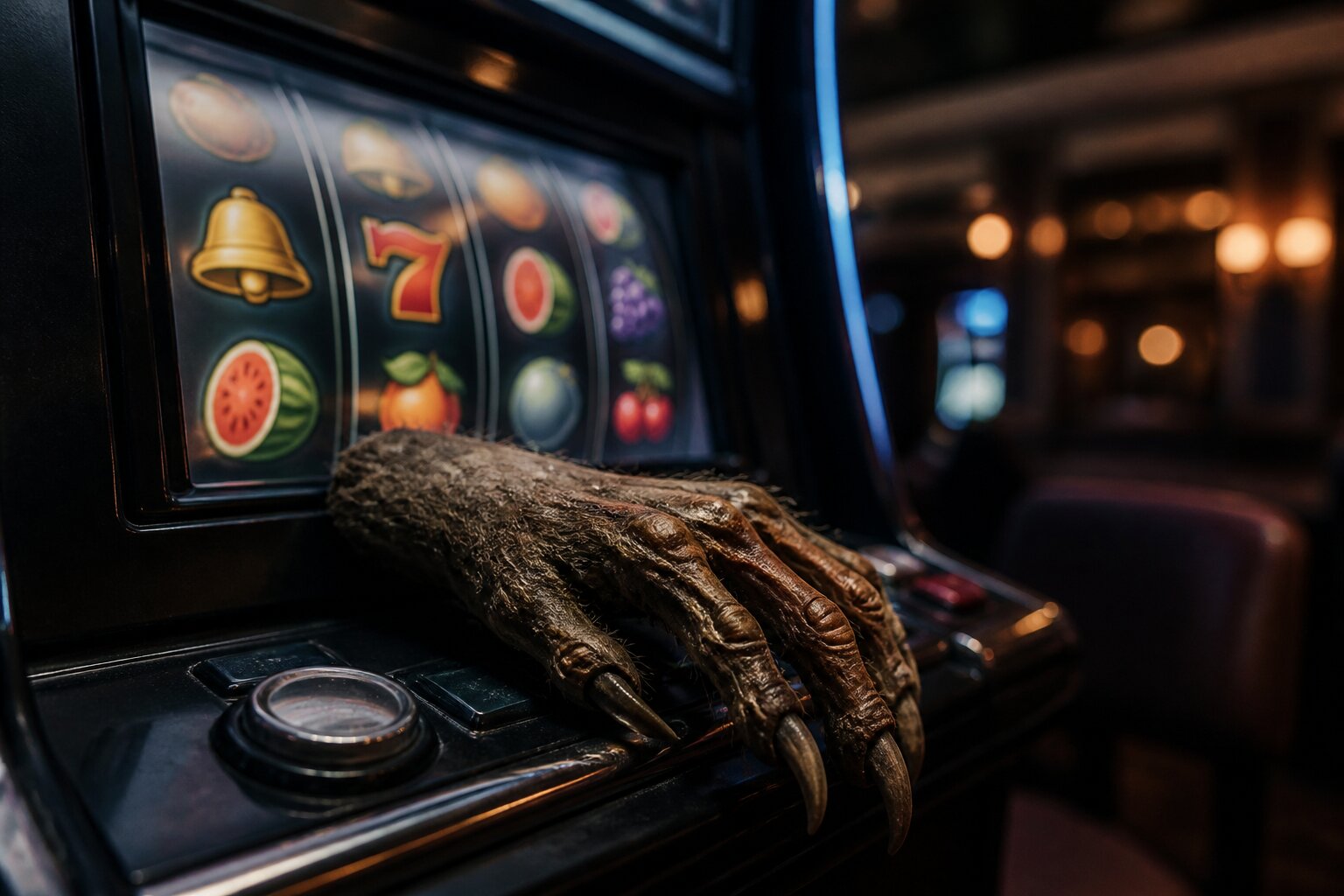
Ever wondered if there’s a secret tool tucked away somewhere that could beat the slots? You’re not alone. The “monkey paw” is one of those persistent tales, a story that has travelled from seaside arcades to betting shops, whispered among players who grew up around spinning reels and jangling coins.
These legends suggest a simple mechanical trick could force a payout from a machine. Before you decide whether the story is entertaining folklore or something more worrying, it helps to separate historical possibility from myth and to understand how machines and regulations have evolved. Read on to see what the monkey paw was purported to do, why it’s unlikely to have been effective, and what the real risks are for anyone tempted by cheating.
What Is the Monkey Paw Tool Myth?
The monkey paw tool myth centres on the idea that a handcrafted wire device, shaped like a claw, was used to manipulate mechanical slot machines. According to stories that circulated in older gambling circles, the tool could be fed through the coin tray and used to trip an internal mechanism, causing the machine to pay out coins without a legitimate win.
Those tales mostly come from the era of mechanical slots, when machines had visible gears and levers and payouts were handled directly by coin mechanisms. The image of someone slipping a bent wire into a payout chute is vivid and easily remembered, which helps explain why the legend has endured. However, the persistence of a story does not make it fact, and later sections will explore the evidence, or lack of it, and why such tactics do not work on modern machines.
How Did the Monkey Paw Tool Allegedly Work?
Most accounts of the monkey paw are anecdotal and lack detailed technical confirmation. What follows is a synthesis of the common claims about appearance and use, drawn from oral histories and popular descriptions rather than formal investigations.
What Did the Device Look Like?
Descriptions portray the device as a short length of bent metal, often no more than the size of a pencil, with one end curled into a small hook or claw. The simplicity of the design is a recurring theme: a repurposed coat-hanger or a piece of hardened wire fashioned to fit through narrow gaps.
Because the accounts are informal, specifics vary. Some versions emphasise the device’s concealability—slipped into a sleeve or pocket—while others focus on the maker’s skill at shaping the hook. The common thread is a low-tech, improvised tool intended to reach internal parts of a machine without opening it up.
How Was It Supposedly Used on Slot Machines?
According to legend, the user would insert the hooked end through the coin tray or return slot and try to catch a payout lever or trigger. If they managed to catch the right component and move it in the correct way, the machine would release coins as if a win had been registered.
Those telling the stories often stress the difficulty: success supposedly required detailed knowledge of a machine’s internals, steady hands and considerable patience. Even among the tales, reliability is rarely claimed—more a matter of occasional, opportunistic success than a dependable technique. Modern mechanical and electronic safeguards, discussed later, make the technique impractical and ineffective today.
Was the Monkey Paw Tool Ever Real?
When historians and security professionals examine the record, the monkey paw sits more with folklore than verified threat. There are no well-documented seizures, court cases or formal security advisories that confirm the existence of a distinct, widely used device matching the popular description.
Cheating on older machines did occur, but confirmed methods tended to be different: coin-stringing, magnet use or collusion with staff are better documented. Where mechanical vulnerabilities existed, operators adjusted hardware or procedures in response, and when electronic systems took over those vulnerabilities changed.
Given the absence of reliable evidence, the most reasonable conclusion is that the monkey paw is a colourful tale that grew around real examples of tampering, rather than a single identifiable tool that once worked routinely.
This history leads into how modern machines have been designed specifically to prevent any return of these old techniques.
The Risks & Consequences of Attempting Slot Machine Cheats
Attempts to tamper with machines carry severe legal, financial and personal consequences. Under UK law, cheating and fraud related to gambling are criminal offences, and those convicted may face fines, criminal records and possible imprisonment depending on the seriousness of the offence.
Licensed venues employ CCTV, trained security staff and monitoring systems that flag suspicious patterns and behaviours. If a person is caught tampering with a machine, venue operators will confiscate any ill-gotten gains, impose bans and report the matter to police. The wider impact can also be significant: a criminal conviction affects employment opportunities, travel and reputation.
Operators are required to follow regulatory standards and to protect customers and games from manipulation. Promoting safe play and adherence to the law is part of that duty, and anyone using or discussing tools that might interfere with machines should be aware of those legal ramifications.
Are Modern Slot Machines Vulnerable to Physical Cheats?
Modern machines are engineered to prevent physical interference and to maintain fair play. Cabinets are built with tamper-detection features, coin systems are secured, and components that used to be accessible on mechanical machines are now internalised and electronically monitored.
At the centre of contemporary slot operation are certified random number processes and encrypted software that determine outcomes independently of any physical interaction with the cabinet. Independent testing and regular audits are routine, ensuring that both the hardware and software meet regulatory standards and operate as intended.
Security measures include alarmed locks, sealed access panels, and continuous electronic monitoring. Any intrusion attempt typically triggers alerts and is rapidly investigated. For these reasons, a simple tool inserted into a coin tray could not change the result of a spin or force a legitimate payout on a properly maintained, regulated machine.
By understanding the technological and legal landscape, it becomes clear why a return to old mechanical cheats is not feasible and why operators invest heavily in preventing tampering.
Final statement: the monkey paw endures as an intriguing piece of gambling folklore, but evidence and modern safeguards show it to be a story rather than a viable method, and any attempt to tamper with machines carries serious consequences.
Play Online Slots at Thor Slots
We invite you to enjoy the laid-back atmosphere and great entertainment that comes with playing online slots with us. At Thor Slots, we love bringing people together for a bit of light-hearted fun.
Getting started is simple: just set up your account, make a deposit and you are ready to play. We look forward to welcoming you soon.
**The information provided in this blog is intended for educational purposes and should not be construed as betting advice or a guarantee of success. Always gamble responsibly.