
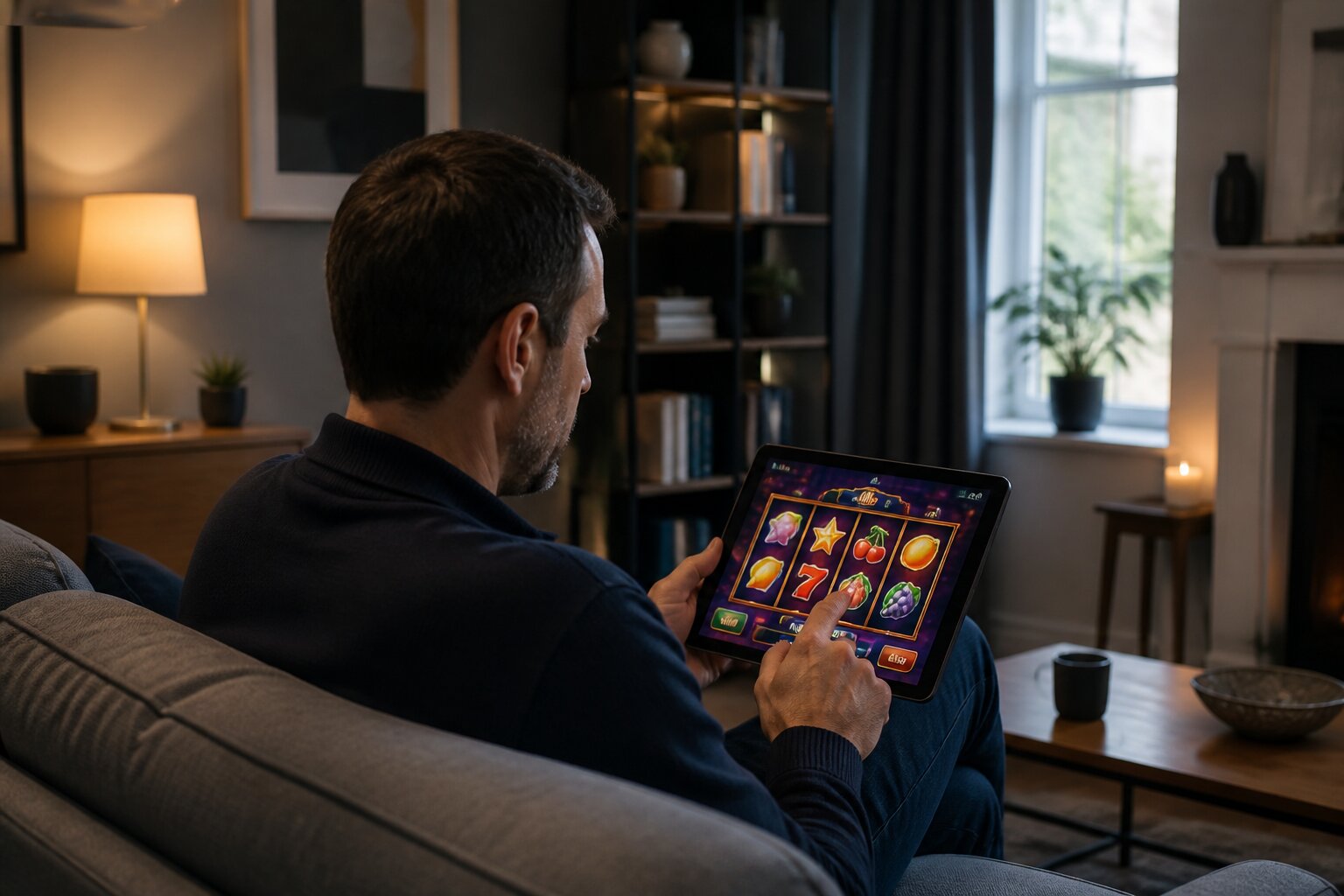
Thinking about having your own slot or fruit machine at home? You’re definitely not alone. More people enjoy the idea of bringing elements of the arcade or casino environment into a personal space.
Before you start filling a spare room with flashing lights and spinning reels, it’s important to know what’s actually allowed in the UK. The rules can be tricky, and getting them wrong — even unintentionally — can lead to serious consequences.
This guide explains what is legal, what isn’t, and how to keep a machine at home within the law so you can enjoy it without risking a breach.
What Are Slot and Fruit Machines?
Slot and fruit machines are devices that accept money or credits in return for a chance to receive a prize based on spinning reels and symbol combinations. Fruit machines are typically the classic physical cabinets with fruit symbols such as cherries and lemons; slot machines can refer to similar physical devices or to their digital equivalents on websites and apps.
These machines operate using random number generators to determine outcomes, and in the UK they must meet technical standards set by the regulator to ensure fair operation. Physical machines will have electrical and mechanical parts; online versions rely on software and server-side systems. Both types are subject to testing and certification where they are used commercially, which helps maintain consistent behaviour and player protections.
Understanding these basic differences helps when considering ownership and use at home, and it also frames how legal rules apply to private versus public situations.
Is It Legal to Own a Slot or Fruit Machine in the UK?
Owning a slot or fruit machine in the UK is generally permitted, but the law draws a clear distinction between private, non-commercial ownership and machines used in public or for profit. A machine kept solely for personal amusement at home is treated very differently from one placed in a pub, arcade or other business.
If a machine remains in private domestic use and is not used to generate income, no licence is needed. However, it must not be made available to the public or used to take stakes or pay out cash. Once a machine is accessible to the public, provided for use by customers, or used to generate revenue, it falls under strict regulatory requirements and licensing.
If you are considering a machine for a business or public space, preparations go beyond simply buying equipment. Operators must hold the appropriate permissions and ensure machines meet technical, safety and social responsibility standards. Compliance in that setting is robust and actively enforced.
Licensing and Age Restrictions Explained
The legal age for playing or owning a slot or fruit machine in the UK is 18 or over. This rule is firm: minors must not be allowed to use these machines, whether the device is in a private home or a commercial setting.
For a privately owned machine truly kept for amusement at home, no formal licence is required, but the owner must prevent under‑18s from accessing it. In public or commercial settings, licences are mandatory and operators must meet detailed technical and safeguarding requirements set by the regulator.
These age and licensing rules exist to protect young people and the wider public. Non‑compliance can lead to penalties, including fines and criminal charges for serious breaches. With that in mind, owners should ensure access is controlled and that machines remain private in purpose unless the correct permissions are in place.
Can You Play Slot Machines for Money at Home?
Playing slot or fruit machines for money at home is generally not permitted. UK law restricts private gaming that involves cash prizes to prevent unregulated gambling. In most practical terms, a machine at home must be used only for amusement and not as a way to collect stakes or award cash.
There are narrowly defined allowances for private gaming among genuine friends and family within a private dwelling, but these are tightly limited. If a device is used repeatedly to take money, to offer prizes, or to run what looks like an organised gambling activity, it moves outside the scope of lawful private amusement and becomes unlicensed gambling.
Payouts and prize arrangements are therefore critical. Machines must not be adapted to dispense cash or tokens redeemable for money or items of value in a home setting. Any modification intended to enable payouts could create criminal liability. Next, we look at how machines can be bought or sold within these legal boundaries.
Where Can You Buy or Sell a Slot or Fruit Machine Legally?
Machines can be bought or sold through reputable dealers and specialist retailers who understand the legal and technical requirements. Purchasing from such sources helps ensure a machine meets safety standards and is supplied in a condition appropriate for private use.
Private sales are allowed too, but both parties need to be over 18 and should be sure the machine is intended only for private, non‑commercial use. Avoiding anonymous or unregulated sellers minimises the risk of acquiring tampered, unsafe or otherwise non‑compliant equipment.
When buying, check the seller’s credentials and ask about the machine’s history, any servicing records, and whether it has been modified. These details make it easier to confirm that the purchase is lawful and that the machine will be safe to operate at home. Proper sourcing also helps when considering maintenance and ongoing safety, which are discussed next.
Maintenance and Safety: What Owners Must Know
Keeping a machine in safe, working order is an owner’s responsibility. Following the manufacturer’s installation and maintenance guidance helps prevent electrical faults, mechanical failures, or hazards posed by worn components. Regular visual checks for damage, loose wiring or signs of tampering are sensible.
Repairs and technical servicing should be carried out by qualified technicians, especially for older or more complex cabinets where electrical work is involved. Using unqualified repairers can introduce safety risks and may invalidate any assurances about the machine’s condition.
Security measures are also important. Lockable cabinets and restricted room access help ensure under‑18s cannot use the machine and reduce the chance of unauthorised modification. These practical steps protect both users and the owner’s legal position. With maintenance and security in place, it helps to dispel common misunderstandings about home machines.
Common Myths About UK Home Slot Machine Laws
There are several persistent misconceptions about what is allowed with home slot and fruit machines. Clearing them up makes it easier to stay compliant and avoids risky decisions.
One myth is that it’s acceptable to run cash games at home if only friends attend. In truth, organising gambling where money changes hands, even privately, is tightly restricted. Another belief is that anyone can freely buy or sell these machines: in fact, transactions should involve adults and ideally reputable sellers to ensure compliance.
Some assume that owning a machine at home places it outside regulation. Ownership does not remove legal obligations to prevent under‑18 access or to avoid using the machine for commercial gain. Finally, online purchases are not automatically lawful; buying from unverified sellers can result in unsafe or non‑compliant equipment.
Understanding these points lets owners make informed choices and reduces the chance of unintentionally falling foul of the rules. Keep the practical measures described earlier in mind when deciding whether a machine is suitable for your home — a careful approach keeps ownership straightforward and lawful.
**The information provided in this blog is intended for educational purposes and should not be construed as betting advice or a guarantee of success. Always gamble responsibly.