
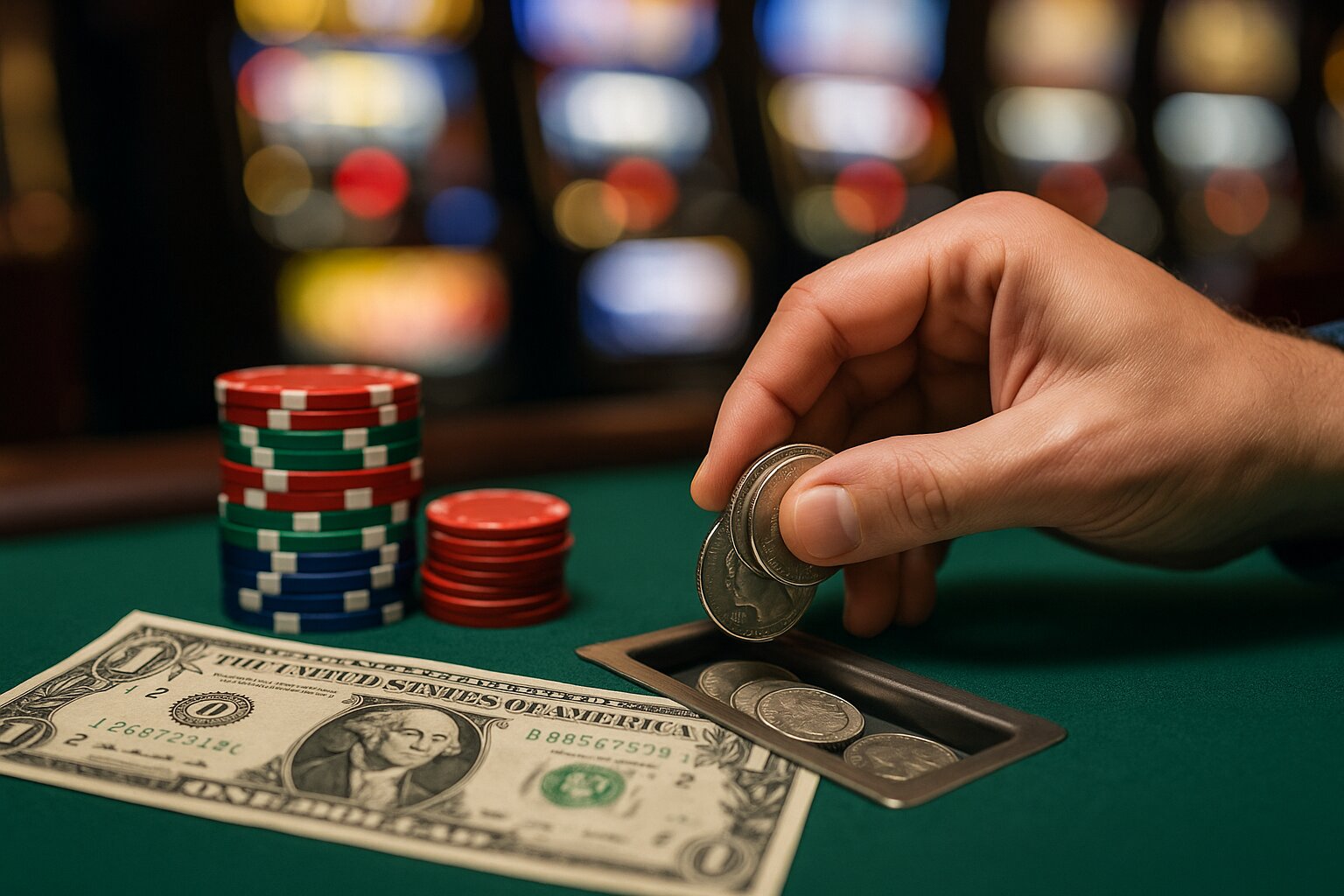
Ever rocked up to a casino in the UK and wondered what you can actually use to play? Are those loose coins in your pocket any good, or is it notes only at the tables and slot machines? With payment options changing, it helps to know what’s accepted before you arrive.
This guide explains how coins and notes are handled on the gaming floor, what to expect from cash exchanges, and which payment alternatives are commonly available. Read on to make your visit straightforward and secure.
How Do Casinos Handle Coins & Notes in the UK?
Casinos in the UK follow strict cash-handling procedures to keep transactions accurate and lawful. Staff check banknotes for authenticity and log exchanges carefully, whether you swap notes for chips at the cashier desk or buy chips at certain tables.
Coins are treated more narrowly. Most table games do not accept coins at all; older slot machines may still take £1 or £2 coins, but many venues have moved to ticket-in, ticket-out systems or note-only machines to speed play and reduce handling. Every transaction is recorded to meet legal and internal compliance standards, and staff are trained to follow these procedures precisely.
This structured approach helps prevent errors and supports wider regulatory requirements such as identity checks on larger transactions, so you can expect both efficiency and oversight when dealing with cash on the gaming floor.
Do UK Casinos Accept Small Change?
Small denomination coins are generally not suitable for gaming and are usually refused for chip exchanges. These coins include:
- 1p
- 2p
- 5p
- 10p
- 20p
- 50p
Venues typically accept £1 and £2 coins only in limited circumstances, most often at older slot machines or at the cashier when breaking larger notes. Policies can vary between casinos, so some venues may have coin machines, others may only accept larger denominations or card and contactless payments.
If you bring small change, it is practical to exchange it for higher denominations before or upon arrival. Doing so avoids delays, keeps play moving smoothly and reduces the chance of being unable to use your money when you want to. Staff will usually point you to the correct way to exchange cash or to a change machine if you are unsure.
If you are planning to gamble, consider using notes, a card or contactless payment where accepted, and always set a spending limit in advance. Play responsibly and only gamble with money you can afford to lose.
What Happens If You Try to Pay With Change?
If you attempt to pay with small coins at a casino, staff will explain that these denominations are not accepted for gaming or chip exchange. This policy is intended to keep transactions straightforward and to maintain smooth operation on the gaming floor as well as ensure compliance with licensing rules.
Where coins are refused, staff will guide you to acceptable alternatives. These typically include:
- paper notes of the appropriate denomination
- £1 and £2 coins where those are permitted for gaming transactions
- using the cashier desk or other designated payment point to exchange your change
Staff will usually offer these options politely and quickly so you can continue with your visit without delay. Asking about payment methods before you play prevents misunderstandings and helps avoid interrupting a game.
If you are unsure about a casino's specific rules, check with reception or the cashier on arrival. They can confirm what is and is not accepted and advise on the best way to convert your coins to usable funds.
Coin Machines & Change Desks: What Are Your Options?
Most casinos have a cashier desk where you can change banknotes into chips or request larger notes to be broken down. Larger venues may provide coin machines or self-service kiosks, but these tend to support £1 and £2 coins rather than smaller denominations.
Staff at cashier or change points are trained in both the practical and regulatory aspects of cash handling, so they can help with questions about machine compatibility, available denominations, and any identification checks that might be required for higher-value transactions.
If you prefer a quick reference, a brief chat with the cashier on arrival will tell you whether coin machines are available and what they accept.
Is There a Minimum or Maximum Cash Amount Accepted?
Minimum buy-ins vary by venue and by game. Table minimums can start at around £5 or £10, while electronic games often accept smaller amounts, sometimes from £1 or £2. Casual play in many venues therefore has a low entry point, but always check with the operator before you play.
There is usually no fixed upper limit for casual cash exchanges, but larger transactions attract more scrutiny. Transactions above certain thresholds, commonly around £2,000, will typically prompt additional checks as part of anti-money laundering controls.
These checks are standard and applied to protect customers and the business. They commonly include:
- identity verification, such as checking a photo ID
- enquiries about the source of funds or how the money was obtained
- record keeping of the transaction for compliance purposes
These measures are routine rather than intrusive and are intended to keep the environment safe and lawful for everyone.
How Do Casinos Manage Chips, Cash, and Winnings?
When you exchange cash for chips, the chips act as the in-play representation of your money. If you win, chips are taken back to the cashier to be converted into cash or, for larger sums, into a bank draft or electronically documented payment as required by the venue’s procedures.
Every exchange is logged and recorded to meet regulatory obligations, which ensures traceability and transparency. Staff follow clear counting and verification routines so both parties have confidence in the outcome of a cash-out.
If you have questions about the cash-out process or prefer a particular form of payment for a larger sum, asking the cashier in advance will clarify available options.
Are Note Acceptance Policies Different for Foreign Currency?
Most casinos transact in pounds sterling and do not accept foreign banknotes for direct play. Converting foreign currency to pounds at a bank or a currency exchange before you play is the usual approach. This reduces confusion at tills and makes the process quicker when you arrive.
Some larger venues may offer on-site exchange services. These services are not universal, can carry commissions or less favourable exchange rates, and are usually limited to major currencies. They are also subject to the same identity and verification checks as other large transactions, such as proof of identity, source of funds checks, and transaction reporting where applicable.
The practice of handling transactions in sterling simplifies cash management and supports regulatory compliance. It helps venues to record transactions clearly, verify the authenticity of banknotes, and meet anti-money-laundering and reporting obligations.
If you are travelling to a casino from abroad, consider one of these alternatives to avoid issues on arrival:
- exchange currency before you travel to get a better rate and avoid on-site fees
- use a debit or credit card where accepted for deposits and purchases
- contact the venue in advance to confirm whether they accept your currency and to ask about limits, fees, and ID requirements
Always keep receipts for currency exchanges and any large transactions, as these may be required for verification or refunds.
What Alternatives Exist for Handling Cash at Casinos?
Beyond notes and coins, many casinos provide regulated card and digital payment options at the cashier desk or kiosks. Debit cards are commonly accepted for cash exchanges; credit cards are not permitted for gambling. Contactless payments and mobile wallets such as Apple Pay or Google Pay may be supported in some venues, offering an efficient alternative to carrying large amounts of cash.
All non-cash payments are processed with identity checks and security measures to meet regulatory standards. These options reduce the need to carry coins and can make transactions quicker, particularly when swapping funds for chips.
If you want to use a digital method, a quick conversation with the cashier will confirm what’s accepted that day.
Myths About Using Change at Casinos
There are a few persistent misconceptions about coins and change that often cause unnecessary confusion. Firstly, not all coins are accepted for play; in practice, only certain circumstances allow £1 or £2 coins, and smaller denominations are typically refused. Secondly, the method of payment does not affect the functioning of the games themselves. Finally, while some older slot machines accept coins, most modern machines use note or ticket systems, so it’s wise to check before you play.
Clearing up these points helps you plan ahead, avoid delays and keep your visit straightforward.
To wrap up, knowing the practicalities of coins, notes and alternative payments makes casino visits easier. If you’re ever uncertain, a quick question at the cashier will sort things out, and staff will explain the options available that day so you can proceed with confidence.
**The information provided in this blog is intended for educational purposes and should not be construed as betting advice or a guarantee of success. Always gamble responsibly.