
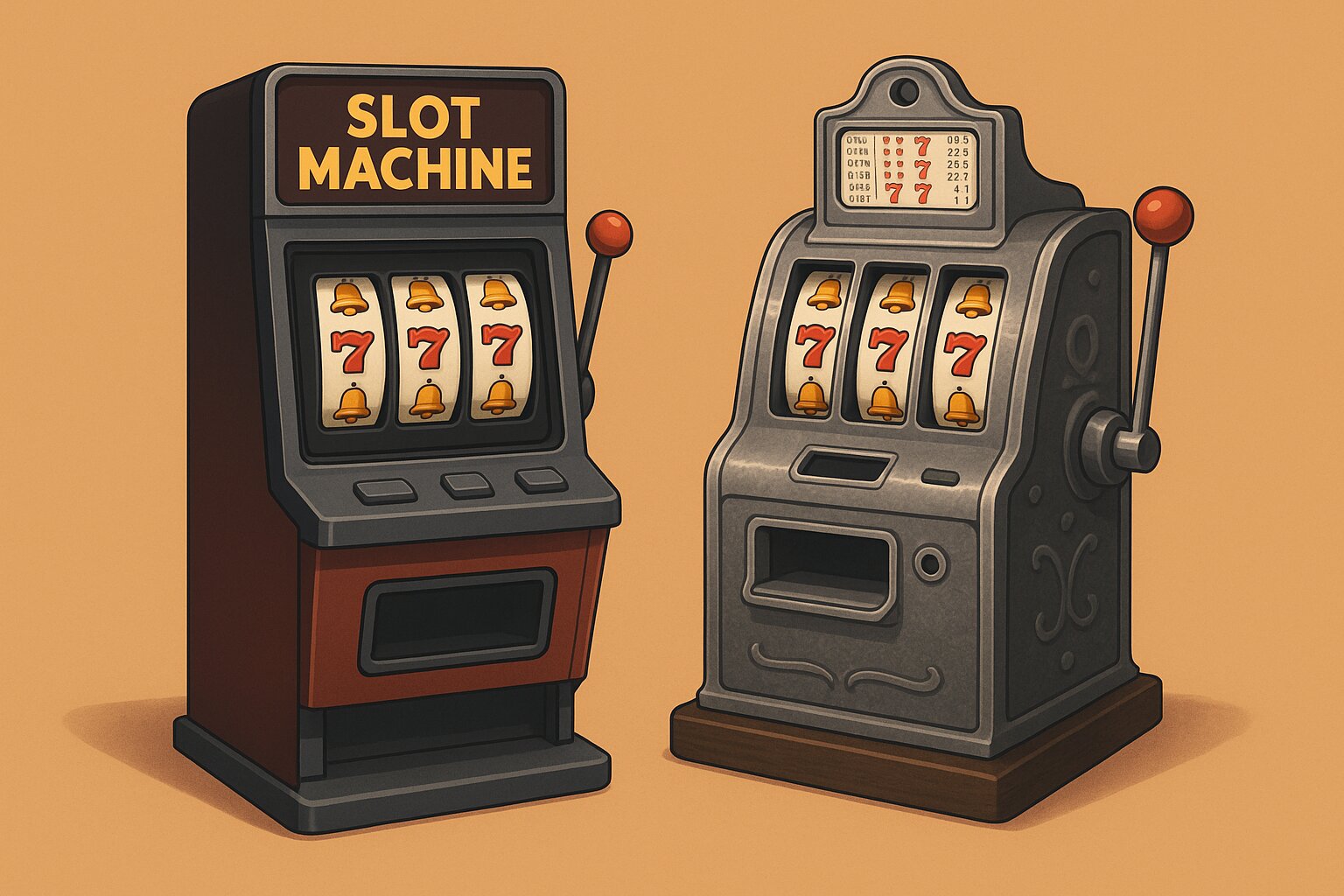
Ever wondered how the flashy, digital slots we see today first began? The journey of the slot machine traces back to a time of spinning reels, clinking coins, and mechanical ingenuity.
From humble beginnings in the late 1800s, these machines have evolved through clever inventions and new technologies into the familiar devices found in venues and online. Keep reading to explore where it all started and how the machines developed over time.
What Is a Slot Machine?
A slot machine is a gaming device where players place bets and hope for winning symbol combinations. Traditionally, it is a machine with spinning reels, each showing different symbols. When a lever is pulled or a button pressed, the reels turn and then stop at random.
Early machines were entirely mechanical, driven by gears and springs. Modern versions use digital screens and software to generate outcomes. While the visual design has shifted dramatically, the core idea remains: each play produces a randomised result determined by the machine’s mechanism or its software.
Slot machines come in several forms:
- Mechanical machines with physical reels, now uncommon.
- Video slots that use graphic displays to represent reels and symbols.
- Online slots accessed through internet casinos and gaming sites.
Behind the scenes, modern machines use a random number generator, or RNG, to decide results. This ensures each spin is independent and unpredictable. Regulated machines also display a theoretical return to player, or RTP, which indicates the average percentage of stakes returned over the long term. Volatility, sometimes called variance, describes how often wins tend to occur and how large they typically are.
Slots are games of chance. Players cannot influence the outcome by timing plays or using particular patterns, and skill does not affect the randomised results. Machines in licensed venues are subject to regulation and testing to ensure fairness and compliance with legal standards.
Where Did Slot Machines Originate?
Slot machines first appeared in the United States at the end of the 19th century. The earliest widely recognised machine was created by Charles Fey, a San Francisco mechanic, around 1894–1895.
Fey’s Liberty Bell featured three spinning reels and simple symbols such as horseshoes, stars, and a bell. Its straightforward design made it easy for people in bars and social clubs to try, and it quickly spread beyond its local area.
Inventors soon adapted Fey’s concept, adding different symbols and mechanical tweaks. Over the following decades these devices moved from public houses into entertainment venues and, eventually, dedicated gaming spaces, setting the stage for later technological advances.
How Have Slot Machines Changed Over Time?
Slot machines have moved through clear stages of development as technology advanced. Initially they were purely mechanical, with physical reels and payout mechanisms. The machines operated using springs and cogs, and payouts were made in coins, tokens, or small prizes.
In the 1960s electromechanical components began to appear, enabling automatic payouts and more elaborate lighting and sound effects. The arrival of microchips in the 1970s and 1980s transformed the industry again, allowing for video displays and software-driven gameplay. These changes made it possible to add themes, bonus features, and more complex pay structures.
The internet brought another shift: online slots made the games accessible from computers and, later, mobile devices. Across these changes regulation has evolved too, with authorities setting standards for fairness and player protection.
Key Milestones in Slot Machine Development
Below are the major moments that shaped the machines we know today.
- 1894–1895: Charles Fey invents the Liberty Bell, featuring three reels and simple symbols.
- 1907: Fruit symbols are introduced by new manufacturers, giving rise to the familiar cherries and bars.
- 1963: Electromechanical machines allow automatic coin payout and brighter effects.
- 1976: The first video slot replaces mechanical reels with a screen.
- 1994: Online slots appear, making play possible over the internet.
- 2005 onwards: Mobile access expands as smartphones and apps become common.
- Present day: Regulation and technological safeguards support fair play and player protection.
These points mark how design, technology, and oversight have influenced the industry.
What Were the Early Designs Like?
Early slot machines had a distinctive, tactile presence. Solid metal cabinets housed the spinning reels and payout mechanisms. A lever started the action and the satisfying clink of coins was part of the experience.
When electrical components were introduced, machines gained automatic payout trays, brighter lights, and new sounds. They still retained mechanical elements, but electrical systems added reliability and new ways to attract attention.
With video technology, physical reels became virtual. Software handled symbol positions and outcomes, and screens allowed designers to create themed games, animated sequences, and layered bonus features. Each design era reflected the available technology and customer expectations at the time.
Why Did Slot Machines Become So Popular?
Several factors contributed to the rise in popularity. Their straightforward play meant anyone could try without learning complex rules. The simple interaction—insert a stake and start—made them widely accessible.
Placement helped too: machines were installed in pubs, arcades and entertainment venues, putting them within easy reach of many people. Technological progress kept the games interesting; video and online formats introduced themes and features that held attention over time.
Finally, convenience played a role. As online and mobile options grew, access broadened beyond physical venues. Throughout these changes, standards and safeguards developed to make sure play remained regulated and fair.
Common Myths About the Invention of Slot Machines
A few myths persist about how these machines began. Two of the most common are:
- That the first slot machines were exclusive to elite casinos. In reality, early machines were typically found in bars, saloons and social clubs, where they were accessible to everyday people rather than being confined to high-end gambling establishments.
- That early machines could be beaten with special techniques. Historically, outcomes were determined by the machine’s mechanical components and, later, by software. There has never been a reliable, sustainable method to influence results in the long term.
Some people look for secret systems or predictable patterns and expect to spot a reliable edge. The basic design of slot machines has always produced random number generation, whether through mechanical randomness or modern random number generation.
Understanding how they work helps set realistic expectations about what the machines can and cannot do. It also reminds players that chance is the dominant factor, and that there are no guaranteed ways to win.
Modern Slot Machines: A Brief Overview
Modern slot machines are typically digital, driven by software that uses random number generation to decide each play. The random number generator ensures that each spin is independent and outcomes are unpredictable, with return-to-player percentages set by the game design and regulated where applicable.
High-resolution displays, themed visuals and interactive bonus features are now common. Games often include animated sequences, sound design and narrative elements to enhance immersion, while touchscreens and responsive controls make play more intuitive.
Contemporary games often let players choose stake levels and offer a variety of play mechanics, such as:
- clustered wins
- multiple pay lines
- hold and respin features
- cascading reels
Operators also provide tools to help players manage their activity, including:
- deposit limits
- session reminders
- time-outs and self-exclusion options
These safer play measures are intended to support player control and do not change how outcomes are determined by the software and random number generation.
How Do Online Slots Compare to Traditional Machines?
Online slots and traditional machines share the same underlying principle: outcomes are produced randomly by the machine or its software. Their differences lie in presentation and access.
Traditional machines are physical devices in venues, with tactile controls and immediate coin or ticket payouts. Online slots are accessed via a browser or app and present virtual reels and more diverse multimedia features. Online distribution allows for a greater variety of themes and faster updates, while venue machines offer a physical, social setting.
Players should approach both formats with the same awareness of limits and use available protection tools to keep play controlled.
The Cultural Impact of Slot Machines in the UK
In the UK, slot machines—often called fruit machines—have been a familiar part of social leisure for decades. They appear in pubs, arcades and seaside venues and have influenced popular culture, from film to television.
Symbols such as cherries and bars remain iconic, linking contemporary designs back to earlier machines. Regulation ensures these devices are restricted to adults and meet standards for fairness and safety, reflecting the country’s approach to balancing availability with protections.
Playing should always be a conscious choice; understanding the nature of the games and the safeguards available helps keep that experience straightforward and safe.
Conclusion: How the Slot Machine Has Evolved
From Charles Fey’s Liberty Bell to today’s software-driven titles, slot machines have been reshaped by technology, design and regulation. Their story is one of continual adaptation: mechanical ingenuity gave way to electronics, then to software and online delivery, while oversight evolved to protect players.
As part of this site, we aim to present accurate information and offer tools that help you manage play responsibly. If you decide to try a game, use the available controls to set limits and stop when you choose. The history of these machines is rich and interesting, and understanding it helps put today’s games into perspective.
**The information provided in this blog is intended for educational purposes and should not be construed as betting advice or a guarantee of success. Always gamble responsibly.