
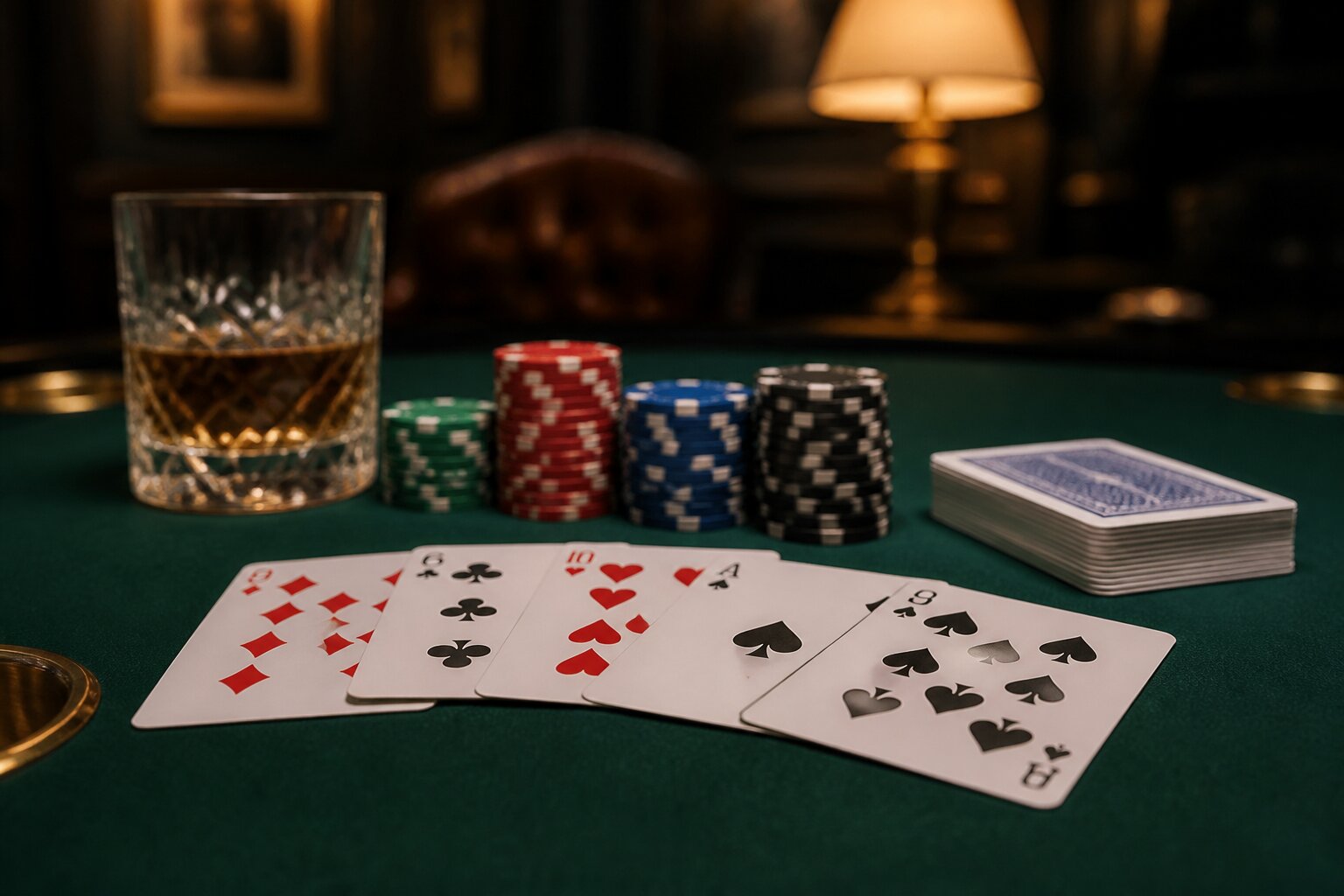
Fancy learning a classic poker game that’s easy to pick up and full of excitement? 5 Card Draw is the perfect place to start. Whether you’re new to poker or keen to sharpen your card skills, this timeless game offers clear rules and plenty of meaningful choices.
This guide covers the essentials—how the game works, how hands rank, and what to expect at the table—so you can feel confident playing or hosting a game. Read on to move from the basics to practical tips and common questions.
Ready to join the action? Keep going and you’ll have everything you need to play a solid game of 5 Card Draw.
What Is 5 Card Poker?
5 Card Poker, often called 5 Card Draw, is one of the most straightforward poker variants. Each player receives five cards face down and aims to make the best five-card hand possible using only those cards.
A key feature of this game is a single draw phase: after the first betting round, players may exchange any number of cards to try to improve their hands. There are two betting rounds in total—one before and one after the draw—which keeps the game compact and easy to follow.
Decision-making centres on which cards to keep and which to replace, with the uncertainty of the card distribution influencing strategy. That interplay of choice and the draw’s uncertainty creates the scope for skillful play without complex procedures. Up next, we’ll explain how a typical hand unfolds so you can see those decisions in context.
How Do You Play 5 Card Draw?
The basic flow of 5 Card Draw is simple to picture. A dealer shuffles a standard 52-card deck and deals five cards to each player, face down. Players privately inspect their hands and the first betting round begins, starting with the player to the dealer’s left.
Players use standard betting actions—fold, call, raise—according to the agreed limits. After this opening betting round, players may discard between zero and five cards and receive replacements from the deck, starting with the player to the dealer’s left. Choosing to keep all five cards is called “standing pat.”
A final betting round follows the draw. If more than one player remains after betting finishes, there is a showdown: players reveal their hands and the best five-card hand wins the pot. The next section lays out the rules and table conventions that keep this process fair and steady.
Basic Rules of 5 Card Draw Poker
5 Card Draw is normally played with two to six players using a 52-card deck and standard poker hand rankings. Betting order proceeds clockwise from the dealer and the structure—fixed limit, pot limit or no limit—should be agreed before play begins.
Each hand has two betting rounds: one before the draw and one after. During the draw, a player may replace up to five cards from the deck. If cards run low, discarded cards (other than those just discarded in the current turn) can be reshuffled and returned to the deck to complete exchanges.
At showdown, the highest-ranking five-card hand wins the pot; ties split it. Following these simple rules makes the game flow smoothly and reduces disputes, which helps everyone focus on the decisions that matter. Next, we’ll detail the hand rankings so you can quickly judge which holdings are strong.
What Are the Card Rankings in 5 Card Poker?
Hands are evaluated using the familiar poker ranking hierarchy, from the strongest combination down to the high card. Knowing these rankings lets you decide whether to draw, bet or fold.
From highest to lowest the ranks are: royal flush, straight flush, four of a kind, full house, flush, straight, three of a kind, two pair, one pair, and high card. A royal flush consists of ace, king, queen, jack and ten of the same suit; a straight flush is any five consecutive cards of the same suit. Four of a kind and full house combine matching ranks in different ways, while a flush is five cards of the same suit not in sequence; a straight is five consecutive cards in mixed suits.
When hands are similar, the highest ranks or the highest side cards determine the winner. With those rankings clear, the following section describes how a round progresses from setup to showdown so you can see each phase in practice.
Step-by-Step Guide to Playing 5 Card Draw
This section follows a single hand from setup through the showdown, describing what typically happens at each stage and why each decision matters. It focuses on the common sequence of play so you can follow how a hand unfolds from start to finish.
Setting Up the Game
A dealer is chosen and a standard 52-card deck is used. Seats and chips are arranged so everyone can see the table, and players should agree on the betting structure before any cards are dealt. Establishing clear limits and agreed procedures for dealing, disputes and split pots helps make the game fair and reduces the chance of confusion during play.
It is good practice to confirm the order of betting and any house rules before starting, particularly if new players are involved. Simple measures such as a visible dealer button and obvious chip stacks contribute to smoother rounds and fewer disagreements.
The Deal and Betting Rounds
The dealer shuffles and deals five cards face down to each player, one at a time. Players examine their hands in private and should avoid signalling information about their cards. The first betting round begins with the player to the dealer’s left and proceeds clockwise, with options to fold, call or raise depending on the betting structure in use.
Players make decisions based on their hand strength, position at the table and their chosen strategy. Betting patterns and the size of raises convey information to observant opponents, so decisions at this stage shape how the rest of the hand plays out.
Drawing New Cards
After this first betting round, players may discard any number of cards, from zero to five, and receive replacements from the dealer. Each player acts in turn, and those who stand pat keep their original cards. Players should be mindful of the number of cards replaced, as that affects the likelihood of improving a hand and can reveal information to others.
Choosing how many cards to exchange is a core strategic decision and depends on hand composition and reads of the table. In many games the number of cards drawn, and whether a player chooses to stand pat, provides useful cues that opponents can use to adjust their own play.
The Showdown and Deciding the Winner
Following the second betting round, any remaining players reveal their hands. The dealer, or a player designated to judge, compares hands using the standard rankings and awards the pot to the highest hand. If there is a tie, the pot is split according to the usual rules.
Understanding how early choices influence the final reveal helps players make more informed decisions at each stage. Recognising how betting and drawing behaviour affects the odds of various hands will improve strategic play and clarify why each action during the hand matters. The next section explains what distinguishes 5 Card Draw from other poker types so you can see where it fits among variants.
What Makes 5 Card Draw Different from Other Poker Games?
5 Card Draw’s defining traits are private hands and a single draw phase, which contrast with the shared board cards and multiple betting rounds of games like Texas Hold’em or Omaha. In Draw, all five cards remain hidden until showdown, emphasising secrecy and individual decision-making.
The single draw permits a direct attempt to improve a hand, while many other variants rely on face-up cards or community cards that gradually change the information available to everyone. Betting tends to be simpler too: most Draw games use just two betting rounds, which generally leads to quicker hands and a more compact game rhythm.
These features make 5 Card Draw particularly well suited to casual home games and situations where you want a straightforward, self-contained poker experience. With the differences clear, the next section tackles some common misconceptions players often have.
Common Misconceptions About 5 Card Draw
One common misconception is that the game is overly complicated. In truth, its core mechanics are among the easiest to learn: deal, bet, draw, bet, reveal. Another is that bluffing doesn’t apply; because all cards are hidden until the end, bluffing can be just as effective as in other variants, depending on how a player reads betting patterns.
Some players assume discarding all five cards is a reliable way to improve a weak hand, but a full redraw rarely produces a strong holding and is typically a high-variance choice. If questions remain about tactics or rule nuances, consulting clear, authoritative resources is the best way to clarify them and improve play.
The following short FAQ addresses specific practical queries players often raise and provides concise answers you can return to during play.
Can Jokers Be Used in 5 Card Draw?
Officially, 5 Card Draw uses a 52-card deck without jokers. Informal home games sometimes add jokers as wild cards, but that alters strategy and should be agreed by all players before the first deal.
Is There a Betting Limit in 5 Card Poker?
Betting limits are set before play and commonly take the form of fixed-limit, pot-limit, or no-limit structures. Agreeing these rules up front creates a fair environment and helps everyone manage their spending comfortably.
How Many Players Can Take Part in a Game?
Two to six players is the usual range to ensure tidy dealing and straightforward play. Larger groups can play, but dealing and deck management become more awkward without additional decks.
What Happens if the Deck Runs Out of Cards During the Draw?
If replacement cards are exhausted, previously discarded cards can be reshuffled (excluding the most recent discards) and returned to the deck so exchanges can continue. This keeps the hand moving without changing the agreed rules.
Are There Any Tools to Support Responsible Gambling?
Many platforms provide features such as deposit limits, session reminders and self-exclusion. Using these tools helps players control their activity and keeps play within personal limits.
**The information provided in this blog is intended for educational purposes and should not be construed as betting advice or a guarantee of success. Always gamble responsibly.