
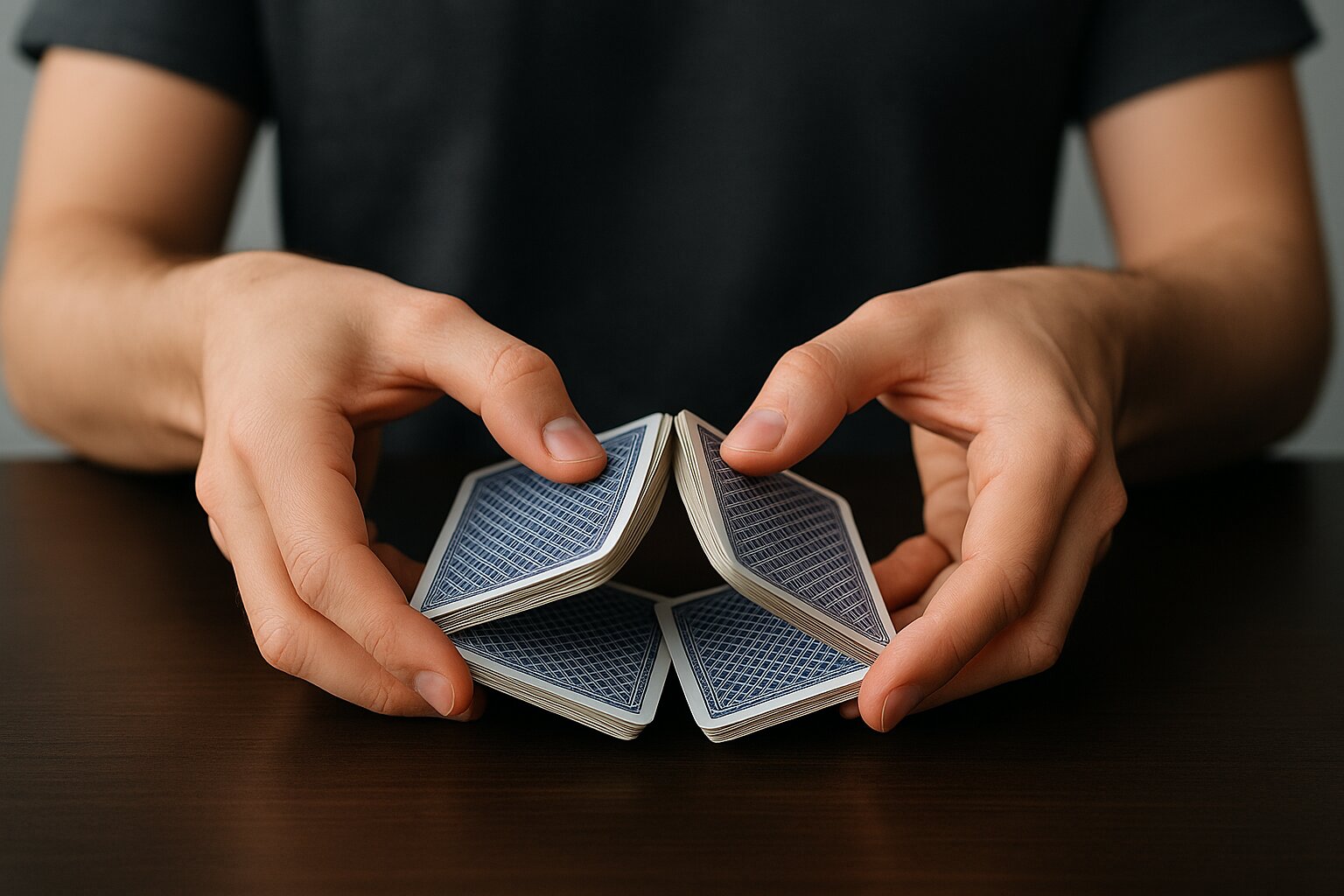
Nothing brings friends and family together quite like a good card game, but every great game starts with a well-shuffled deck. Whether you’re playing snap, rummy, or aiming to keep the deal fair, learning to shuffle properly is a useful skill.
If you’ve ever fumbled with a pack of cards or watched someone else make shuffling look effortless, relax—anyone can master the basics with a little practice. Simple techniques and gentle handling are all you need to get comfortable.
In this post we’ll cover why shuffling matters, what you need, how to hold and care for a deck, common mistakes to avoid, and practical tips to improve. Read on and you’ll soon feel more confident at the table.
Why Is Shuffling Cards Important?
Shuffling mixes the cards so that the order is not influenced by previous rounds. When cards are mixed well, every player faces the same, impartial starting point and the game proceeds fairly.
A good shuffle breaks up clumps and patterns that may remain from earlier hands. That helps prevent predictable sequences or repeated card groupings and keeps play honest and transparent.
Beyond fairness, visible, careful shuffling reassures everyone at the table that the game is being handled properly. That small bit of care makes the atmosphere more enjoyable and keeps the focus on the game itself.
Now that you understand why it matters, let’s look at the basic kit you’ll need.
What Do You Need to Shuffle Cards Properly?
You do not need much to shuffle well. A complete deck of cards in reasonable condition and a flat, firm surface are the essentials.
A standard table or other firm, level surface gives your hands support and helps the cards sit and move predictably. Good lighting and a comfortable chair can also help you see the edges clearly and keep your posture steady for longer sessions.
Cards that are warped, sticky, bent, or missing will make any technique harder and less reliable. Replace very worn decks when necessary to maintain consistent shuffles and to help keep games fair for everyone.
That is it, nothing fancy. With a reliable deck, a steady surface and a little practice, you can start building good habits that make play more comfortable and fair.
How to Hold a Deck of Cards Correctly
A steady, relaxed grip makes shuffling easier and reduces wear. Hold the deck in your non-dominant hand, with the short edge against your palm and your fingers supporting the bottom and one side. Your thumb should run along one long edge, with the fingers of your dominant hand ready to manipulate small packets.
Keep tension light: firm enough to control the cards, but not so tight that they bend. This balance prevents slips while preserving the shape of each card.
A consistent hold helps you move smoothly between different shuffle styles and makes it easy to square the deck afterwards.
Here’s a look at a couple of friendly techniques that work well for beginners.
What Is the Easiest Way to Shuffle Cards?
Two straightforward approaches to start with are the overhand shuffle and the riffle shuffle. Both mix the deck effectively, but they feel different in the hands and suit different preferences.
The overhand shuffle is gentle and forgiving. You hold the deck in one hand and use the other to lift small packets from the top and let them fall back, one after another. Done slowly and with smaller packets, this motion loosens up groups of cards and mixes them without stressing the edges.
The riffle shuffle gives a more thorough mix for many players. The deck is separated roughly in half, each half held between thumb and fingers. The edges of the two halves are brought close so individual cards from each stack can interleave as they are released. Squaring the combined pile afterwards tidies everything up and keeps the cards aligned.
Each method has its own rhythm; try both and stick with the one that feels natural, or combine them for a fuller mix.
How Should You Finish and Square Up the Deck?
After shuffling, tidy the deck so it is neat and ready for dealing. Gather the cards into a single pile and place them on the table. Gently tap the short edges on the surface to help align the cards; a few light taps are usually enough.
Apply light pressure with your fingers to bring the sides flush and make the faces sit evenly. Take care not to press too hard or bend the corners, as that can mark the cards and affect how they run in future deals.
Squaring the deck not only looks neater but also makes it easier to hold and deal from. A well-aligned pack sits comfortably in the hand, which helps with smoother, more consistent dealing and reduces the chance of cards slipping.
It is a small finish that signals the cards are ready and treated with care. With the deck squared, players can be confident the shuffle was handled properly and the game can begin.
Common Mistakes Beginners Make When Shuffling
Beginners often repeat a handful of avoidable errors. Watching for these will speed up your progress and keep your cards in good condition.
- Dropping cards: Trying to move too many at once or rushing the motion increases slips. Work in smaller packets and maintain a calm rhythm.
- Bending cards: Squeezing or forcing cards to interleave can cause creases. Gentle pressure and relaxed wrists preserve the deck.
- Incomplete mixing: Large chunks moved together leave sequences intact. Smaller, repeated transfers make for a better mix.
- Leaving the deck uneven: Forgetting to square up can create awkward piles that are hard to deal from. A quick tidy finishes the job.
Accepting a few mistakes while you learn helps you build steadier technique faster.
Are There Any Myths About Card Shuffling?
People sometimes attach rules or magical thinking to shuffling, but most of these ideas do not hold up under scrutiny. It helps to separate common belief from what actually happens when you mix a deck.
Common myths include:
-
The deck must be shuffled an exact number of times to become fair. In reality, there is no single magic number that applies in every situation. A few thorough, well-executed shuffles will usually be enough to break up obvious patterns and make the deck unpredictable for practical purposes.
-
A particular style of shuffle guarantees a chosen outcome. All shuffles simply rearrange the cards; none can reliably steer results toward a predetermined card or sequence in normal play. Skilled dealers can control cards in specific contexts, but that is not the same as an ordinary shuffle producing a particular outcome.
-
You can improve your chances by following ritualised rules or superstitions. Relying on unproven rules promotes false confidence. Focusing on clear, careful technique and being mindful of fairness is far more useful than chasing supposed shortcuts.
Keeping expectations realistic and using consistent, transparent methods will serve you better than clinging to unproven rules or myths.
How to Practise and Improve Your Shuffling Skills
Improvement comes with regular, mindful practice. Spend short sessions handling the deck, paying attention to smooth, even movements rather than speed. Repeating a few clean overhand shuffles, then trying a steady riffle, helps you learn control and timing.
Notice small things: the size of the packets you pull, the angle at which cards meet, and how you finish by squaring the deck. Adjustments in those details lead to faster progress than trying to rush the whole process.
Practising also protects your cards by encouraging gentler handling. And while skill will improve the look and consistency of your shuffling, remember that the purpose is to keep play fair and enjoyable for everyone involved.
Caring for Your Playing Cards After Shuffling
Proper care extends the life of a deck and keeps shuffles feeling smooth. Keep hands clean and dry before handling cards, and store the deck in its box or a protective sleeve when not in use to avoid bends and dust.
If cards get dirty, a soft, dry cloth can remove light grime; avoid abrasive cleaners or moisture that could warp the paper or coating. Keep them away from direct sunlight and damp areas to preserve colour and shape.
Regular, gentle care ensures each shuffle and deal feels as good as the first.
Enjoy practising these techniques and take pride in the steady, neat shuffles you’ll bring to every game.
**The information provided in this blog is intended for educational purposes and should not be construed as betting advice or a guarantee of success. Always gamble responsibly.