
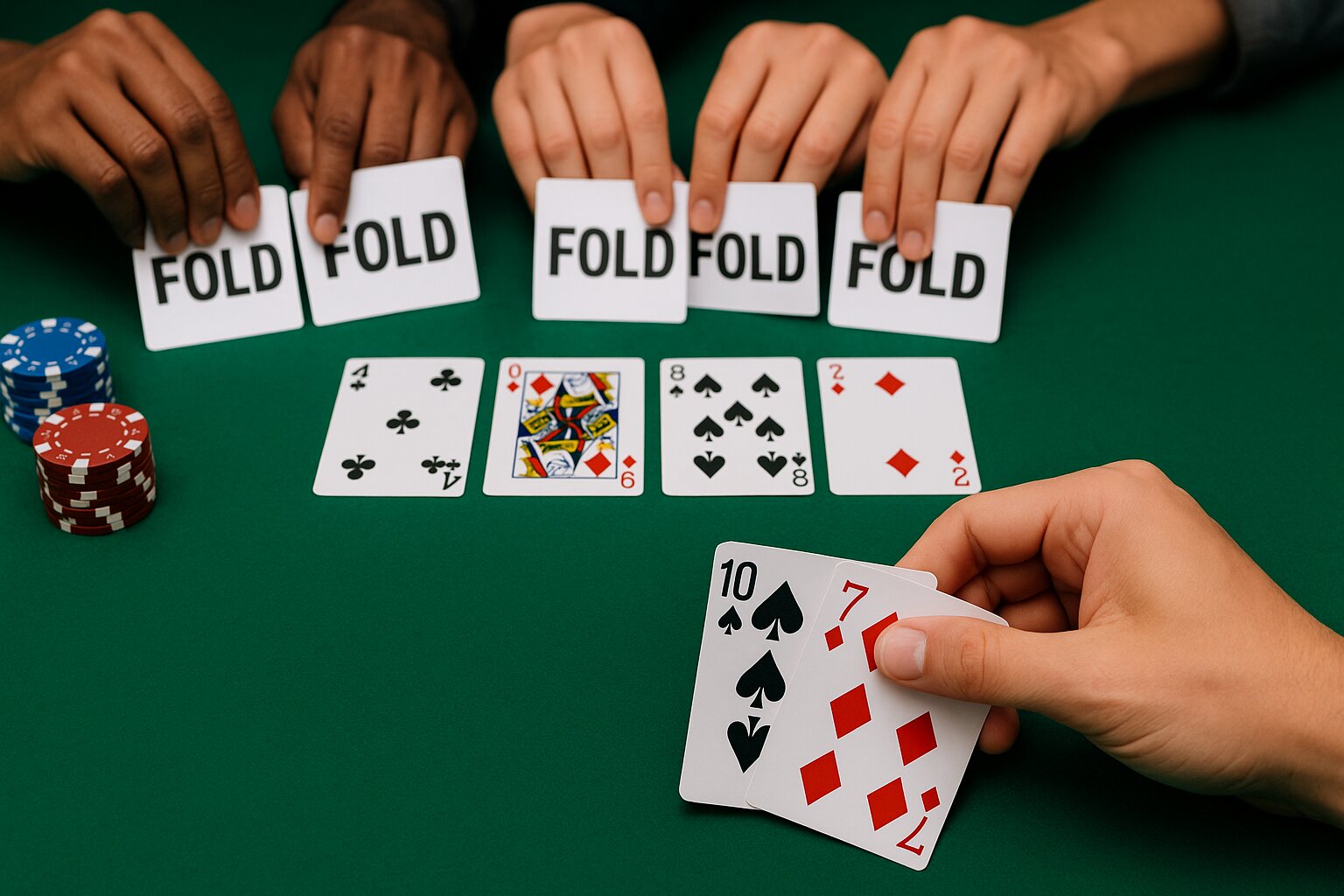
Ever wondered what actually happens when everyone at the poker table folds? It’s a question that comes up a lot, and getting the mechanics straight will help you follow the action and avoid awkward moments at the table.
The rules around folding are simple, but there are a few details that can trip people up—especially when different formats are involved. Read on and you’ll clearly see how a hand can end, who takes the pot, and why showing cards usually isn’t necessary.
What Does It Mean to Fold in Poker?
To fold means a player withdraws from the current hand, giving up any claim to the pot. The player places their cards face down or otherwise indicates they are out for that round. Once folded, they no longer participate in betting or in any showdown that might occur.
Folding is a standard, strategic action. Players fold for lots of reasons: to conserve chips, to avoid committing more of their stack with a weak holding, or to focus on later hands where they have a better position. Knowing when to fold is part of managing your stack and keeping your options open during a session.
What Is the Immediate Outcome When All Players Fold?
If every player except one folds, the hand ends immediately and the remaining player wins the pot. There is no further dealing or continuation of that hand; no more community cards are turned and no additional betting rounds take place. The dealer collects the chips and either places them in front of the winner or the tournament chip tray is updated, depending on whether it is a cash game or a tournament.
The winner is not required to reveal their cards unless house rules or a specific situation calls for a show. In some venues a show may be requested to confirm the hand, or the dealer may ask for cards to be exposed if there is a dispute, but generally the victor may muck their hand and keep the win private.
If any side pots or all-in situations existed earlier in the hand, those have already been resolved by the time a single player remains; the last player standing simply takes whatever portion of the pot they are entitled to, and any remaining chips are awarded according to the usual pot distribution rules.
After the chips are awarded, the table moves on to the next deal promptly. The dealer button and blind positions shift as normal, keeping play efficient and predictable for all players at the table.
Who Wins the Pot If Everyone Folds?
When the table is reduced to a single active player, that player receives the entire pot. The identity of the winner is determined solely by who remained in the hand when the last fold occurred, not by the relative strength of any hands. There is no need for a showdown or for cards to be revealed in this situation.
The pot is awarded immediately once the action is complete. If there are side pots, they are distributed according to the usual eligibility rules: only players who contributed to a particular side pot can win that side pot. The dealer or floor staff will ensure each portion of the pot is allocated correctly.
This rule applies whether the pot contains:
- blinds,
- antes,
- voluntary bets.
The dealer or floor staff will ensure the pot is awarded correctly and that play continues without delay. Please play responsibly and be mindful of the table rules and any casino policies that apply.
Are There Differences Between Poker Variants When All Players Fold?
The basic principle—last player standing wins—holds across most poker variants, but nuances arise from the game format and setting.
Different venues or events may have specific procedures for handling chips, side-pots, or misdeals, and certain variations of poker introduce particular betting structures that affect how players fold during a hand. Being aware of the local rules for the table you’re playing at avoids confusion and ensures smooth play.
Transitioning from the general rule to how formats affect outcomes helps make sense of these practical differences.
Cash Games Vs Tournaments: What Changes?
In cash games, the chips won when everyone folds have an immediate monetary value and are simply added to the winner’s stack. Players can leave or rebuy according to house policy, so managing a chip stack tends to be focused on short-term gain.
In tournaments, chips represent progress rather than direct payout. When a player wins a pot after everyone else folds, their tournament chip count increases and that can affect strategy in later hands—positioning and survival take on extra importance. Tournament chips can’t be cashed out on the spot, and elimination and prize structures create different incentives compared with cash play.
Can a Hand End Without a Showdown?
Yes. A hand will often finish without a showdown when all but one player fold during any betting round. If there is no caller to force a showdown, players do not need to reveal their hole cards and the remaining player wins the pot automatically.
This happens in cash games and tournaments alike, and it is a routine part of play. It saves time at the table and allows players to conceal aspects of their strategy, such as hand strength or bluffing patterns.
There are occasions when rules or etiquette may encourage a player to show cards, for example to confirm a claim to a pot in a dispute, or when players agree to show hands for sportsmanship or learning. These situations are exceptions rather than the norm.
In ordinary play, finishing without a showdown keeps the game moving and preserves player privacy. Players should still follow the house rules and any local regulations governing showdowns and disputes.
Common Misunderstandings About Folding in Poker
Several myths circulate about folding. One is that folding is an admission of error; in reality, it’s often a deliberate, strategic choice to protect one’s stack. Another is that folded cards must be shown—normally they are not unless a specific rule requires it or the hand reaches a showdown.
Some players think only novices fold frequently, but folding is routine at all skill levels. Experienced players fold to manage risk, control pot size, and avoid difficult post-flop decisions when the odds don’t line up with their hand or position.
Clarifying these misconceptions helps new players feel confident making fold decisions and understanding how those choices affect the flow of the game.
What Are the Official Rules When Only One Player Remains?
Official poker rules state that if all players but one fold, the hand ends and the remaining player is awarded the pot. The hand is not played to a showdown, and no further dealing or card exposure is required for that particular hand.
The dealer distributes the pot in line with the rules in effect at the table. This includes ensuring that any announced or agreed procedures for awarding pots are followed and that the chips are handed over to the correct player.
If there were earlier all-in situations that created side-pots, these must be handled before the remaining main pot is awarded. The dealer or floor staff will typically:
- separate the chips into the main pot and any side-pots,
- determine which players are entitled to each pot based on their contributions and eligibility,
- allocate each pot to the appropriate winner(s) in the correct order.
Proper handling of pots ensures fairness, prevents disputes and keeps play moving smoothly. If there is any uncertainty, players should call the floor staff to adjudicate according to the venue's rules.
Final Thoughts on Folding and Poker Outcomes
Folding is a fundamental part of poker and one of the core tools players use to manage risk and timing. When everyone but one player folds, the remaining player wins the pot and play continues with the next hand. Understanding these outcomes makes the game clearer and prevents unnecessary disagreement at the table.
If you’re new to poker, paying attention to table rules and pot procedures will make your sessions more confident and enjoyable. Play within limits you’ve set for yourself and make choices that suit your goals at the table. With the rules clear, you can focus on playing well and enjoying the game.
**The information provided in this blog is intended for educational purposes and should not be construed as betting advice or a guarantee of success. Always gamble responsibly.