
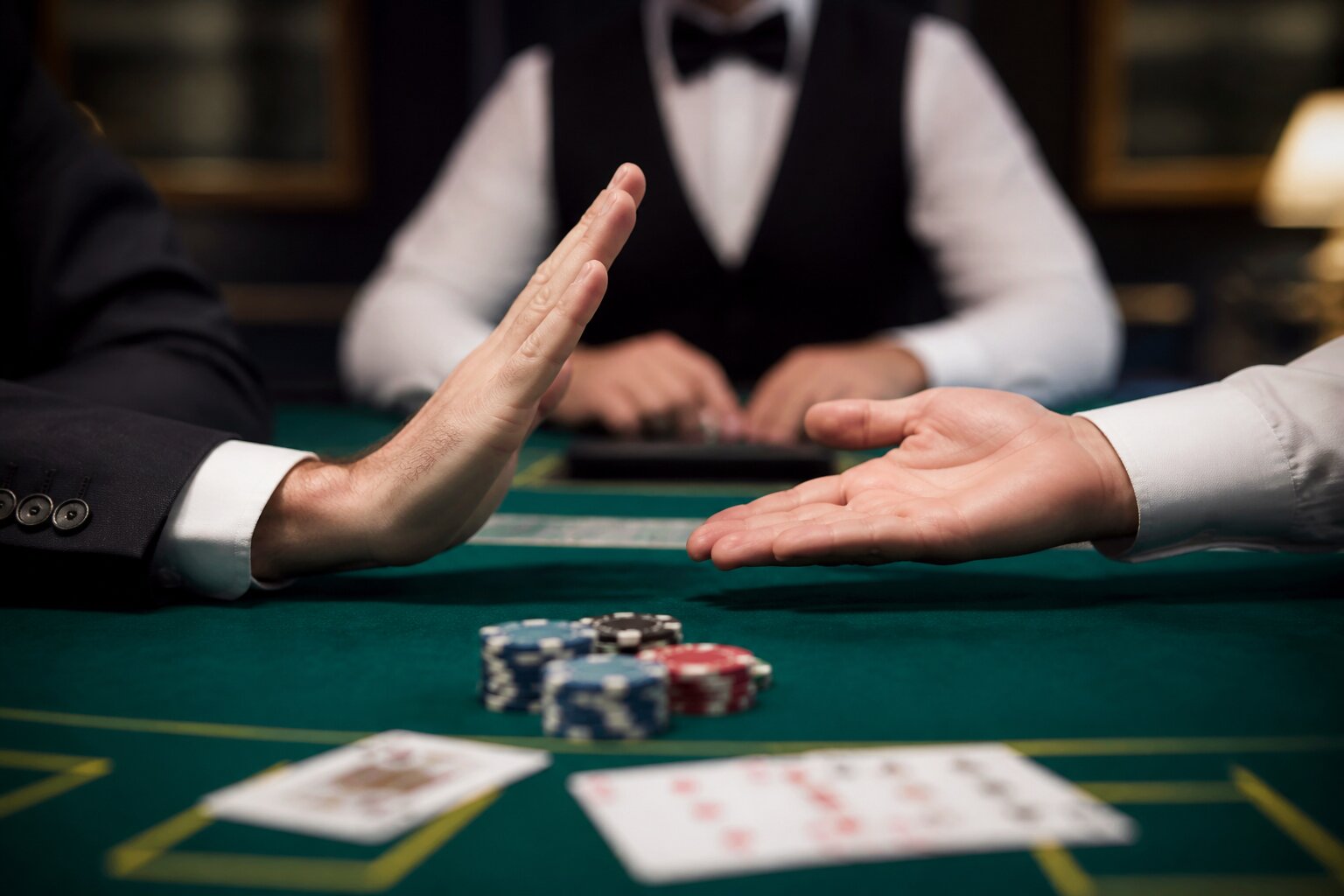
Ever been mid-hand and wondered what happens when your total lines up exactly with the dealer’s? That outcome is commonly called a “standoff” (or “push”), and it’s one of those simple rules that keeps the game straightforward. This guide explains what a standoff is, how it plays out at the table, and what it means for your bets and decisions.
We’ll cover the mechanics, common misconceptions, ways to recognise a standoff, and sensible reactions so you feel confident when it happens. Read on for clear examples and practical context that make the concept easy to follow.
Knowing this small but important part of the rules helps everything else about playing blackjack fall into place.
What Does "Standoff" Mean in Blackjack?
A standoff in blackjack occurs when both the player and the dealer finish a round with the same hand total and neither has exceeded 21. The term “push” is used interchangeably in many places, but both terms describe the same result: a draw with no winner.
When a standoff happens, the player’s original bet is returned exactly as it was placed. No payout is made, and there is no deduction from the stake. This applies whether the matching total is a modest number like 16 or a higher total such as 20, and it also covers cases where both sides have a natural blackjack.
Understanding this outcome makes it easier to follow what happens at the table after cards are revealed. Ahead, we’ll look at when standoffs tend to appear in actual play and how dealers handle them.
How Do Standoffs Occur During Gameplay?
Standoffs arise at the point when the dealer has finished drawing and all player actions—hits, stands, doubles or splits—are complete. The dealer turns over a face-down card (or completes their draw) and both totals are compared. If they match and neither side busts, the hand is a standoff.
These ties can occur regardless of how many cards are in a hand. For example, a player might stand on 20 after two cards while the dealer draws to 20 with several cards; the result is the same as two-card 20s—no winner. The procedure at most tables is mechanical: the dealer announces the push and the player’s stake is returned.
Next, we’ll examine what that returned stake actually means for your bets and any winnings.
Standoff Rules: What Happens to Bets and Winnings?
When a standoff is declared, the player’s stake is given back in full and the round ends without a win or loss on that wager. There are no extra payouts, and any side bets or special wagers follow their own rules separately; the main hand’s stake is simply returned.
Casinos follow this rule to ensure clarity: a draw is a draw. That straightforward outcome helps both players and dealers keep track of balances without ambiguity. If you doubled, split, or placed a separate insurance bet, how those are resolved can vary by the specific bet, but the central hand’s stake is always refunded on a standoff.
To recognise a standoff in practice and know what to expect from the dealer, the next section offers clear signs to look for at the table.
Is a Standoff the Same as a Push in Blackjack?
Yes—the terms “standoff” and “push” describe the same situation: the player and dealer end with equal totals and the hand is a draw. Different casinos or regions may favour one word over the other, but the mechanics and consequences remain identical.
When a push occurs the player’s original stake is returned and the hand is settled without a win or a loss. This applies whether the game is played with physical chips at a felt table or on a digital platform, where the stake is credited back to the player’s balance.
There are a few related points that sometimes cause confusion. A blackjack that ties a dealer blackjack is also treated as a push in most games, so the player does not receive the usual blackjack payout. Likewise, pushes generally apply to the main wager only; any side bets or optional wagers are resolved independently and may still result in a win or loss.
Using either term does not change how the dealer handles the cards or the player’s funds. With that settled, we’ll address several common misconceptions that can cause confusion at the table.
Common Misconceptions About Standoffs
A few mistaken ideas often circulate among players. One is that a standoff results in a small win or bonus; it does not—the stake is simply returned. Another is that a standoff somehow alters the odds for the following hands; it does not change the underlying rules or card probabilities.
Some players assume standoffs happen only with higher totals, but they can occur at any equal total under 22. And while strategy affects when you choose to draw or stand, a standoff itself is determined solely by the final totals after all play is complete.
Clearing up these myths helps keep expectations realistic and prevents confusion when the dealer calls a push. If you want to spot a standoff quickly, the next section highlights what to watch for.
Tips for Recognising Standoffs at the Blackjack Table
Recognising a standoff is straightforward. Once the dealer finishes their actions and turns over the cards, compare the totals: equal totals that are 21 or less indicate a standoff. Dealers will usually announce the result and return the stake; on electronic tables the screen shows the push.
Pay attention to how side bets are handled, since they may resolve differently even when the main hand is a standoff. Staying alert to the dealer’s announcements and the table’s display keeps you informed about the outcome. With this awareness, you can move on to the next hand in control of your funds and decisions.
After a push, some players wonder whether to change their approach—below are sensible ways to respond that keep your session measured and intentional.
What Should Players Do After a Standoff?
A standoff simply returns the stake, so the most effective response is often to continue with the same considered approach you had before the hand. Take a moment to check your balance and decide whether you’re comfortable to play on; treating the returned stake as neither a win nor a loss helps keep decisions steady.
If reassessing your plan feels useful, adjust your play according to your original strategy and bankroll limits rather than reacting to that single result. A measured approach supports good money management and keeps the session focused on controlled play rather than impulsive changes.
Understanding how standoffs fit into the overall game makes it easier to move on without overreacting; next we’ll consider why that understanding matters for your broader play.
The Importance of Understanding Standoffs in Blackjack
Knowing what a standoff means clears up a common point of confusion and helps the game flow more smoothly for everyone involved. Recognising how ties are resolved gives a clearer frame for decisions during a session, and that clarity supports sensible betting and financial awareness.
A solid grasp of standoffs contributes to a more confident, composed way of playing. When the rules feel familiar, players spend less time second-guessing outcomes and more time focusing on their chosen strategy and enjoyment. With this knowledge in hand, you can follow each round with confidence and move on purposefully to the next.
**The information provided in this blog is intended for educational purposes and should not be construed as betting advice or a guarantee of success. Always gamble responsibly.