
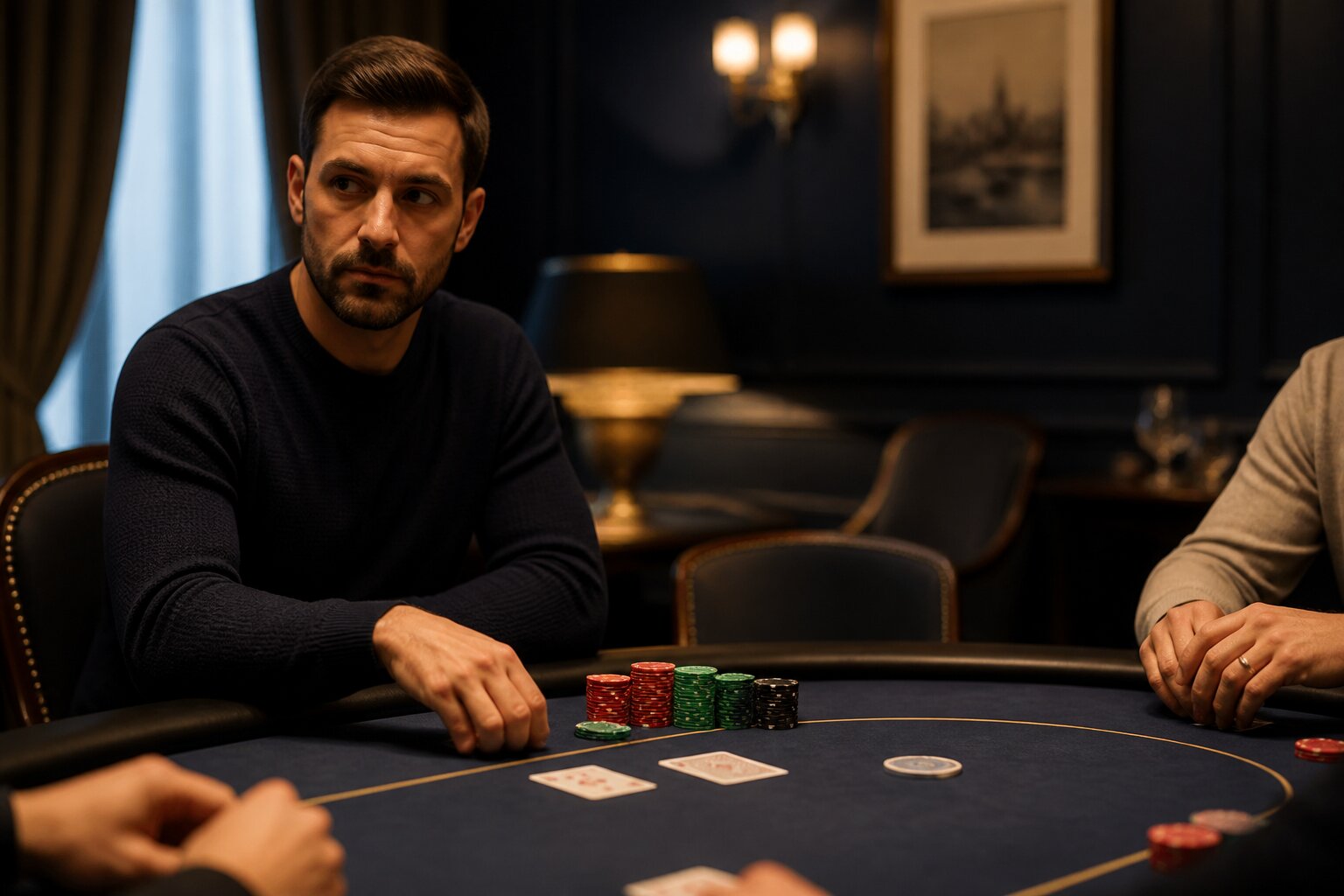
Stepping into a poker game can feel a bit daunting, especially when you're sitting at the start of the action. If you've heard the phrase "under the gun" and wondered how it affects your choices, this guide will clear it up.
Mastering early position play is key to building a solid poker approach, because the decisions made here shape the rest of the hand. Read on for clear explanations, practical examples and straightforward strategies to handle this demanding seat with more confidence.
Let's get you comfortable with one of poker's trickiest positions.
What Does Under the Gun Mean in Poker?
In poker, under the gun, often abbreviated UTG, refers to the player who acts first during a betting round, immediately after the big blind. That seat sits to the left of the big blind and is part of the game's early positions.
Acting first means making a decision with no prior information about opponents' plans for that round. That uncertainty increases the likelihood of facing raises and stronger hands from players yet to act, so being selective about starting hands is important.
The phrase historically comes from the idea of being under pressure, since the UTG player's choice can influence the tone of the entire hand. Knowing what the term refers to helps explain why players change their strategy based on where they sit at the table.
Where Is the Under the Gun Position at the Table?
The UTG seat is the chair immediately to the left of the big blind, and in most games the action moves clockwise from there. In full-ring games, which usually seat nine or ten players, UTG is typically the third seat after the dealer button and the blinds.
Calling this an early position reflects the practical effect: many players remain to act after you. That impacts the range of hands you can profitably play and the sort of decisions you’ll face as the hand continues.
Understanding where UTG sits at the table makes it easier to visualise why pre-flop choices are more constrained here, and why players often tighten up compared with middle or late positions.
How Does Being Under the Gun Affect Your Gameplay?
Being under the gun changes how a hand is played because the first decision comes without seeing anyone else's action. This lack of information makes it harder to assess your hand's relative strength and harder to control the pot size.
From UTG, players typically prioritise premium starting hands. High pocket pairs, combinations like Ace-King, and strong suited broadway cards perform better in this seat because they withstand more opposition from late-position raisers. Conversely, speculative hands that profit most in multi-way pots or when acting later tend to be folded more often from UTG.
Position also affects post-flop play. Acting early means side-stepping some manoeuvres that are more effective when a player has position over opponents, for example applying pressure on later streets. Managing pot size through tighter pre-flop selection reduces the frequency of awkward choices after the flop.
Common Misconceptions About Under the Gun Position
Several myths surround UTG. One is that it is simply a terrible seat that should be avoided. In practice, it is a neutral structural role of the game. When treated with the correct strategic adjustments, UTG can produce profitable decisions rather than forcing constant losses.
Another misconception is that bold, frequent bluffing is rewarded from UTG because acting first gives a sort of initiative. In reality, bluffing from early position is riskier, since many players still to act can counter with strong hands or re-raises, making bluffs harder to realise.
A further mistaken belief is that UTG requires a rigid rule set, such as folding everything below a fixed threshold. While discipline is necessary, the right play also depends on table dynamics and stack sizes. Adjustments are reasonable when the table is unusually passive or short-stacked players are present, but any change should be based on observation rather than habit.
These clarifications help reframe UTG as a position that demands respect and awareness, rather than one to fear or overuse.
Tips for Early Table Play from Under the Gun
Approaching UTG effectively comes down to hand selection, awareness and measured aggression. These ideas are most useful when applied adaptively to the specific game you are in.
Recognising strong starting hands
Strong starting hands for UTG are those that can withstand action from multiple players. Examples include pocket Aces, Kings and Queens, Ace-King, and Ace-Queen suited. Such holdings are likely to be ahead of opponents' ranges and make subsequent decisions simpler.
Avoiding common pitfalls in early position
Common mistakes include playing marginal or speculative hands that perform better in late position, and overplaying suited connectors or low pairs from UTG. Another frequent error is using frequent aggression in the hope of folding opponents; with many players yet to act, that tactic often backfires. Finally, be mindful of stack sizes, since deep stacks change the value of speculative hands compared with short stacks where fold equity and shove dynamics differ.
These points are practical rather than prescriptive, and they aim to reduce difficult post-flop situations while keeping options open when premium opportunities arise.
How Do Professionals Approach Under the Gun Poker?
Professional players treat UTG as a seat that requires discipline, observation and adjustment. Their approach is conservative pre-flop but flexible enough to exploit specific table tendencies.
Pros often narrow their opening ranges in early position, favouring hands that hold up through multiple callers or re-raises. They track opponents' behaviours, noting who defends wide or who overfolds, and they adapt opening frequencies accordingly. Bluffing from UTG is used rarely and usually only when later action patterns suggest it can succeed.
Patience is a hallmark of professional play here. Instead of forcing action, pros wait for hands that offer clear value or for situations where later players have shown repeated weakness. That patient style helps preserve chips and create profitable spots when hands are strong.
Summary of Under the Gun Key Points
To wrap up, understanding the under the gun position helps make smarter table decisions. Below is a concise recap of the essentials to remember when you find yourself acting first.
Key facts to take away:
- Under the gun is the seat directly left of the big blind and is first to act pre-flop.
- Acting first means less information, which calls for tighter starting-hand selection.
- Hands that perform well from UTG are generally strong pocket pairs and top broadway combinations.
- Professional players use discipline and table awareness to manage the position effectively.
- Keep decisions aligned with your bankroll and limits so play remains sustainable.
With these ideas in mind, UTG ceases to be an intimidating label and instead becomes a position that rewards careful play and observation. Approach it calmly, make considered choices, and you'll find it easier to navigate the early stages of a hand.
**The information provided in this blog is intended for educational purposes and should not be construed as betting advice or a guarantee of success. Always gamble responsibly.