
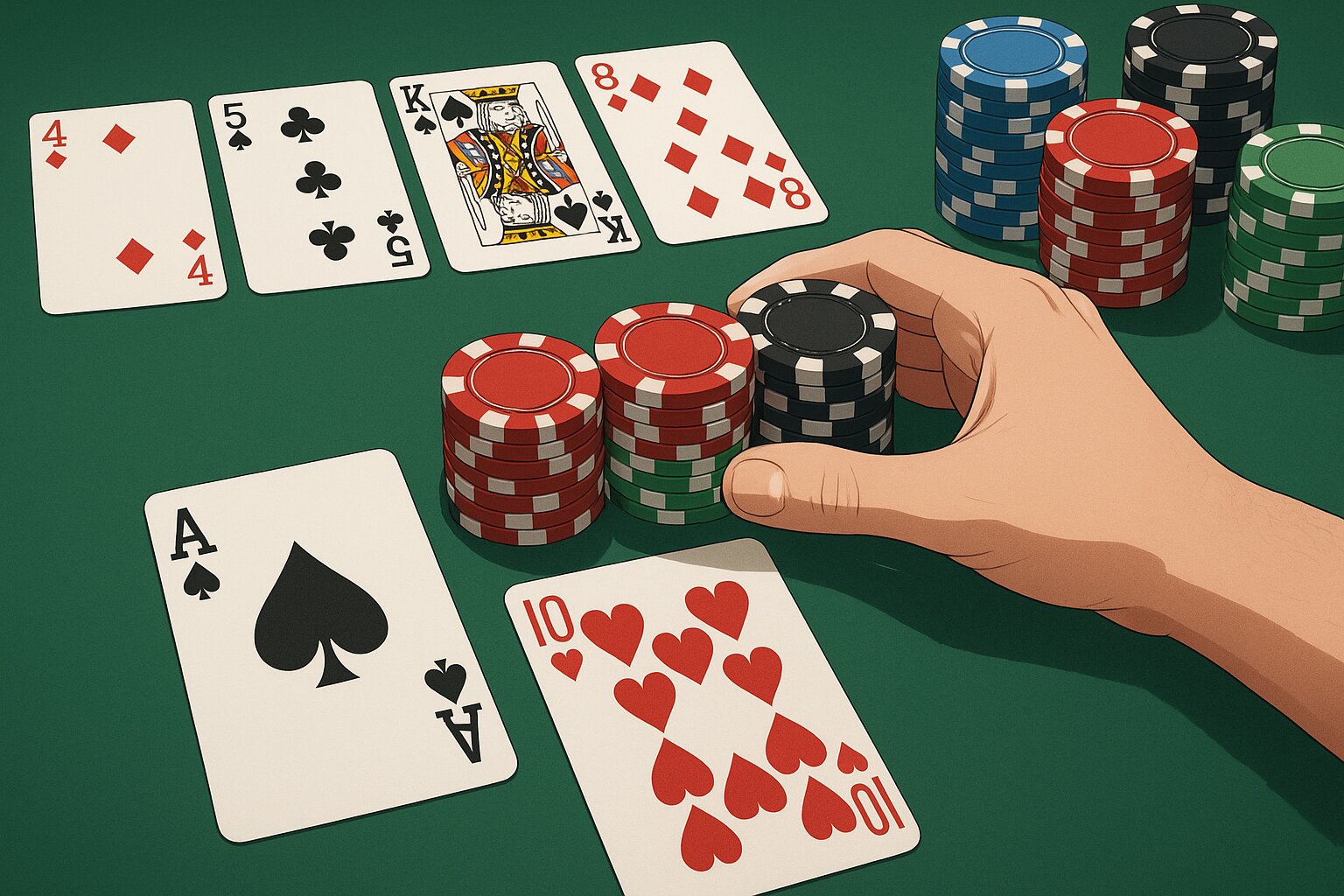
Thinking about going all-in at the poker table but unsure when’s the right time? You’re not alone. Whether you’re a seasoned player or just getting started, mastering shoving tactics like all-in moves, push/fold strategies, and defending your big blind can make a real difference.
This guide breaks down the key ideas you need to make clearer, more confident choices on the felt. Read on and you’ll find practical explanations, examples, and points to watch for in every shove situation.
Ready to fine-tune your strategy? Let’s get started.
What Does It Mean To Go All-In In Poker?
Going all-in means you push all your remaining chips into the centre of the table. When you take this move, you are committing everything you have in the current hand.
You cannot add more chips during that hand. If opponents have more chips and raise later, you can only win up to the amount you matched, which forms the main pot. Any additional chips wagered by others are placed into a side pot that only players who contributed to it can win.
An all-in often shifts the table dynamic. It can force opponents to reassess whether to call or fold, and it changes how the hand is resolved at showdown. Because the outcome depends on the cards and how others act, weigh the odds and the context before committing your stack.
Push Or Fold: When Should You Move All-In?
The push or fold choice commonly arises when your stack is short relative to the blinds and antes. In those spots, the practical options narrow: either push all-in or fold. That binary nature makes these decisions feel high-stakes, but they are a routine part of tournament and late-stage play.
Typical scenarios include having around ten big blinds or fewer and holding a hand that fares reasonably well against likely caller ranges. Tournament structure influences this too: rising blinds, antes and the value of survival all change the calculus.
Good judgement here comes from balancing your hand strength, position, and how opponents have been playing. Recognising whether the table is tight or aggressive helps you decide whether your shove will be respected or widely called.
Understanding Big Blind Tactics In All-In Scenarios
The big blind is a forced bet that naturally commits a portion of your chips before the hand. That commitment gives the big blind a different cost-benefit balance when facing all-ins, since some of the investment is already made.
When you’re in the big blind against an all-in, compare your hand’s equity against the likely calling range and factor in stack sizes. Calling from the big blind can be profitable more often than from other positions because of the partial investment, but it is still a decision that depends on opponents’ tendencies and pot odds.
Think about how your actions affect future hands as well. Calling marginally from the big blind can preserve tournament life in the short term but may put you in repeated tough spots if you don’t adjust to the table flow.
All-In Betting Rules: What Should You Know?
In standard poker rules, an all-in bet is your final contribution to the current hand. If you have fewer chips than other players, you can still participate, but only to the extent of your stack; any extra betting from others moves into side pots.
Showdown procedures follow these main and side pot distinctions so that chip ownership is clear. If further bets or raises occur after you are all-in, you are not required to match them, and your exposure remains limited to what you pushed in.
It’s sensible to understand these mechanics before sitting down to play. Knowing precisely what happens with main and side pots helps you make informed decisions about risk and keeps the game fair and transparent.
Play within your bankroll and set sensible limits for each session to keep poker enjoyable and sustainable.
Common Mistakes Players Make When Going All-In
A frequent error is shoving with hands that don’t have enough equity against likely calling ranges. That tends to cost chips quickly and predictably.
Some players also overuse the all-in as a bluffing tool until opponents adjust and call more often. Predictable patterns like that reduce your edge.
Other mistakes include failing to monitor stack sizes at the table, neglecting position, and letting emotions drive decisions after a bad beat. Good players keep track of relative chip counts and adapt their shove ranges accordingly, while also staying composed after setbacks.
Being mindful of these pitfalls and reacting to changing circumstances will keep your game sharper and more resilient.
How Do Stack Sizes Affect Your Shove Decisions?
Stack depth shapes how often and with which hands you should shove. Short stacks often require more frequent shoves to avoid being blinded down, while medium and deep stacks allow more nuanced play and manoeuvring.
When short, a shove can be the most efficient way to extract value or force folds and potentially double up. With a larger stack you can pressure opponents with smaller bets, pick spots to isolate, or wait for premium hands before committing everything.
Consider also the stack-to-pot ratio and how much of your tournament life is at stake. That context helps determine whether an all-in is a necessary gambit to preserve equity or an avoidable risk.
When To Shove Pre-Flop And Post-Flop?
Pre-flop shoves frequently occur in short-stack situations or when a hand is strong enough that you want to deny free cards and quicken the action. The decision here hinges on how many callers you expect, your seat, and whether the opposition is likely to fold to pressure.
Post-flop shoves are more situational. They follow when the community cards improve your hand or when a bet can credibly represent a made hand and force folds. Reading board texture and opponents’ tendencies becomes vital; a dry board versus a coordinated one changes the credence of a shove.
Each case is a balance of equity, fold equity and risk, so present your range accordingly and be ready to adapt if the table’s behaviour shifts.
Myths About Shoving And Folding: What’s True?
There are several persistent misconceptions. One is that aggressive all-ins are always the best way to win pots. In practice, reckless shoving without regard to ranges, position or stack sizes often costs more than it gains.
Another myth treats folding as passive play. Folding can be a strong strategic choice that preserves chips for higher-expected-value spots, and recognising when to fold is a mark of sound decision-making.
Finally, no single formula works in every game. Systems can offer useful guidelines, but effective shoving and folding depend on reading the specific table and adjusting to the players and structure you face.
Follow solid principles, stay observant, and avoid chasing easy answers.
Glossary: Key Terms In Poker Shoving
Here are clear definitions of the most common terms you will see when discussing all-in play.
All-In: Putting all your remaining chips into the pot in one move.
Push: Another term for going all-in, often used when describing short-stack decisions.
Fold: Surrendering the hand and placing no more chips into the pot.
Big Blind: The larger forced blind bet that rotates around the table each hand.
Short Stack: A relatively small chip count compared with other players, often prompting push-or-fold choices.
Side Pot: A separate pot created when players have unequal stacks and multiple players contribute beyond a shorter stack’s amount.
Pre-Flop: The stage before any community cards are dealt.
Post-Flop: Any stage after the flop, including the turn and river.
Understanding these terms will help you follow table talk and make better decisions when shoves occur.
Play thoughtfully, keep track of the game’s changing dynamics, and use the shove as one tool among many to manage your stack and shape your strategy.
**The information provided in this blog is intended for educational purposes and should not be construed as betting advice or a guarantee of success. Always gamble responsibly.