
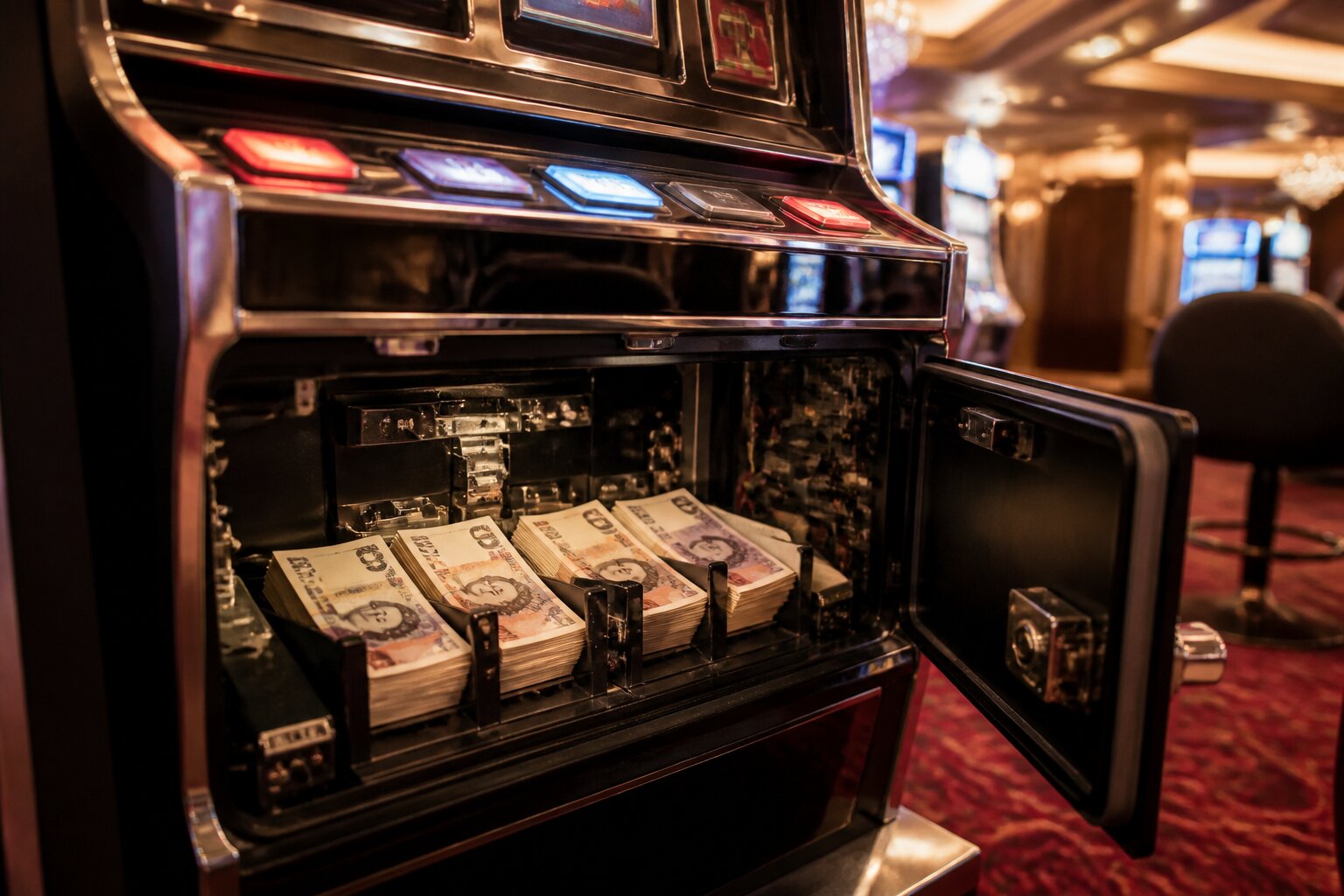
Ever wondered how much money is actually inside a slot machine? It’s a common question when you see the flashing lights and start spinning the reels. Whether you play in a venue or use a machine that issues vouchers, the systems behind the scenes are more interesting — and more important — than they first appear.
Knowing how machines store and move cash can change the way you think about cashing out. Occasionally the mechanics of a machine affect the way payouts are processed, so it helps to understand what is happening behind the glass.
Read on to learn how cash is stored, what happens when a machine runs low, and how venues manage payouts and maintenance to protect every player’s funds.
How Do Slot Machines Store Cash?
Physical machines accept banknotes through a validator that checks notes for authenticity and then routes them into a locked compartment, sometimes called a cash box. That box is designed to be tamper resistant and is only opened by authorised staff during routine collections. Many modern units also use ticket-in/ticket-out systems, where wins or remaining credits are printed as barcoded vouchers that can be redeemed at another machine or a cashier.
These systems are designed so that every transaction is recorded and traceable. Machines keep audit logs of cash-ins, ticket issues and payouts, which helps venues reconcile receipts and respond quickly if a discrepancy appears. The industry is also moving toward more cashless payment options and digital wallets, reducing the need for physical banknotes inside machines.
The technical side of storage sets the scene for limits and safeguards, which in turn influence how much a machine will hold and how payouts are handled. That leads into the next section on the practical factors that determine storage capacity.
Factors That Affect How Much a Slot Machine Can Hold
A machine’s physical design is the first practical limit: the size of the cash box and internal layout determine how many notes it can store. Beyond that, operators set policies about when collections happen, often keeping on-machine totals well below any legal maximum to reduce risk.
Regulatory requirements establish minimum standards for security, auditing and maximum on-machine holdings. These rules aim to prevent fraud and ensure that venues can account for every transaction while protecting customer funds. Technological developments — ticketing systems and cashless options — also reduce the reliance on physical notes, shifting value into printed vouchers or electronic accounts.
Together, these factors determine day-to-day availability of cash inside machines and the contingency arrangements venues use when a payout cannot be dispensed immediately. The way machines are monitored and emptied ties directly into what happens when cash runs low, which is worth exploring next.
What Happens When a Slot Machine Runs Out of Money?
When a machine cannot dispense a requested cash amount, it will show an error or go out of service so it cannot be used until attended. The alert prompts staff to follow established procedures: either to replenish the machine’s cash container or to arrange the payout via an alternative method, such as issuing a redemption voucher or paying at a cashier.
If a payout cannot be made from that particular unit, the venue will ensure the player receives the full amount through another channel. Machines and venue systems keep records of the owed amount and any ticket or voucher issued, so the payout process remains auditable and secure.
These operational responses protect customers and help venues meet regulatory obligations, while also minimising disruption for other players. In larger wins or unusual cases, staff may perform additional checks required by anti-money laundering rules before completing a payout.
Does the Amount Held Impact Your Ability to Cash Out?
The quantity of cash inside a machine might affect how a payout is delivered, but it does not change a player’s entitlement to winnings. If the machine cannot dispense notes, the usual outcome is that a ticket is printed or the guest is directed to a cashier to collect the full amount. Venues maintain procedures to make sure payouts are honoured in full and promptly.
Where a very large payout is involved, venues may use pre-established protocols that include verification steps and alternative payment arrangements. These measures balance the need to complete the payout quickly with the legal requirement to prevent financial misuse. The following section looks at typical cases where larger payouts trigger extra safeguards.
Cash-In and Pay-Out Processes Explained
When money or a voucher is inserted, the machine logs the transaction instantly. Small, routine payouts are normally handled by the machine itself, while larger sums are handled through the venue’s redemption systems. If a pay-out exceeds the cash available, a printed ticket commonly serves as the immediate record of the balance owed, which can then be redeemed at a cashier.
Staff are trained to manage these situations so the guest receives the correct amount with minimal delay. Machines and venues retain transaction histories to support audits and customer enquiries. These processes help to protect players and keep the system transparent, while also meeting statutory reporting and verification requirements.
Casino Rules and Legal Limits on Slot Machine Cash Storage
Regulators require venues to operate machines within defined safety and security parameters, including limits on the amount of cash that can be held in a single unit. These rules are intended to lower the risk of theft, make reconciliation straightforward and ensure venues can fulfil payouts even if a machine runs low.
Transactions are logged at every stage so each cash-in, ticket issuance and payout forms part of a clear audit trail. For larger or unusual payouts, automated alerts typically prompt staff to follow additional checks, which can include identity verification where required by anti-money laundering regulations. These safeguards protect both the venue and the player.
This regulatory framework also shapes how often machines are emptied and refilled, which is the bridge to understanding day-to-day maintenance routines.
Are My Winnings Safe If a Slot Machine Runs Low on Funds?
When a machine is low on cash, the systems and procedures in place ensure that any amount owed to a player remains protected. Machines record owed balances and venues have established redemption channels so players can claim funds even if the unit itself cannot dispense notes at that moment.
The integrity of game outcomes is independent of the amount of cash in the machine. Random number generation and game maths are governed by technical standards and audits, and outcomes cannot be influenced by the physical cash level. If a machine needs servicing, staff will ensure every valid claim is settled using secure, traceable methods.
Those protections help maintain confidence in the payout process while meeting legal and financial reporting obligations. The next section explains how venues keep machines supplied and secure to prevent those interruptions happening frequently.
How Do Casinos Refill and Maintain Slot Machine Funds?
Maintenance routines combine scheduled collections and responsive checks. Machines are monitored and flagged if cash or ticket storage approaches set thresholds, triggering an authorised refill or emptying operation. Staff follow strict security procedures while handling cash boxes and printed vouchers, and each movement is logged to maintain a transparent audit trail.
Surveillance, controlled access, and receipt reconciliation are all part of the safeguards that reduce errors and deter misuse. When a machine is taken out of service for maintenance, players are directed to alternative ways to redeem balances so there is no loss of access to winnings.
By combining secure handling, regular monitoring and clear record keeping, venues ensure machines remain operational and any payouts are processed correctly. That system of checks and controls is designed to protect customers and complete the picture of how cash moves through a slot machine environment.
Final statement: the amount of cash in a machine affects how a payout is delivered but not a player’s entitlement; robust systems, regulated processes and clear audit trails ensure every valid win is honoured and recoverable even when a machine cannot dispense notes directly.
**The information provided in this blog is intended for educational purposes and should not be construed as betting advice or a guarantee of success. Always gamble responsibly.