
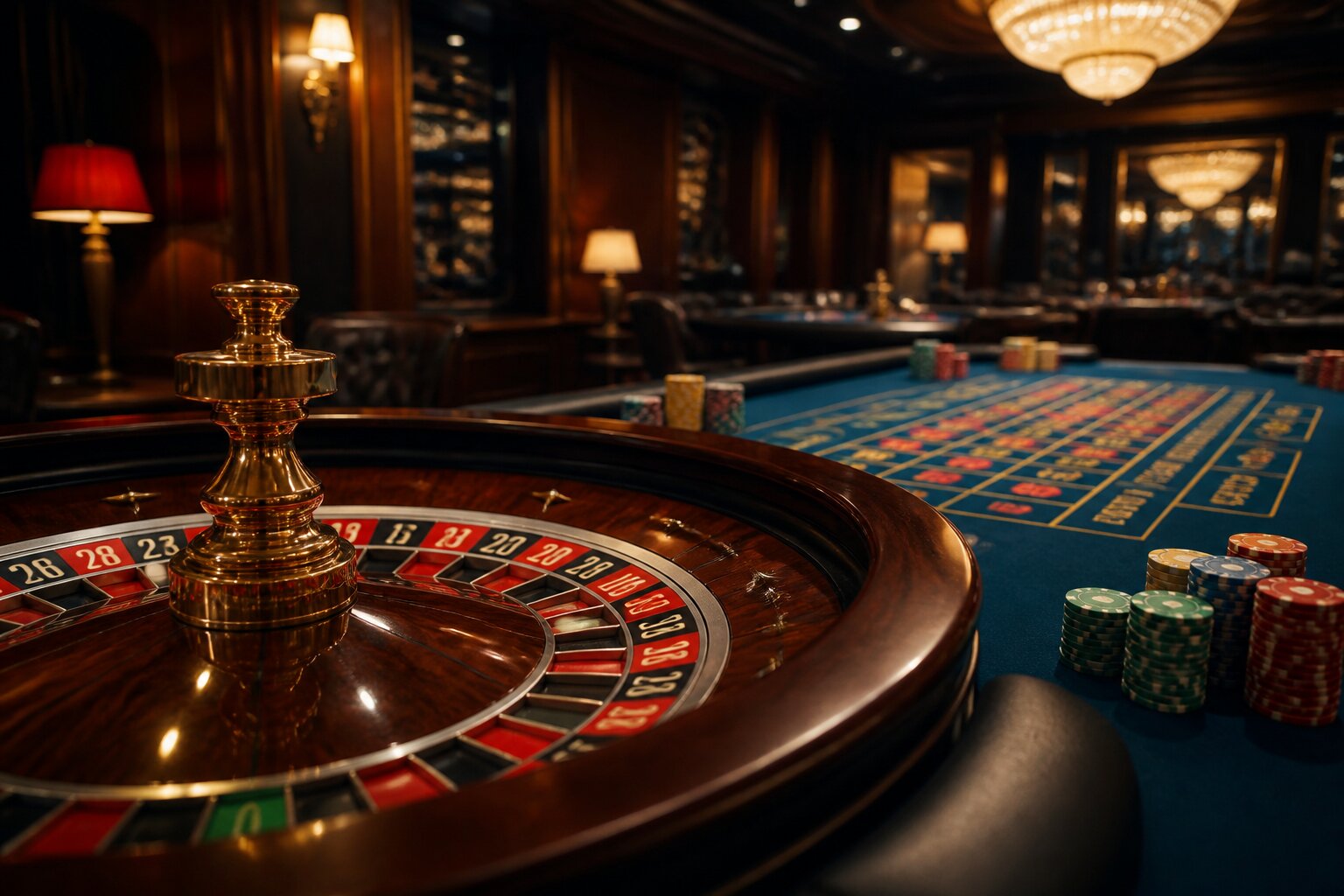
Ever wondered what goes on behind the flashing lights and spinning reels of online casinos? There is more to these games than the surface spectacle suggests.
From persistent myths to the operational details that rarely reach players, the casino world contains a mix of clear rules and common misunderstandings. Whether you’re new to gambling or have some experience, this guide will reveal the practical truths that matter when you play.
Ready to separate fact from fiction and understand how the industry really works? Let’s start with how casinos make their money and why that matters for every player.
How Do Casinos Really Make Money?
Casinos make their profits through a built-in mathematical advantage called the house edge. That margin is applied to all games and reflects the way payouts compare with the odds; over many plays, it ensures the business covers costs and remains viable.
Each bet, spin or hand carries a probability profile set by the game rules and payout structure. For example, a slot or a blackjack hand is arranged so the long-term expected return favours the operator by a small percentage. That does not imply manipulation; regulated games are independently tested to confirm outcomes are random and meet industry standards. The house edge simply explains why, statistically, the operator returns a fraction of stakes as profit over time.
Understanding the house edge helps you choose games with clearer expectations. The next section looks at exactly what that edge means for players and how to interpret the percentages you see.
House Edge Explained: What Players Need To Know
The house edge is expressed as a percentage indicating how much of all stakes a casino expects to retain over time. If a game shows a 3% house edge, that is the average portion the operator anticipates keeping from total wagers in the long run. It is a statistical expectation, not a promise about any single session.
Game types vary widely. Some table games and certain variants of poker or blackjack offer lower house edges when played with optimal decisions, while many slots have higher long-term margins. Independent auditors test and report on each game’s randomness and return-to-player figures so players can review the mechanics if they wish.
No betting method can alter the house edge. Knowing the figure for a game helps set realistic expectations and focus play on formats you find most enjoyable. With that in mind, many players ask whether outcomes are fair — the following section addresses that concern.
Are Casino Games Rigged? Unpacking the Truth
Concerns about rigging are common, but regulated operators must meet strict standards for randomness and fairness. Most digital games use certified random number generators that produce outcomes across a defined probability space. Independent testing agencies audit these systems and publish verification results to confirm compliance.
Regulation and auditing reduce the risk of foul play by ensuring games behave as declared. Operational controls and oversight make it difficult for staff or external parties to influence results. In short, the frameworks in place focus on transparency and measurable fairness rather than secrecy.
Understanding these controls sets the scene for dispelling the most persistent myths about gambling behaviour and winning streaks.
Common Myths About Casinos Debunked
Misunderstandings spread easily because people naturally look for patterns in rapid events. Many so-called tricks—like spotting timing patterns or machines being “due” to pay—ignore the fact that each outcome is independently generated under fixed probabilities. There are no secret signals or predictable rhythms that reliably forecast the next result.
Winning and Losing Patterns: Is There a Secret?
The belief that past outcomes can predict future ones stems from a cognitive bias known as the gambler’s fallacy. Each round is statistically independent; observing a sequence of results does not change the probability distribution for the next round. Players who try to infer a pattern from short-term motion are mistaking coincidence for causation.
This misconception can lead people to make riskier choices, chasing wins or trying to avoid perceived losses. In reality, long runs of similar outcomes are simply a normal feature of random processes. Understanding independence helps set realistic expectations and supports more responsible decision making.
"Hot" and "Cold" Slot Machines: Fact or Fiction?
Slots are often labelled “hot” or “cold” by players, but those labels don’t reflect how the underlying systems work. Each spin is governed by the same probability rules regardless of recent payouts, so a machine that has paid out recently is not statistically more or less likely to do so again. The appearance of streaks is a natural outcome of randomness and sample variation, not a manipulable state.
Perceptions of hot and cold machines are reinforced by selective memory, where people remember striking examples and forget the many ordinary sessions. Casino operators use random number generators and regulated procedures to ensure outcomes follow expected probabilities rather than human intuition.
Now that some myths are cleared up, let’s look at what actually happens behind the scenes in casino operations.
Behind the Scenes: The Hidden World of Casino Operations
Casino operations are a combination of technical systems and human oversight designed to keep services running smoothly and securely. Teams manage game integrity, customer service, security and compliance, while technology handles the heavy lifting of randomisation, payment processing and monitoring.
Operational design matters: clear navigation, accessible support and reliable systems all contribute to a safe playing environment. Security operations protect personal data and financial transactions, while compliance teams work with auditors to keep standards high.
These operational priorities influence how casinos shape the player experience, which leads into how design and surveillance support both service and safety.
Casino Design Tricks: Why Nothing Is Left to Chance
Design choices—visual layout, menu structure, and how games are presented—are made to help players find what they want and to keep interfaces usable. Online platforms focus on clarity and speed so navigation is straightforward, while physical venues arrange games and facilities to make activities easy to access.
Design is about user experience rather than affecting game outcomes. Clear, accessible interfaces and helpful information support informed play and make it easier for players to use protection tools when needed.
Surveillance and Security: How Are Players Watched?
Security combines technical and human measures. Land-based casinos rely on monitoring and trained staff to spot irregularities, while online operators use identity checks, transaction monitoring and automated alerts to identify suspicious activity. These protections safeguard customers and prevent abuse without compromising legitimate privacy expectations.
Good security underpins trust in the system and helps keep the experience fair for everyone, which naturally connects to the ways operators influence player engagement and retention.
How Do Casinos Influence Player Behaviour?
Casinos employ design, rewards and communication to shape how players interact with games. Game features such as visual feedback and audio cues create an engaging environment, while loyalty schemes and Promotions encourage repeat visits. These tools are intended to enhance the experience rather than alter game probabilities.
Promotions and loyalty benefits come with terms and conditions and are delivered within regulatory frameworks that demand clarity. Operators must present offers transparently and make protective tools available, such as deposit limits and account controls, so players can manage their engagement.
Industry safeguards aim to prevent harm while allowing players to choose how they want to play. With that context, it’s useful to hear what insiders say about rewards and player categories.
Industry Insights: What Casino Staff Won’t Tell You
Staff emphasise systems and service rather than secret methods of winning. Their daily work is wide-ranging and tends to focus on managing the practical running of the venue, handling customer enquiries, ensuring compliance with regulations and maintaining a safe environment for everyone. Because of this, the insights they offer are usually about operational realities rather than any hidden advantage that could change a player’s chances.
When staff talk about games they will often explain publicly available information, such as how a particular game operates, what the published return to player percentages mean, or how volatility affects prize frequency. They will not and cannot provide tips that alter the underlying mathematics of a game. Anything resembling a shortcut to guaranteed wins would be false and is strictly outside the remit of legitimate operations.
The Role of Casino Comps and Rewards
Comps and rewards are methods of recognising regular customers. They may include perks such as complimentary items, discounted services or loyalty points that can be exchanged for goods or further play. These incentives are intended to encourage continued engagement and to reward loyalty, not to change game mechanics or probabilities.
Allocation of rewards follows clear terms and conditions so benefits remain transparent and fair. Schemes typically operate on a tiered basis with defined criteria for earning and redeeming rewards, and operators set expiry periods and other rules to ensure consistency. From a regulatory perspective, these programmes must also align with responsible gambling measures and cannot be used to obscure the fairness of play.
Staff Perspectives on High Rollers and Regulars
High-stakes players and regular visitors may receive more personalised services or communications, but that attention is about customer care rather than any preferential treatment in the games themselves. Tailored services commonly cover hospitality, account management and bespoke offers, such as invitations to exclusive events or dedicated account support.
All customers remain subject to the same game rules and oversight. Operators must apply the same standards for fairness, security and compliance to every player. Staff also play a role in monitoring play for signs of harm, carrying out identity checks and enforcing anti-money laundering safeguards, so their interactions with high-value customers often involve additional due diligence rather than changes to odds or payouts.
Having explored staff roles and incentives, the next section examines how online platforms have reshaped the wider gaming landscape.
The Impact of Online Casinos on Traditional Gaming
Online casinos have expanded access and convenience, while land-based venues continue to offer a social and entertainment-focused experience. Digital platforms provide tools such as account limits, time reminders and instant support options that assist players in managing their activity, while physical casinos offer in-person staff and visible security measures.
Both environments operate under rigorous oversight and testing. Players choose based on whether they value convenience, atmosphere or a mix of both. The key point is that the same core rules about fairness and protection apply across formats, even if the delivery differs.
With that comparison in mind, it helps to know the practical steps players can take to protect themselves during play.
Responsible Gambling Matters
Keeping play proportionate and safe relies on clear personal boundaries. Setting and sticking to financial and time limits helps avoid harm. If gambling stops being enjoyable, pausing activity and reassessing involvement is sensible.
Choose operators that provide clear information about game rules, return profiles and available account controls. If difficulties arise, confidential support services and self-exclusion options are available free of charge.
Where to find support
If you need confidential advice or practical assistance, organisations such as GamCare, BeGambleAware and the National Gambling Helpline provide information, tools and support services. These resources are accessible to anyone seeking help.
Keep these measures in mind to ensure gaming stays a controlled, informed leisure activity rather than something that causes harm.
Remember, understanding how casinos operate and recognising common myths makes it easier to enjoy gaming responsibly and with realistic expectations.
**The information provided in this blog is intended for educational purposes and should not be construed as betting advice or a guarantee of success. Always gamble responsibly.