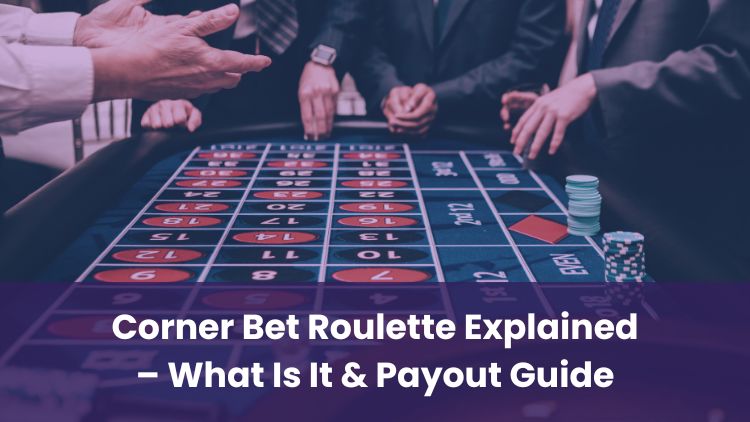
Roulette offers many ways to place bets, and the corner bet is one option that some may not notice straight away. This type of bet gives players flexibility when choosing numbers to cover during a game.
Some people may be unsure about how to place a corner bet or how the payouts compare between European and American roulette. Understanding the table layout and the chances of winning may help players make more informed decisions.
This guide explains exactly what a corner bet is, how it works, and how much it pays out in different types of roulette. It also covers how to read the table, how to work out returns, common mistakes, and myths you may come across.
What Is a Corner Bet in Roulette?
A corner bet in roulette is a type of inside bet that covers four numbers at the same time. It is also sometimes called a square bet.
To place a corner bet, a chip goes on the point where four numbers meet on the table layout. This position lets one bet cover all four numbers at once.
For example, placing a chip at the intersection of 1, 2, 4, and 5 will cover these numbers. If the ball lands on any of the four chosen numbers, the corner bet wins.
Corner bets may suit those who want to cover a small cluster of numbers with a single chip rather than selecting individual numbers. It offers a different approach from betting on single numbers or larger groups.
How Do You Place a Corner Bet on the Table?
To place a corner bet in roulette, put a chip on the shared corner point of four numbers on the table layout. This spot is where the lines dividing the numbers meet.
For instance, to cover 10, 11, 13, and 14, the chip should sit exactly on the intersection where all four numbers touch. If it sits entirely on one number or only on a line between two, the bet will not count as a corner.
Corner bets are only possible where there is a clear intersection of four numbers on the main section of the table. Numbers at the very edge of the grid will not always have a valid four-number corner. Most tables also set separate minimum and maximum limits for inside bets, so it is worth checking the rules beside the layout.
Once placement is clear, the next question is what the bet pays on each type of wheel.
Corner Bet Payouts: European Versus American Roulette
Corner bet payouts in roulette are based on the type of wheel used. European and American roulette tables have different layouts, which may affect the chances and outcomes for this bet.
European (Single-Zero) Payout
On a European roulette wheel, which has a single zero, a corner bet pays 8 to 1. If the bet is successful, the player receives eight times their stake plus their original bet back.
The European layout has 37 pockets (numbers 1–36 plus a single zero). Having just one zero gives a slightly higher chance for any inside bet to be successful compared to the American version.
American (Double-Zero) Payout
In American roulette, the corner bet also pays 8 to 1. However, the wheel contains an extra pocket, the double zero (00), bringing the total to 38.
This extra pocket slightly decreases the chance of landing a winning number for a corner bet. The payout stays the same as European roulette, but the probability of winning differs.
With payouts covered, it helps to look at the actual chances next.
What Are the Chances of Winning a Corner Bet?
The chances of winning a corner bet in roulette depend on the type of wheel in use.
On a European wheel, there are 37 pockets. A corner bet covers 4 of these, so the probability of winning is 4 out of 37, which is about 10.8%.
On an American wheel, there are 38 pockets. With a corner bet still covering 4 numbers, the probability is 4 out of 38, or roughly 10.5%.
The chances are always slightly lower on the American wheel due to the extra pocket. Keeping that in mind makes it easier to compare tables and choose where to play.
Knowing the probability makes it simpler to estimate potential returns.
How to Calculate Corner Bet Returns Quickly
It can be helpful to know how much a winning corner bet would return. The calculation uses the standard payout and the stake placed, and it always includes the original stake in the final return.
Example Calculation for a £10 Corner Bet
A corner bet usually pays 8 to 1. So, a £10 stake would win £80, and with the £10 stake added back, the total return would be £90.
This applies on both European and American wheels, as the stated payout for a corner bet is the same on each.
How to Read the Table Layout for Corner Bets?
To spot where a corner bet may be placed, look at the central section of the roulette table, where the numbers sit in a grid.
Each number occupies a box, and at certain points, four boxes touch at their corners. These intersections form a small square. That is where a chip for a corner bet should be placed.
Numbers located at the outer edges of the grid will not always have four adjoining numbers, so not every position allows a corner bet. Focus on the inner part of the layout, where the four-number intersections are clear. With a little practice, identifying these spots becomes quick and intuitive.
Once the layout makes sense, it is easier to weigh up when a corner bet fits your overall approach.
Corner Bet Advantages and Limitations
A corner bet covers four numbers with a single chip, sitting between betting on a single number and backing larger groups. This can appeal to anyone who wants targeted coverage without spreading too many chips across the layout.
The payout sits between outside bets, such as dozens or columns, which pay less but cover more numbers, and higher-paying inside bets like splits and straight ups, which pay more but cover fewer numbers. A corner bet offers mid-range coverage with a mid-range return.
There are limits to keep in mind. The chance of success is still relatively modest compared to bets that cover larger sections of the wheel. Not every part of the table layout qualifies for a corner bet either, so choices are restricted to certain intersections.
Understanding both the potential return and the probability helps set realistic expectations and keeps betting decisions consistent with your budget.
Common Mistakes With Corner Bets
A frequent mistake is chip placement. If the chip sits on the line between only two numbers, the bet becomes a split, not a corner. It needs to rest precisely at the intersection of four numbers.
Another issue is trying to place corner bets on edge positions where four-number intersections do not exist. Only the inner grid offers true corner points.
Confusion around payouts or table rules can also cause problems. While 8 to 1 is standard, it is sensible to check the information on the layout, including any minimum and maximum stakes for inside bets.
Some people focus on how many numbers are covered and overlook the actual probability or how the bet fits into their overall spend. A quick check against your budget keeps things on track.
Misunderstandings often come from myths, so it is worth addressing those next.
Common Myths About Corner Bets: Are They True?
There are several myths about corner bets in roulette. One common belief is that choosing certain sets of four numbers can influence the outcome. In reality, each spin is independent, and every number has the same chance of being selected regardless of previous results.
Another myth is that corner bets have different payouts on different standard tables. While rules may occasionally vary, both European and American roulette normally offer the same 8 to 1 payout for a winning corner bet.
Some think that covering multiple numbers with corner bets can secure consistent returns. Every bet type is designed with a house advantage, so no staking pattern can remove it.
Lastly, some players believe certain sequences of corner bets can change results. The random nature of roulette means no system can alter the basic odds.
If you choose to play, set limits that suit your circumstances and only stake what you can afford. If gambling starts to affect your well-being or your finances, seek support early. Independent organisations such as GamCare and GambleAware offer free, confidential help for anyone who needs it.
Understanding how corner bets work, from placement to payouts, helps you make clear, informed choices whenever you sit at the table.
**The information provided in this blog is intended for educational purposes and should not be construed as betting advice or a guarantee of success. Always gamble responsibly.