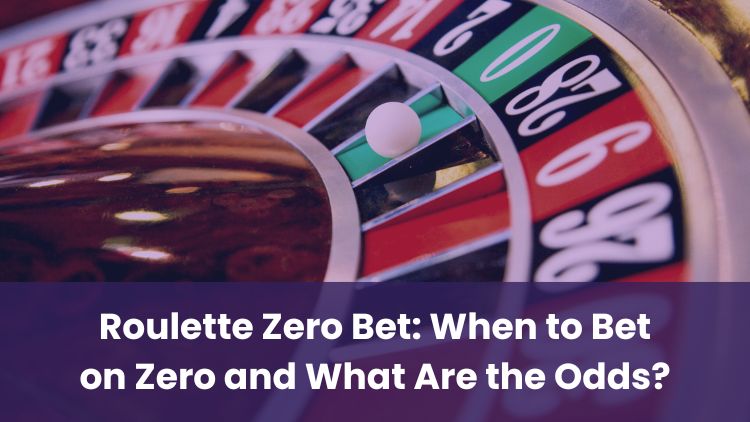
Zero holds a unique place in roulette, acting as a quiet game-changer for every spin. While most attention goes to red or black and favourite numbers, the green zero has a bigger influence than many realise.
This blog post looks at what it means to bet on zero, how often it appears, the impact of wheel type, and what payouts apply. It also explains key table rules such as En Prison and La Partage, and how zero interacts with other bets.
You will also find clear, practical context on placing a zero bet in casinos and online, plus a grounded view of whether zero-focused strategies make sense. Play should always stay within personal limits, with gambling treated as paid entertainment.
What Is A Zero Bet In Roulette?
A zero bet in roulette is a straight up wager on the single green zero pocket found on European wheels. Players choose it the same way they would any other number, placing a chip on the zero square on the betting layout.
Because it is a straight up bet, it covers only that one pocket. Zero is neither red nor black, and it is not odd or even, so it sits outside many of the common even-money options. This is why the presence of zero changes the outcome of a lot of other bets.
Understanding what the zero bet covers sets up the next question: How often does it actually appear?
How Likely Is Zero To Come Up On The Wheel?
The chance of the ball landing on zero depends on the type of wheel in use.
On a European wheel, there are 37 pockets in total, numbers 1 to 36 plus a single zero. That gives zero a probability of 1 in 37, about 2.70% on any individual spin.
On an American wheel, there are 38 pockets, numbers 1 to 36, a single zero, and a double zero. The chance of landing on the single zero is 1 in 38, roughly 2.63%. If counting either zero pocket, 0 or 00, the combined chance is 2 in 38, about 5.26%.
Each spin is independent, so previous results do not influence the next outcome. With those basics in place, it is easier to see why the wheel you choose matters.
Does Wheel Type Change The Odds?
Yes, wheel type affects the probabilities for every bet, including zero.
European roulette has a single zero and 36 other numbers, so any specific pocket, including zero, has a 1 in 37 chance on each spin.
American roulette adds a double zero, increasing the pocket count to 38. That means any specific pocket has a 1 in 38 chance, and the two zero pockets together have a 2 in 38 chance. The extra pocket increases the house edge, which has a knock-on effect for returns.
Those returns come into focus when you look at how the game pays and what the expected figures look like over time.
How Much Does A Zero Bet Pay And What Is The Expected Return?
A straight up bet on zero pays 35 to 1. A £1 winning bet returns £35 in winnings plus the £1 stake, for £36 in total.
Because the payout does not match the true odds, the expected return over time is negative. On a European wheel, the house edge is 2.70%, so the expected long-term loss is about 2.7 pence for every £1 staked. On an American wheel, the house edge is 5.26%, so the expected loss rises to about 5.26 pence per £1. This applies to straight up bets, including zero, and is built into roulette’s design.
Zero does more than shape payouts on its own number; it also affects what happens to other bets when it appears.
How Does Zero Affect Other Bets On The Table?
Zero has a special status in roulette because it is not covered by the usual even-money bets. If zero is spun, outside bets like red or black, odd or even, and high or low normally lose. This single pocket is a key reason the game has a house edge.
However, some tables introduce rules that soften the impact on even-money bets when zero appears.
En Prison and La Partage Rules Explained
On some European tables, La Partage returns half of an even-money stake if zero lands, and the other half is settled as a loss. En Prison holds the even-money stake on the layout for one more spin if zero appears. If the next spin wins, the original stake is returned without profit; if it loses, the stake is then lost.
These rules can improve the maths on even-money bets. On a European wheel, La Partage typically lowers the house edge on even-money wagers to about 1.35%, with En Prison providing a similar effect. Availability varies by table, so it is worth checking the rules before play.
With that in mind, when might a zero bet fit into a wider selection?
When Should You Bet On Zero?
A zero bet is a straightforward way to add a single-number chance to a bet selection. Some players include it for variety, others use it to extend coverage when focusing on the wheel area around zero.
There is no timing advantage for betting on zero. On a fair wheel, each number, including zero, has the same independent probability on every spin. That means choosing zero is a matter of preference, not a statistical edge.
Zero can also sit within broader approaches that cover sectors near it on the wheel, which leads naturally to the special bets that target this area.
How Do You Place A Zero Bet On Table, Wheel And In Live Games?
In a casino, a zero bet is placed by putting a chip on the zero square of the table layout. Online, the betting interface mirrors this, allowing the player to select zero on the digital layout. Live dealer games use the same style of interface, with the bet confirmed before the wheel is spun.
Some formats offer racetrack views and predefined patterns that include zero within a cluster of nearby numbers. Game information panels usually outline how these features work, along with the staking needed for each pattern.
If that cluster around zero appeals, there are classic variations that focus on it directly.
Variations And Called Bets That Target Zero
Several called bets highlight the section of the wheel around zero. The best known is Neighbours of Zero, or Voisins du Zéro, which covers zero plus a run of numbers on either side, 17 pockets in total. This is placed using a set of split and corner bets that map to that arc on the wheel.
Zero Spiel, or Zero Game, narrows the focus to a small group of numbers closest to zero on a European wheel, using fewer chips and a tighter footprint than Voisins. These options are common at French and some European tables and are also available on many online racetrack layouts.
Because these are predefined patterns, it helps to review the chip layout and total stake before committing, so the coverage and cost are clear.
Common Myths About Betting On Zero
A frequent misconception is that zero becomes “due” after not appearing for a while, known as the gambler’s fallacy. In reality, each spin is independent and previous results do not affect the next outcome.
Another claim is that casinos alter wheels to push results towards or away from zero. Licensed operators are required to use regulated and tested equipment, and online games are independently checked, so the distribution across pockets is designed to be fair.
Systems that promise to force a win on zero fall into the same trap. No staking pattern changes the underlying probability, and there is no method that can guarantee a result.
With the myths set aside, it is easier to focus on choices that a player can control, such as how much to stake and for how long.
Practical Considerations For Bankroll And Stake Size
Setting a clear budget for a session helps keep play manageable. Keeping stake sizes in proportion to that budget means bets are less likely to feel pressured, and smaller wagers can make a session last longer than occasional large stakes.
It can be helpful to decide on typical bet sizes in advance and to pause if results begin to influence decisions. Losses are part of roulette and cannot be undone by raising stakes, so chasing outcomes tends to add risk without improving the odds. Regular breaks and an honest check-in with how you feel can keep play within comfortable boundaries.
If you choose to play, do so within limits that suit your circumstances and only with money you can afford to spend on entertainment. If gambling starts to affect your well-being or your finances, seek support early.
Understanding how zero works, from probabilities to table rules, makes it easier to make informed choices and enjoy the game on your terms.
**The information provided in this blog is intended for educational purposes and should not be construed as betting advice or a guarantee of success. Always gamble responsibly.