
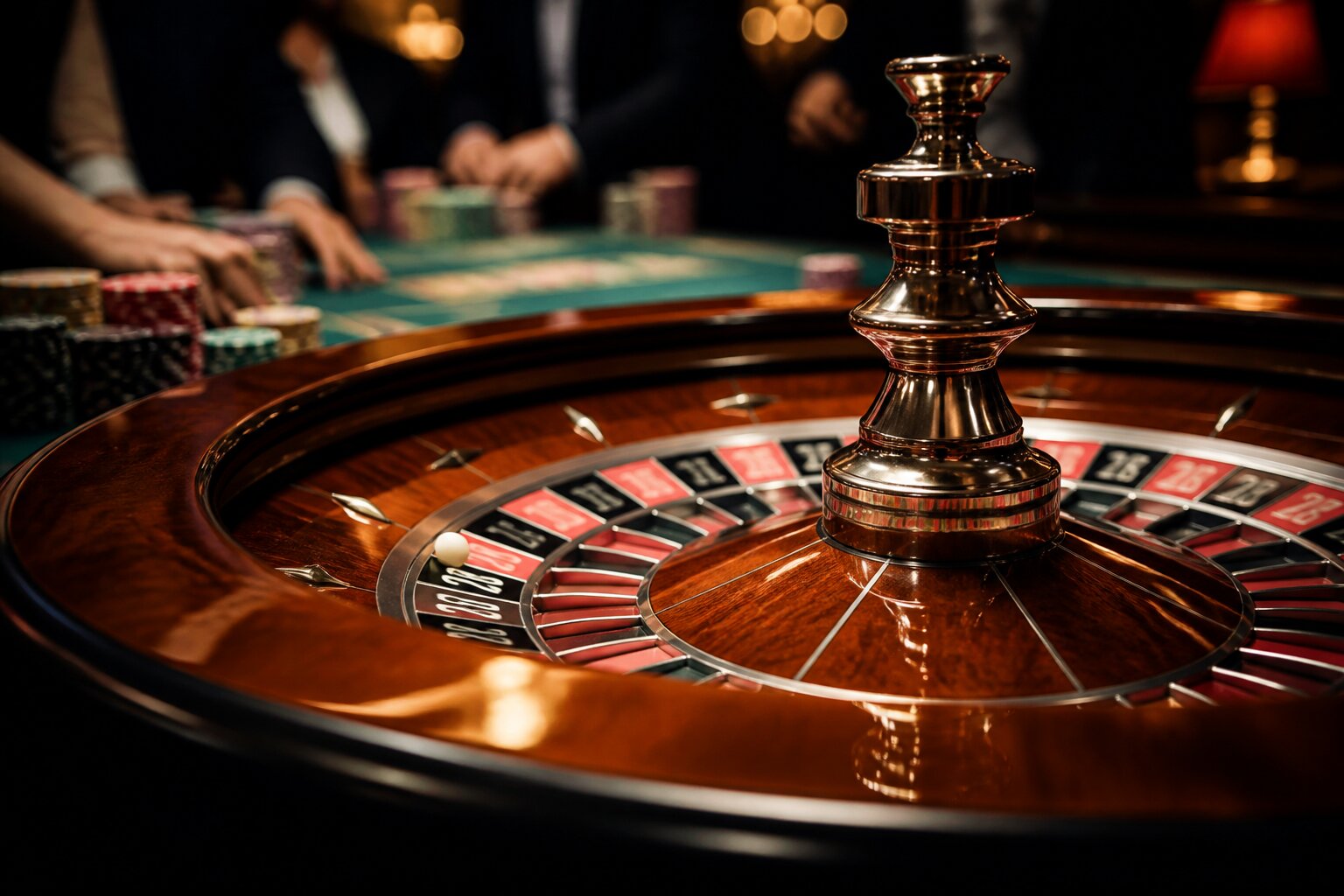
Ever wondered if there’s a number that players should really avoid at the roulette table, or if certain spots simply seem to cause more grief than others? Many players hold strong views about particular numbers, whether from personal experience or well-known stories.
Beneath those stories lies precise maths and fixed rules that determine how each spin pays out. From the single green zero to the double zero used in some wheels, every pocket affects the odds in a defined way.
Curious which number, if any, deserves the label of “worst”, and how the wheel design changes your chances? The sections that follow explain the mechanics, compare wheel types, and show what the numbers actually mean for bets and payouts.
What Are the Unlucky Numbers in Roulette?
Certain numbers pick up reputations at roulette tables because of superstition, memorable losing runs, or cultural associations. For example, 13 is widely considered unfortunate in some cultures, while 17 is often talked about because of high-profile stories where it featured in big losses.
The green zero (and double zero in American roulette) is frequently blamed when a run of red or black breaks, since those pockets push outsized bets towards the house. That reaction comes from how the rules treat the zero pockets, rather than from any inherent bias in wheel outcomes.
Though players may swear a particular number is “jinxed”, the statistical reality is that every spin is independent and each pocket has the same theoretical probability of being landed on. Fair roulette—whether run on a certified physical wheel or by a tested random generator—doesn’t give any number a systemic advantage or disadvantage.
How Does the Roulette Wheel Affect Your Chances?
The wheel’s layout directly changes the probabilities you face and the average return the casino expects to make. Small differences between wheel types can have a noticeable effect on the house edge and on the value of particular bets.
European wheels have 37 pockets: numbers 1–36 plus a single zero. American wheels add a double zero to make 38 pockets. That extra pocket increases the house advantage and reduces the true odds you’re getting for most bets.
Knowing how zeros influence payouts helps explain why some bets seem less favourable than they first appear, and it points to which wheel usually offers better value for the player.
European vs. American Roulette Wheels
A European wheel’s 37 pockets give a straight-up bet on one number a theoretical chance of 1 in 37. The house edge on that wheel works out to about 2.7%. With an American wheel’s 38 pockets, the inclusion of both zero and double zero raises the house edge to about 5.26%.
That difference means the same bet on an otherwise identical table will, on average, lose more quickly on the American wheel than on the European wheel. For players looking to reduce the long-term cost of play, this distinction matters.
The contrast between wheel types also affects certain specialised bets; some wagers available on American tables carry a notably higher house edge than any mainstream European option.
The Role of Zero and Double Zero
Zero pockets are the structural reason casinos retain an edge over the player. Many even-money bets—red/black or odd/even, for example—do not include zero, so when zero appears those bets lose and the house collects.
The single zero in European roulette offers slightly closer-to-fair payouts than the double-zero variant. That’s why players who want the best mathematical odds usually prefer European-style tables: fewer green pockets mean improved expected returns on the same bets.
Understanding how zeros alter payout fairness is useful when choosing which version of the game to play, and it leads naturally into how players form preferences about particular numbers.
Why Do Players Avoid Certain Numbers?
Players’ avoidance of specific numbers usually stems from psychology rather than probability. A bad run after betting a particular number or a memorable loss can create a persistent dislike of that number, and cultural beliefs about numerals play a role too.
Personal experience is particularly persuasive: when someone loses repeatedly on a number, that memory colours future choices. Likewise, some numbers are associated with sorrowful anniversaries or superstitions in certain communities, so those numbers get skipped at the table.
These behaviours don’t change the odds, but they shape how players pick numbers and view risk. Next, we’ll look at which types of bets carry the biggest house disadvantages so you can see how bet choice matters more than an individual number’s reputation.
Which Roulette Bet Has the Highest House Edge?
Different bet types are priced differently by the game’s payouts, and some carry a heavier expected loss than others. Knowing where the house edge is largest helps with informed decisions about where to place stakes.
Inside Bets: Odds and Payouts
Inside bets target single numbers or small clusters on the table—straight-up (one number), split (two), street (three), corner (four) and line (six). These bets pay proportionally more on a win; for example, a straight-up pays 35 to 1.
Despite higher payouts, inside bets have low hit probabilities. A straight-up on a European wheel has a 1 in 37 chance of success. The house edge on inside bets matches the table’s overall design (about 2.7% on European wheels), but certain niche bets on American wheels, such as the “top line” covering 0, 00, 1, 2 and 3, carry a much larger house edge (around 7.89%).
These differences show why the size of the payout isn’t the only factor to weigh—probability and edge matter too.
Outside Bets: Odds and Payouts
Outside bets cover larger portions of the wheel—red/black, odd/even, high/low—and therefore win more often, but at lower payouts, typically 1 to 1. Dozen and column bets cover 12 numbers and pay 2 to 1.
Although the house edge is still present on outside bets, the higher hit rate means they suit players seeking steadier, smaller wins. The choice between inside and outside bets is a trade-off between payout size and probability, and it’s the house edge imposed by the wheel that determines the long-term expectation.
With the mechanics of bets and wheel types clear, the idea of a single “worst number” starts to look less meaningful than the broader structure that governs returns.
Is the "Worst Number" a Myth?
Yes—claiming one specific pocket is the worst misunderstands how roulette works. The game’s rules and the wheel’s construction set fixed probabilities that treat each numbered pocket equally on a theoretical level. Stories of persistently bad numbers usually arise from selective memory and human pattern-seeking.
Roulette outcomes are produced under controlled conditions that ensure each spin is independent. No betting system, superstition, or strategy can change the underlying probabilities built into the wheel. Recognising this helps prevent chasing sequences or interpreting short runs as meaningful trends.
Understanding this is key to forming sensible expectations about the game, which leads into a closer look at how odds are calculated and why they matter for players’ choices.
How to Understand Roulette Odds and Probabilities
Odds in roulette come from the ratio between the numbers covered by a bet and the total pockets on the wheel. A straight-up bet on a European table covers 1 of 37 pockets, while a red/black bet covers 18 of 37. That simple ratio sets the probability of a win for each bet type.
Payouts are deliberately set a bit lower than true odds; a straight-up pays 35 to 1 even though the chance of winning is 1 in 37, which is why the house earns an edge over many spins. No sequence of past spins alters those ratios, because each spin is independent.
Grasping these mechanics lets players compare bets on a rational basis and pick options that match their tolerance for risk. It also clarifies why avoiding a single number won’t change long-term outcomes—the structure of the wheel and the payout schedule do.
Summary: Key Takeaways on Unlucky Numbers and House Edge
In roulette, numbers gain reputations through stories and personal experience, not because the wheel treats them differently. The single and double zero pockets are what create the house edge, and choosing European rather than American wheels generally offers better expected returns.
Inside bets give higher payouts but lower chances of success, while outside bets win more often with smaller payouts. No bet eliminates the house edge, and no system changes the mathematical expectation set by the wheel.
Play with clear expectations about probabilities, set limits you can stick to, and keep wagering within those boundaries. Enjoy the experience with a view of the maths behind it, and you’ll approach the game with a better sense of what each spin actually means.
**The information provided in this blog is intended for educational purposes and should not be construed as betting advice or a guarantee of success. Always gamble responsibly.