
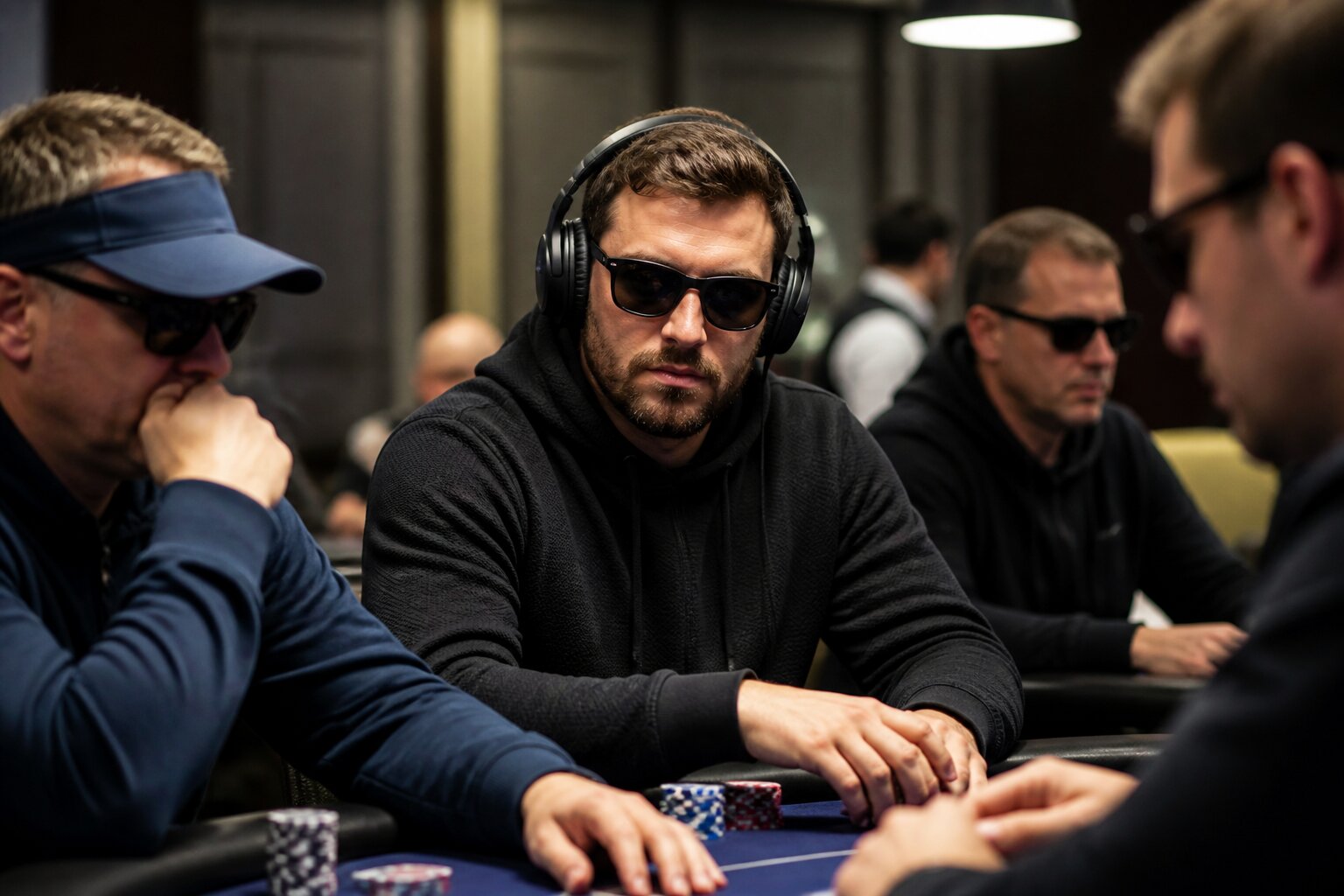
If you’ve ever watched a game of poker, you’ll have noticed players hiding behind sunglasses, pulling on visors, or plugging in headphones at the table. It’s almost part of the scene—cards in one hand, shades on, and a poker face that says nothing.
But what’s the real purpose of these accessories? They’re not just fashion statements. Read on to find out why so many players bring their own headgear and what it actually does for their game.
The Psychological Edge: Hiding Tells & Emotions at the Table
Poker is as much about reading people as it is about the cards. Tiny movements, a quick glance or a change in breathing can reveal more than a player intends. That’s why many people use sunglasses, visors and headphones.
Sunglasses conceal eye movement, which can be a clear giveaway if someone brightens or looks away when their hand improves or weakens. Visors shade the upper face and help keep expressions neutral under pressure. Headphones, aside from blocking sound, create a private space that some players find helps them manage tension.
These accessories are tools for managing what other people can observe. They do not turn poor decisions into good ones, but they can make it harder for opponents to read obvious physical signals. Use of such items is generally acceptable, though venues may have rules about them in particular situations.
Can Sunglasses or Visors Really Prevent Opponents Reading You?
They help, but they are not foolproof. Covering your eyes or hiding part of your face removes some obvious tells, yet experienced opponents look for other signals. Changes in posture, hand rhythm, bet sizing and timing can all communicate information. Even the way a chip is pushed forward or a card is handled can be noticed.
Wearing accessories is therefore part of a wider approach to table presence. Players who aim to be unreadable often combine composure, consistent behaviour and betting patterns with whatever they wear. Ultimately, fairness and respect are central at the table, and accessories should not be used to disrupt play or gain an unfair advantage.
What Role Do Headphones Play During Poker Games?
Headphones are common because they alter a player’s sensory environment. In a busy room they reduce distraction and help a player block out chatter and clatter, making it easier to keep attention on action at the table. Many people also use music or ambient sounds to create a steady mental rhythm that helps them stay focused during long sessions.
Players choose headphones for several practical reasons:
- to cut down on external noise so concentration is easier,
- to mask disruptive sounds that break thought processes,
- to sustain attention and energy over many hours,
- to control mood and manage nerves in tense moments.
That said, headphones can reduce awareness of table dynamics and subtle cues, so many players keep the volume low or remove them at critical points in a hand. Dealers and floor staff may ask players to lower volume or take headphones off so they can be spoken to clearly, particularly during disputes or when important announcements are made.
It is important to remember that headphones are a personal aid rather than a strategic shortcut. Players must comply with venue and tournament rules: staff may restrict the use of certain devices, and using headphones to access outside assistance or receive information would be prohibited.
Social Interaction: Are These Accessories Anti-Social?
People’s reactions vary. Some find that sunglasses or headphones create distance, which can make a table feel less friendly. Others prefer a degree of separation so they can focus without social pressure. Either way, being aware of how you come across helps maintain a good atmosphere.
Small gestures—like removing headphones briefly or exchanging a few words between hands—can balance personal comfort with the social side of poker. That creates a better experience for everyone at the table without sacrificing the benefits of your chosen accessories.
People often adjust how they use accessories depending on the setting. In relaxed cash games, casual chatter is common; in serious tournaments, quieter focus is the norm. Adapting to the table helps avoid unintended friction.
How Casinos and Poker Rooms View Player Accessories
Rules differ between venues. Many poker rooms allow sunglasses, visors and headphones, but they may impose limits at certain times such as during televised sessions, final tables or when a player is required to show cards. These measures are intended to keep play clear and transparent when it matters most.
Staff will explain any local restrictions when you arrive, and players are expected to follow them. Where rules require removal of an item, it is usually for practical reasons—ensuring the integrity of play and clear communication. Checking house rules beforehand avoids awkward moments and keeps the game moving smoothly.
Are There Myths About Poker Players Using Sunglasses, Visors or Headphones?
There are several common misconceptions about players who wear sunglasses, visors or headphones at the table. One widespread belief is that these items confer a decisive advantage. In truth, they mainly obscure certain signals and do not change the underlying maths or strategy required to win consistently.
Another misconception is that only professional players use such accessories. In reality, players of all skill levels, from complete novices to seasoned pros, may wear them for a variety of reasons, including comfort, concentration or habit.
What truly matters at the table is decision making, observation and experience. Accessories can help support those skills in modest ways, for example by:
- reducing distractions from other players or the room environment,
- helping a player avoid showing simple facial tells,
- allowing someone to focus on their thought process or a particular aspect of the game.
Even so, these items do not replace disciplined play, an understanding of strategy, or the ability to read the broader situation at the table. Good poker remains about patience, sound judgement and consistent execution rather than relying on props.
Should You Wear These Accessories While Playing Poker?
Choosing to wear sunglasses, a visor or headphones is a personal call shaped by comfort and the setting. If an item helps you maintain concentration or composure, it can be a useful part of your routine. At the same time, consider how it affects interaction with other players and whether venue rules impose limits.
Think about the environment you’ll be in and whether you need to stay alert to dealer announcements or other table cues. Balancing personal comfort with awareness of the game will give you the best experience.
If gambling causes concern, organisations such as GamCare provide support and information. Playing within set limits and monitoring your behaviour helps ensure poker remains an enjoyable activity.
**The information provided in this blog is intended for educational purposes and should not be construed as betting advice or a guarantee of success. Always gamble responsibly.