Blackjack is one of the most popular casino games in the world, prized for its quick pace and clear rules. But have you ever wondered where it began and how it became the game people recognise today?
Its origins reach back centuries, with scenes shifting from European card rooms to American gambling houses and, later, modern casinos. Along the way the rules and customs changed, producing the version most players encounter now.
If you want a compact but thorough tour of blackjack’s early history, the people and games that shaped it, and how it has moved into the digital age, read on to follow the game’s surprising journey.
What Are the Earliest Origins of Blackjack?
The earliest known roots of blackjack lie in 17th and 18th century Europe, where a card game called vingt-et-un, literally “twenty-one,” became widely played. That French game set out the basic aim that still defines blackjack today: form a hand with a value as close to 21 as possible without exceeding it. Accounts from the period show vingt-et-un appearing across social classes, from noble salons to public gaming rooms.
Similar games appeared elsewhere on the continent. Spanish references to veintiuna predate some written French sources and indicate that 21-based games were already established in Iberia. The famous novelist Miguel de Cervantes included a description of such a game in his writings, reflecting how familiar it was to contemporary readers.
When these games travelled to North America with European settlers, local dealers and players adjusted rules and payouts to suit new tastes and commercial pressures. That process of adaptation—small rule changes, altered card values and different betting customs—produced the distinct but recognisable line that leads from vingt-et-un to modern blackjack. This long, cumulative development explains why there is no single inventor to name, only a chain of influences and refinements that produced the game’s essential form.
The next section looks at how these early features were combined and altered over time to create the modern game.
How Did Blackjack Evolve into Its Modern Form?
Blackjack’s move from a family of European games into the structured casino form known today happened gradually. As the game spread, house rules and regional preferences introduced practical changes: who could double, which hands paid bonuses, and how ties were resolved. These adjustments shaped both strategy and the business model of the places that hosted the game.
Key mechanics that survive from the earliest variants include the fixed target of 21 and the dealer-versus-player dynamic, where players aim to beat the house rather than each other. Over time, explicit options such as hitting, standing and splitting became standardised. These options created real decision points for players and allowed skill to influence outcomes within the framework of probability and rules.
American gambling venues in the 19th and early 20th centuries further refined the rules to suit commercial play. Casinos and saloons experimented with payout structures and side bonuses to attract customers, and these tweaks introduced terms and practices that later settled into the mainstream. At the same time, the need for consistent, fair play led operators to implement clearer procedures for dealing and betting, which helped the game scale in larger venues.
Gaming regulators and operators later established standard rule sets for table play, which helped reduce disputes and made the game easier to learn. Alongside this formalisation, informal strategy knowledge—how to play particular hands against certain dealer cards—began to circulate among players. That interplay between rule changes, commercial incentives and strategic thinking is what produced the game’s current balance of simplicity and depth. This balance also underpins efforts to ensure play remains responsible and well-regulated.
Who Popularised Blackjack in Casinos?
Blackjack became widely popular as it moved into commercial gambling houses in the United States during the 19th and early 20th centuries. Saloons and private gaming rooms introduced the game to a broad audience and adjusted rules to increase appeal. These venues promoted the game through special payouts and visible tables, drawing new players who then shared the game socially.
As gambling became more organised, casino operators stabilised rules to create dependable experiences for customers. Consistent dealing procedures, set betting limits and clearer payouts made blackjack easier for casual players to try and for more skilled players to study. Dealers, floor managers and writers who explained the rules contributed to the game’s wider recognition, turning it from a regional pastime into a staple on casino floors.
The commercialisation of blackjack was not only about rules and promotions; it was also about presentation. Tables with clear layouts, well-trained dealers and published rule guides helped make the game approachable. That growing familiarity encouraged more people to try it, which in turn helped establish blackjack as a cornerstone of casino offerings. This story of popularisation leads naturally into the question of the game’s name, which has its own curious origin.
Why Is It Called "Blackjack"?
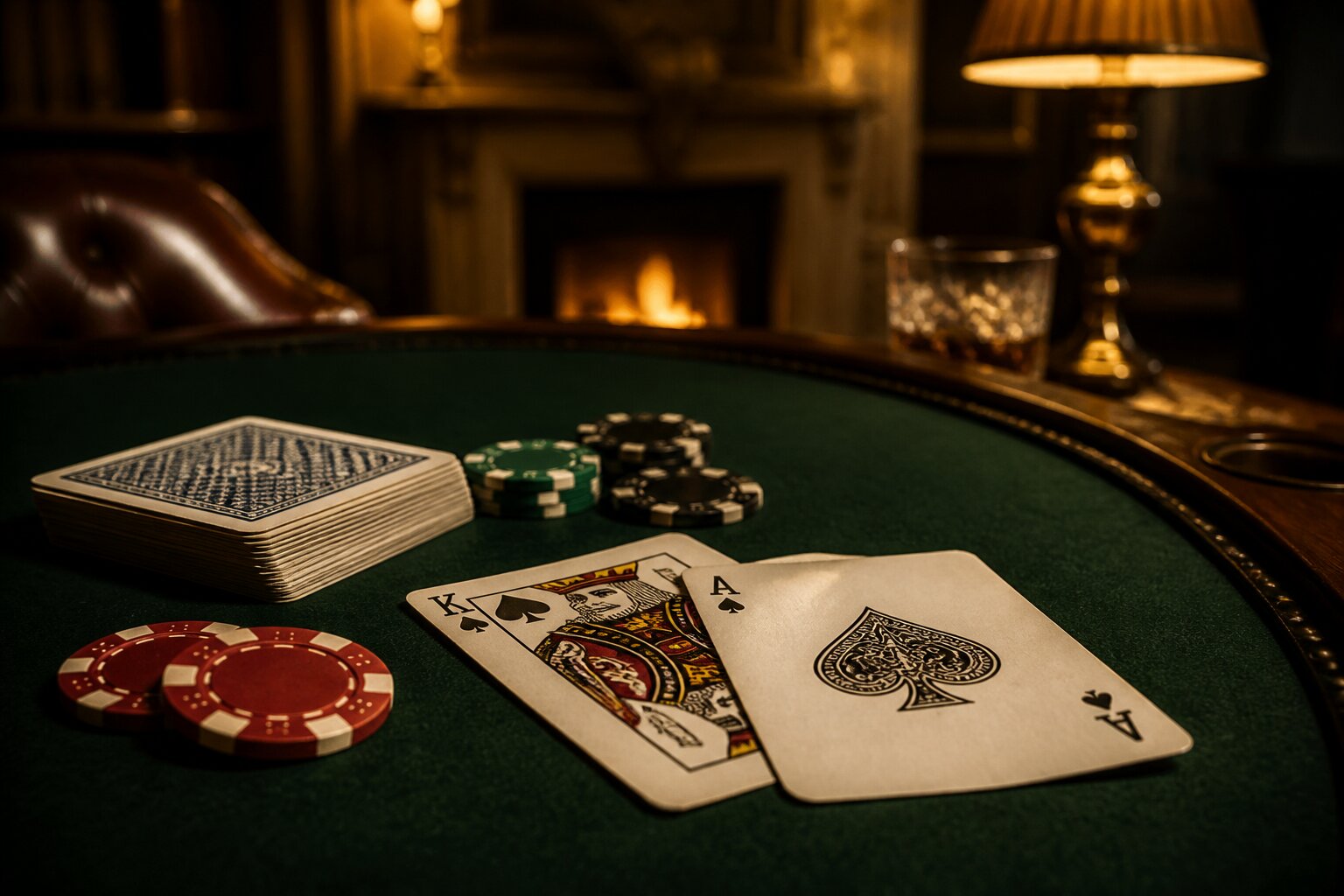
The name “blackjack” came from an early American promotion designed to attract players. Some establishments offered a ace with a black jack—either the jack of spades or the jack of clubs. That specific promotional combination became widely referred to as a “blackjack,” and although the special payout did not last, the name remained.
Over time the term broadened: a “natural” or “blackjack” came to mean any initial two-card hand consisting of an ace and a ten-value card, providing the highest possible two-card total of 21. The promotional origin explains the peculiar name, while the later, more inclusive definition reflects how practical usage settled on a simple and recognisable term for the best starting hand.
Why the game kept that label despite its promotional origin is a small example of how informal customs can become permanent terminology. Next, the article examines some common myths about where blackjack came from and how it developed.
Are There Common Myths About Blackjack’s Invention?
Several myths cloud blackjack’s early history. One persistent idea is that a single inventor created the game at a distinct moment. In truth, blackjack is the result of many incremental adaptations over centuries, not the work of a lone creator. Another misconception is that modern blackjack began in America; while the United States played a central role in popularising the game, the concept of reaching 21 dates back to European card traditions.
Some accounts also suggest that the rules have been static since the beginning, but historical evidence shows otherwise: who may double, how ties are handled and which payouts apply have all changed in different eras and places. Recognising these shifts helps explain why the game has been flexible enough to survive and thrive in different cultures and commercial settings.
Clear sources and historical records point to a cumulative history rather than a single origin story. Understanding that layered development gives a better sense of how the game's form and vocabulary evolved, and prepares us to consider how blackjack has influenced culture more broadly.
Blackjack’s Cultural Impact Through the Ages
Blackjack’s presence in literature and visual media has helped secure its place in popular culture. Early textual mentions signalled the game’s familiarity in social life, and later novels and films used blackjack scenes to explore tension, decision-making and human interaction at the table. These representations often highlight the interpersonal dynamic of the game—the choices players make and the role of the dealer—rather than any one-off outcomes.
In the 20th century, depictions of blackjack in cinema and television reinforced its image as a game where knowledge and composure matter. Writers and directors used table scenes to build character and conflict, and the game's simple structure makes it an effective dramatic device. At the same time, public interest in strategy—discussed in books and articles—helped spread knowledge about probability and decision-making beyond gambling circles.
Blackjack tables also became social spaces where different groups mixed, creating a cultural association between the game and communal entertainment. That social angle contributed to the game’s symbolic role in entertainment imagery and continues to inform how people think about table games today. Looking ahead, the article considers how blackjack adapts to new technology and what trends might shape its future.
What Does the Future Hold for Blackjack?
Blackjack is well placed to continue evolving as technology and player preferences change. Digital platforms have already introduced new formats—live dealer tables streamed in real time, mobile-friendly interfaces and a range of stake sizes—that make the game more accessible without altering its core rules. Those innovations replicate the social and strategic elements of traditional play while offering greater convenience.
Regulation and player protection will remain important influences. Operators increasingly provide tools that help players manage their activity, such as deposit limits and time reminders, and educational resources about healthy play are becoming a standard part of the user experience. These measures help sustain long-term participation by supporting informed choices.
Innovation may also bring new variants and side features that refresh the game for modern audiences, but the core appeal of clear decision points and an understandable objective will likely persist. With continued attention to fair play, clarity of rules and effective player protections, blackjack looks set to remain a prominent table game in both physical and online venues for the foreseeable future.
**The information provided in this blog is intended for educational purposes and should not be construed as betting advice or a guarantee of success. Always gamble responsibly.