Ever wondered what “face cards” are when you shuffle a deck? You’ve probably heard the term at the table, but there’s a bit more to them than the pictures on the cards.
Whether you play occasionally or are learning the basics, knowing what face cmards are helps you follow the rules of many games, from Blackjack to Poker. In this post you’ll find a clear definition, a touch of history, and why face cards matter in play.
Ready to dive in? Let’s start with the basics.
What Counts as a Face Card?
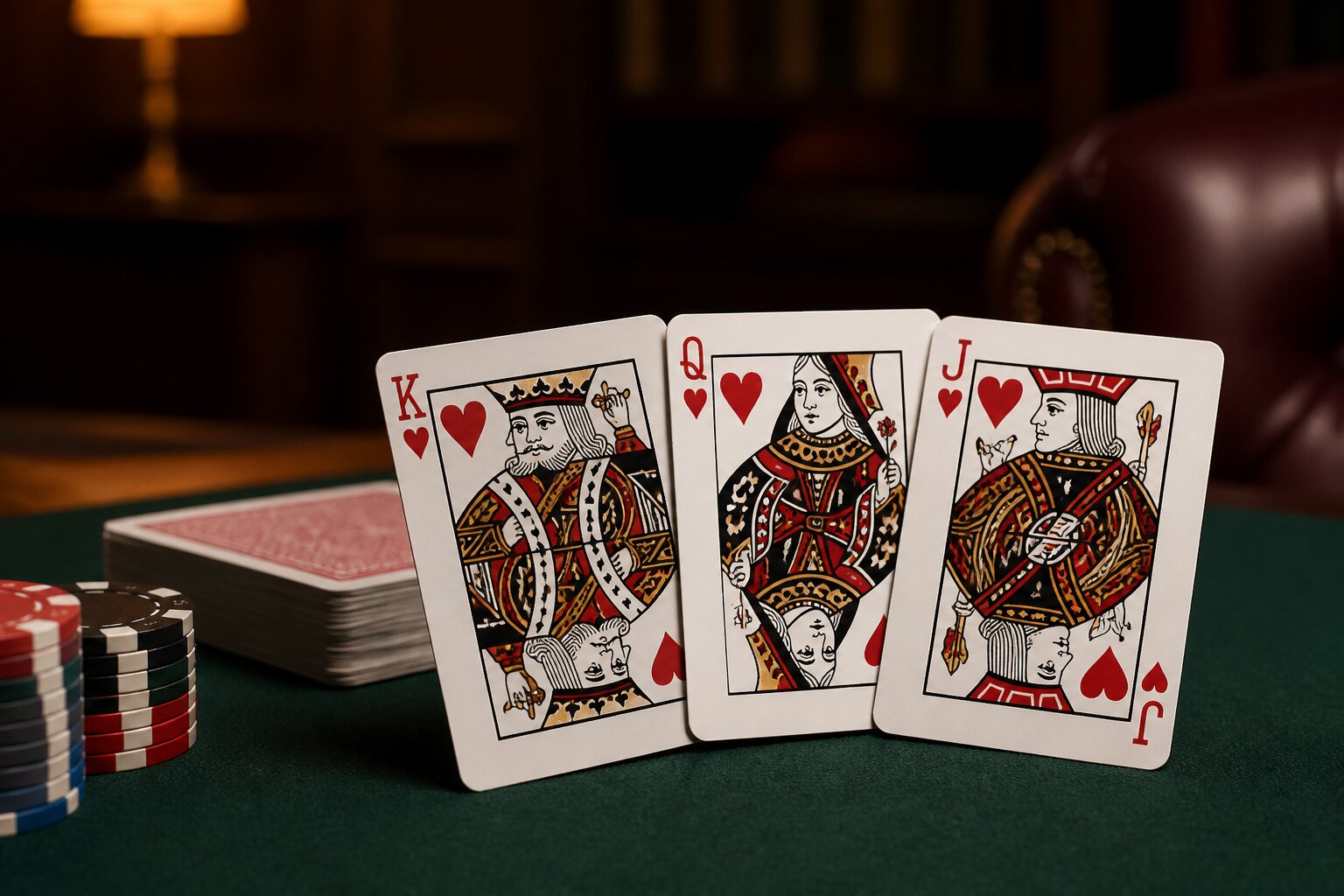
Face cards are the cards in a standard deck that show a person’s face. They’re easy to spot because their artwork depicts human figures rather than just pips or numbers.
In each of the four suits—hearts, diamonds, clubs, and spades—you’ll find three face cards:
- Jack
- Queen
- King
That makes 12 face cards in a full 52-card deck. The Ace and the numbered cards are not face cards; only Jacks, Queens and Kings carry a face. Designs vary by region and period, but the basic set of three per suit is universal in most modern decks.
How Many Face Cards Are in a Deck?
There are exactly 12 face cards in a standard 52-card deck. Each suit contains three face cards: a Jack, a Queen and a King.
- Jack
- Queen
- King
Because there are four suits, that gives three face cards per suit and four suits in total, so 3 × 4 = 12. Face cards are sometimes called court cards or picture cards because they feature a person on the card.
This fixed number matters when players count cards for game rules or when determining the composition of a hand, for example in bridge, poker or blackjack. If a deck includes Jokers or has a different total for a particular game, those cards are treated separately and are not part of the standard 52-card count.
The Significance of Face Cards in Card Games
Face cards take on different roles depending on the game’s rules. In many games, face cards carry higher values than numbered cards; in Blackjack, for example, each face card is usually worth ten points. In Poker and Rummy, they often form part of higher-ranking combinations or influence tie-breaks.
Some games assign special functions to certain face cards, while in others they simply contribute to the hand’s total. Because they frequently represent higher or distinct values, players pay attention to them when assessing strategy and potential outcomes.
If you want to see how this plays out across several games, the next section touches on the historical artwork and how that ties into card recognition.
What Do the Faces on Face Cards Represent?
The faces on these cards have roots in history and legend. Early European decks linked Jacks, Queens and Kings to rulers, mythic figures and heroic characters. Over time, those real or legendary identities became stylised.
Kings in older sets might evoke famous rulers; Queens could reference well-known women from history or myth; Jacks, once called Knaves, represented attendants or knights. Modern decks generally favour classic, recognisable illustrations rather than portraits of specific people, but the tradition of depicting human figures has remained.
This history explains why face cards are often more detailed and symbolic than pip cards, and why they are so easy to recognise at a glance.
Why Are Face Cards Important?
Face cards shape the structure of many card games by providing distinct values and roles. They can change how hands are ranked, create scoring variations and introduce strategic choices for players. Because they stand apart visually and often numerically from numbered cards, they help players read the table and make decisions.
Beyond rules, face cards contribute to the feel of a deck: their imagery and placement can influence how quickly a player identifies a hand or understands potential combinations. That practical clarity is why most games keep the traditional three face cards per suit.
Rather than repeating earlier points, the next section clears up some common misunderstandings about face cards so you can approach any game with confidence.
Common Misconceptions About Face Cards
There are a few frequent confusions worth addressing so you get the most from your games.
Myth 1: The Ace Is a Face Card
A common error is to treat the Ace as a face card. The Ace is not a face card; its role varies by game and it is normally classed with the numbered cards, albeit often as a high or low value.
Myth 2: Face Cards Always Hold the Highest Value
Face cards are not automatically the top-ranking cards in every game. Some games place Aces above Kings, include Jokers with special status, or use alternative ranking systems where face cards are not the strongest pieces.
Myth 3: Knowing Face Cards Guarantees Success
Understanding face cards helps you read hands and follow rules, but it does not guarantee wins. Outcomes depend on the game’s rules and the random draw of cards, so knowledge is a tool rather than a certainty.
Overall, treating card games as entertainment and setting sensible limits is the best approach to keep them enjoyable.
This final note ties everything together: face cards are a small but vital part of a deck, combining history, function and recognisability to shape how many card games are played.
**The information provided in this blog is intended for educational purposes and should not be construed as betting advice or a guarantee of success. Always gamble responsibly.