Tombola and bingo are two classic games that have brought people together for generations. Both involve the slow build of anticipation as numbers are drawn, but each has its own traditions, rules and style.
Tombola tends to appear at local fetes and community events with simple ticket draws, while bingo is more structured, played on marked cards with set patterns to complete. If you want to understand how they compare and which might suit your next gathering, this guide will take you through the essentials.
Please note: both games are for adults aged 18 and over. Read on to learn the differences, the rules and how to take part safely.
What Is Tombola?
Tombola is a straightforward draw-based game with roots in 18th-century Italy and a long history in community fundraising across Europe. At its heart it is a simple raffle-like activity: numbered tickets are mixed in a container and individual tickets are drawn. Players buy ticket(s); if the number on your ticket is drawn, you claim the corresponding prize.
Prizes vary widely — from small treats suited to a family fair to larger items offered at charity events. The appeal of tombola lies in its simplicity and the social occasion that surrounds it, where the emphasis is on taking part and supporting a cause rather than on strategic play.
What Is Bingo?
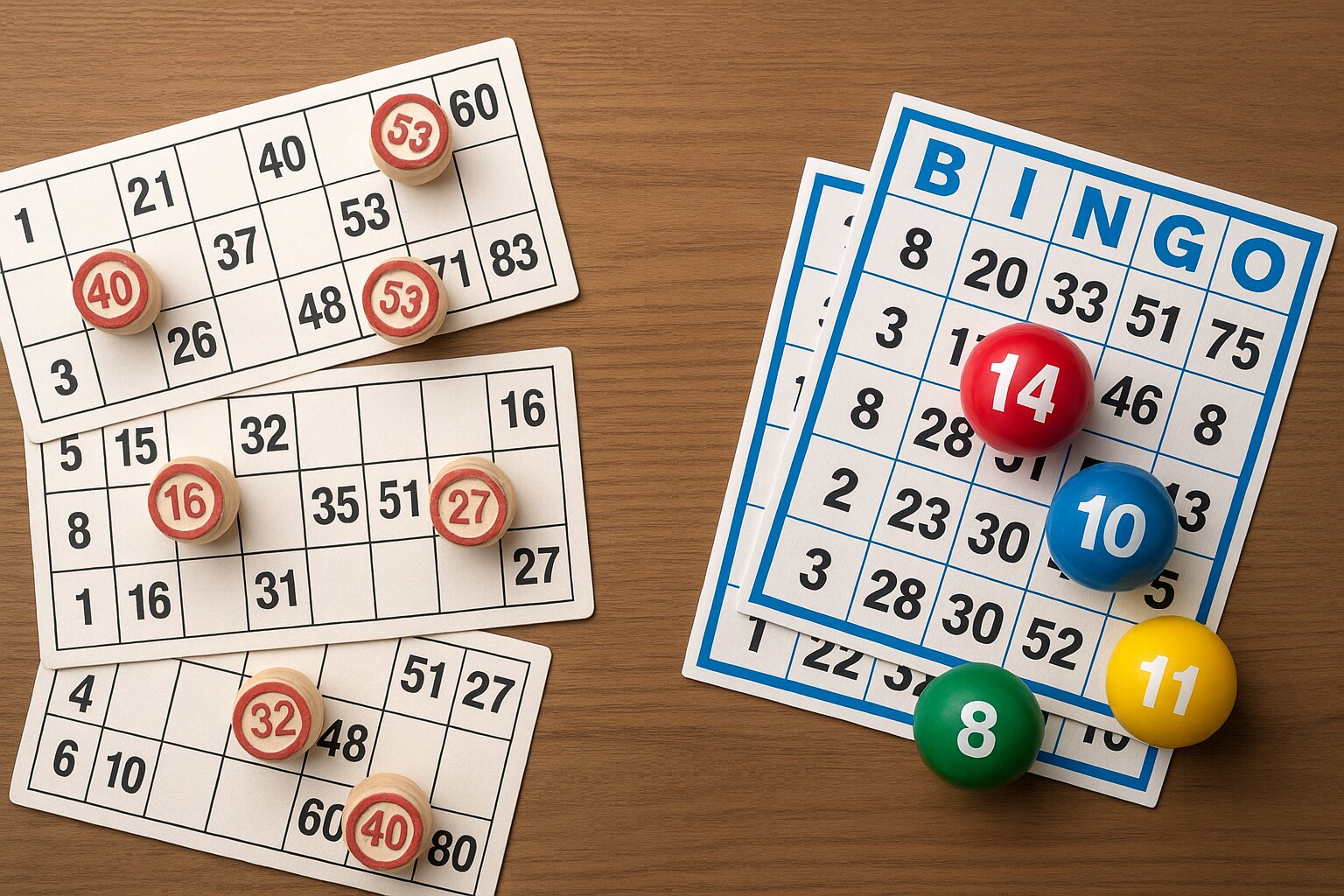
Bingo is played on cards or tickets that carry a grid of numbers. As numbers are randomly selected and called out, players mark matches on their cards. Games assign different winning patterns: a single line, four corners, or a full house where every number on the card is marked. That pattern determines the prize.
Bingo developed into a popular communal pastime across the UK, both in halls and online, and it remains known for its rhythm and social interaction. Modern versions can use automated number generation and on-screen marking, but the basic experience of following a card and waiting for a pattern to form remains the same.
How Do the Rules of Tombola and Bingo Differ?
At first glance both games look similar because both use numbers. The key differences are in the format and what players hold in their hands. Tombola uses individual tickets bought for a draw; there are no playing cards and no pattern to complete. Bingo gives each player one or more cards and requires the completion of a stated pattern to win.
Tombola draws are typically single-event and prize-focused, while bingo matches unfold over several rounds with set goals for each game. That structural contrast shapes how each game feels: tombola is immediate and prize-oriented; bingo is paced and pattern-driven.
How Are the Game Cards and Number Draws Different?
Tombola relies on ticket stubs. An organiser mixes matching numbered tickets in a drum or container and draws numbers one by one. Players check their ticket against the drawn numbers and claim the prize if there is a match. Because there are no cards or patterns, the gameplay stays simple and quick.
Bingo uses grids of numbers on cards. Numbers are drawn and announced; players mark their cards as numbers match until a full pattern appears. Modern bingo often marks cards automatically when playing online, but the deciding factor remains completing whatever pattern the game specifies.
Which Game Is More Popular in the UK?
Bingo has a broad national presence and is played by millions each year across halls and digital platforms. Its formalised structure, regular sessions and community atmosphere have helped sustain its popularity over many decades.
The game is available in a range of settings, from large licensed bingo clubs to small community halls and online sites. That range of venues, together with different formats and session times, makes it accessible to a wide cross-section of people.
Tombola is a staple at local events, fetes and fundraisers. It tends to be more localised and occasional, making it familiar to many people but on a smaller scale compared with bingo.
Both games occupy steady places in British social life for different reasons:
- bingo as a recurring social activity with regular sessions, larger organised venues and an online presence that reaches many players;
- tombola as a simple, informal draw used at community events and celebrations to raise funds or provide quick entertainment.
How to Play Tombola: Step-by-Step Guide
Playing tombola online follows the same basic idea as a community event, simply brought into a digital setting. After you register or log in and confirm you are at least 18, you add funds to your account and choose the tombola draw you want to enter. Tickets are displayed with their price and the number of tickets available; you purchase as many as you wish within your budget. When the draw takes place, numbers are selected at random and displayed to players. If a number on your ticket is drawn, the prize corresponding to that ticket is awarded and credited to your account.
This experience mirrors the in-person atmosphere but removes the need to be physically present at a fete. Keep a clear budget in mind before you participate and use the account tools available to manage spending.
How to Play Bingo: Step-by-Step Guide
Online bingo retains the feel of a hall while automating much of the routine. After creating an account and depositing funds, you choose a bingo room that matches the ticket price and prize level you prefer. Each ticket becomes a card filled with random numbers. When the game begins, numbers are drawn and either marked on-screen automatically or indicated for you to check. Once your card completes the announced pattern you are notified and any prize is credited to your account.
Different rooms may run different styles of bingo and varying prize structures, so it helps to pick a room whose format you enjoy. Setting spending limits and using available safeguards keeps gameplay within your chosen parameters.
Where Can You Play Tombola and Bingo?
Both games can be found at local events and on regulated online platforms. Local community halls, bingo clubs and charity fundraisers often host in-person sessions, while licensed sites and apps provide digital versions you can access from home.
Playing through a licensed operator offers protections. Your account details and funds are handled securely, and games are subject to oversight to ensure they are fair and transparent. Licensed operators are also required to publish clear terms and provide ways to contact customer support.
When you choose an online provider, check for clear information about licensing and the support tools they provide, such as:
- deposit limits
- time-outs
- account history
These features help you keep control of your play and make informed choices about how often and how much to play. Look for visible licence details and links to responsible gambling pages so you can verify the operator’s status and access help if you need it.
Are There Any Common Myths About Tombola and Bingo?
Misconceptions often arise from the social and ritual aspects surrounding these games. One frequent myth is that certain numbers or patterns can be relied on to improve results. In both tombola and bingo each draw or selection is independent; no number or timing strategy alters the fundamental process that selects winners.
Another misunderstanding is that playing at particular times or on specific days increases your chance of winning. In practice, outcomes depend on the mechanics of the draw or number generation rather than on external timing. If you ever feel unsure, look for clear explanations of how draws are run or how numbers are generated on the platform you use.
Support features and spending controls are available to help you stay within your limits and maintain the activity as a form of entertainment rather than a way to earn money.
Conclusion: Which Game Should You Choose?
Tombola and bingo each offer distinct experiences. Choose tombola if you want a quick, prize-focused draw commonly tied to community events. Choose bingo if you prefer a paced game with patterns to complete and a familiar social rhythm. Either way, play through licensed providers, use the available safety and spending tools, and keep the focus on enjoyment.
If you’re ready to try one of these games with us, explore our available rooms and draws to find the format that suits you best. Play only if you are 18 or over, keep within your limits, and enjoy the experience.
**The information provided in this blog is intended for educational purposes and should not be construed as betting advice or a guarantee of success. Always gamble responsibly.