
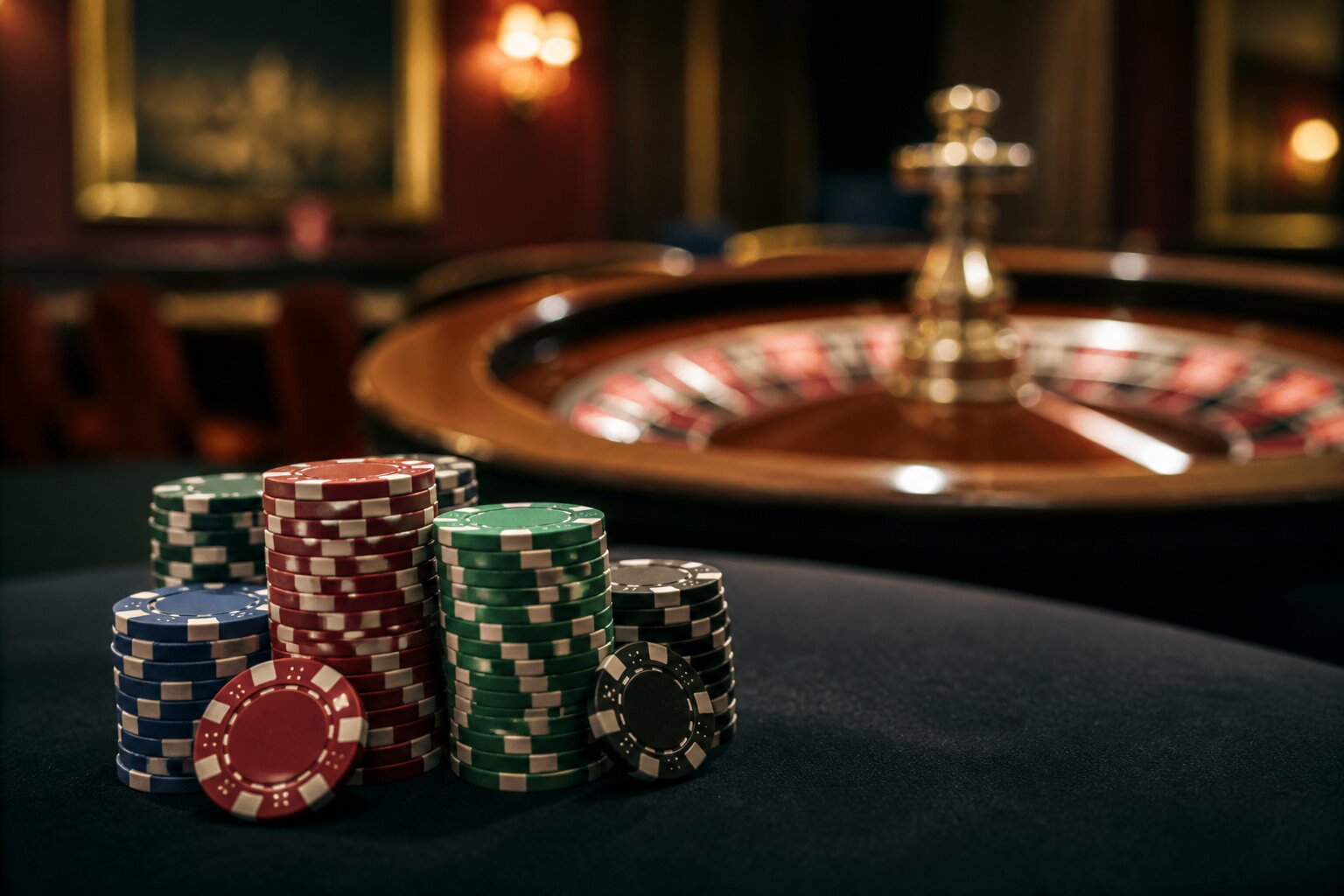
Roulette is one of the most iconic casino games, familiar from both bricks-and-mortar tables and online sites. Its spinning wheel and simple betting choices draw players in, but that simplicity can hide a lot of common misconceptions about how the game actually works.
This guide explains the odds, the mathematics behind bets, and what the house edge means for your money. Read on to learn how outcomes are determined, how different bets compare, and what to expect in the long run—so you can play with a clear head and enjoy the game for what it is.
What Are the Basic Rules of Roulette?
Roulette is played on a wheel divided into numbered pockets. European roulette features numbers 1–36 and a single zero; American roulette adds a double zero. Players place chips on a betting layout to predict where the ball will land, choosing anything from a specific number to broader options like colour or odd/even.
After bets are placed, the dealer spins the wheel and sends the ball in the opposite direction. When the ball settles in a pocket, winning bets are paid according to fixed payouts. Each spin is independent and governed by chance; previous outcomes do not influence future ones.
A clear grasp of these fundamentals helps make sense of the probabilities and payouts described in the next sections. With those basics in place, you’ll see how the different bets line up against one another.
How Do Roulette Odds Work?
Roulette odds reflect how likely a bet is to succeed on a single spin. They depend on how many winning pockets a bet covers compared with the total pockets on the wheel. For example, a straight-up bet on a European wheel wins if one specific pocket comes up—1 in 37—while an even-money bet like red covers 18 of the 37 pockets.
Payouts are scaled to match those probabilities: bets that hit rarely offer larger returns, while wider-coverage bets pay out smaller amounts more often. Importantly, the probability for any given bet is fixed for that wheel type and does not change from spin to spin. This section sets the stage for deciding which bets suit your priorities, whether you prefer the occasional big payout or steadier, smaller wins.
Understanding the Different Types of Bets
Roulette bets fall into two broad groups: inside and outside bets. Inside bets target specific numbers or tight clusters—straight up, split, and street bets—offering the highest payouts but the lowest hit rates. Outside bets cover larger portions of the wheel—red/black, odd/even, columns and dozens—providing smaller payouts but greater frequency of wins.
Each bet type carries a trade-off between risk and reward. Players choose according to their tolerance for swings in bankroll and how they prefer the game to feel. The next section explains how the casino’s built-in advantage interacts with those choices, so you can see the full picture.
What Is the House Edge in Roulette?
The house edge is the percentage of all wagers the casino expects to retain over a very large number of spins. It exists because payouts are set slightly below the true odds of a bet, ensuring the casino maintains a long-term advantage. The edge doesn’t guarantee that the casino will win every session, but across thousands of spins it produces a predictable financial result.
In practical terms, the house edge tells you how quickly, on average, your stake will be reduced by the game’s design. Understanding this helps set realistic expectations about how long a bankroll might last and why short-term results can differ markedly from long-term averages.
Comparing European and American Roulette House Edges
The two common wheel types differ in their house edge because of the number of zero pockets. European roulette’s single zero produces a house edge of about 2.7%, while American roulette’s additional double zero increases the edge to roughly 5.26%. For anyone weighing options, these percentages explain why European wheels typically offer better long-term value per unit wagered.
Bear in mind that a lower house edge reduces the casino’s mathematical advantage but does not change the fact that outcomes are governed by chance. The choice between wheels is therefore about relative cost and how long you want your play to last.
How Does Probability Affect Roulette Outcomes?
Probability gives a precise way to express the chance of a particular bet succeeding on any given spin. Since each spin is independent, probabilities remain the same from one round to the next: past results don’t alter future chances. This independence makes pattern-chasing ineffective as a method for improving results.
Thinking in probabilities rather than expectations of streaks helps you make clearer decisions about bet size and which markets to play. When you combine probability with knowledge of the house edge and the payouts for each bet, you can better judge the risk–reward trade-offs before placing chips on the table.
Common Myths About the "Winning Formula"
Many widely held ideas about roulette are misconceptions. One is that a run of one colour or number makes the opposite outcome more likely; independence of spins rules that out. Another is that staking systems—where you increase or decrease bet size according to recent results—can overcome the house edge. These systems do not alter the fundamental maths and can expose players to large, rapid losses.
Scepticism is healthy: if someone promises a guaranteed way to beat the wheel, the claim should be treated with extreme caution. A clear understanding of the game’s mechanics and probabilities is the best protection against misleading advice.
If you’re curious about practical approaches, the next section looks at what mathematics can and cannot do for your play.
Can Mathematics Improve Roulette Success?
Mathematics helps by quantifying odds, expected returns, and variance. It can show how often a bet will win on average, how much the house edge will erode a bankroll over time, and how volatility affects the experience of play. This knowledge allows players to plan stakes and choose bet types consistent with their goals.
However, mathematics cannot predict a specific outcome on any given spin or overturn the house edge. Where it is most useful is in setting realistic expectations and in bankroll planning—knowing the likely frequency and size of wins and losses helps prevent decisions based on wishful thinking.
With the maths clarified, the brief glossary below collects terms that crop up throughout the article so you can refer back without flipping pages.
Key Terms Every Roulette Player Should Know
Below are common terms used when discussing roulette and what they mean in plain language.
- Wheel: The rotating device with numbered pockets that determines outcomes.
- Ball: The small sphere released onto the wheel that settles in a pocket to decide the result.
- Betting Layout: The table area where bets are placed to represent different predictions.
- Inside Bets: Wagers on individual numbers or small clusters located centrally on the layout.
- Outside Bets: Wagers covering broader sections such as colours, odd/even, columns or dozens.
- Straight Up: A bet on a single specific number.
- Split Bet: A wager covering two adjacent numbers.
- Street Bet: A bet covering three numbers in a horizontal row.
- Column Bet: A bet on one of the three vertical columns of twelve numbers.
- Dozen Bet: A bet covering 1–12, 13–24 or 25–36.
- House Edge: The percentage advantage the casino holds over players across many spins.
These terms should make it easier to follow odds and payout discussions, and they form the vocabulary used across the guide.
Summary: The Truth About Beating the Odds
Roulette’s outcomes are driven by probability and fixed payouts; no system can overturn the house edge in the long run. Familiarity with the wheel type, bet types, and the mathematics behind odds gives you the clearest picture of what to expect and how different bets compare.
Approach the game as entertainment with known costs and variability. Set personal limits, decide in advance how you want to play, and keep your expectations aligned with the maths rather than claims of guaranteed success. Enjoy the experience for what it offers, and play in a way that keeps your time at the table enjoyable and sustainable.
**The information provided in this blog is intended for educational purposes and should not be construed as betting advice or a guarantee of success. Always gamble responsibly.