
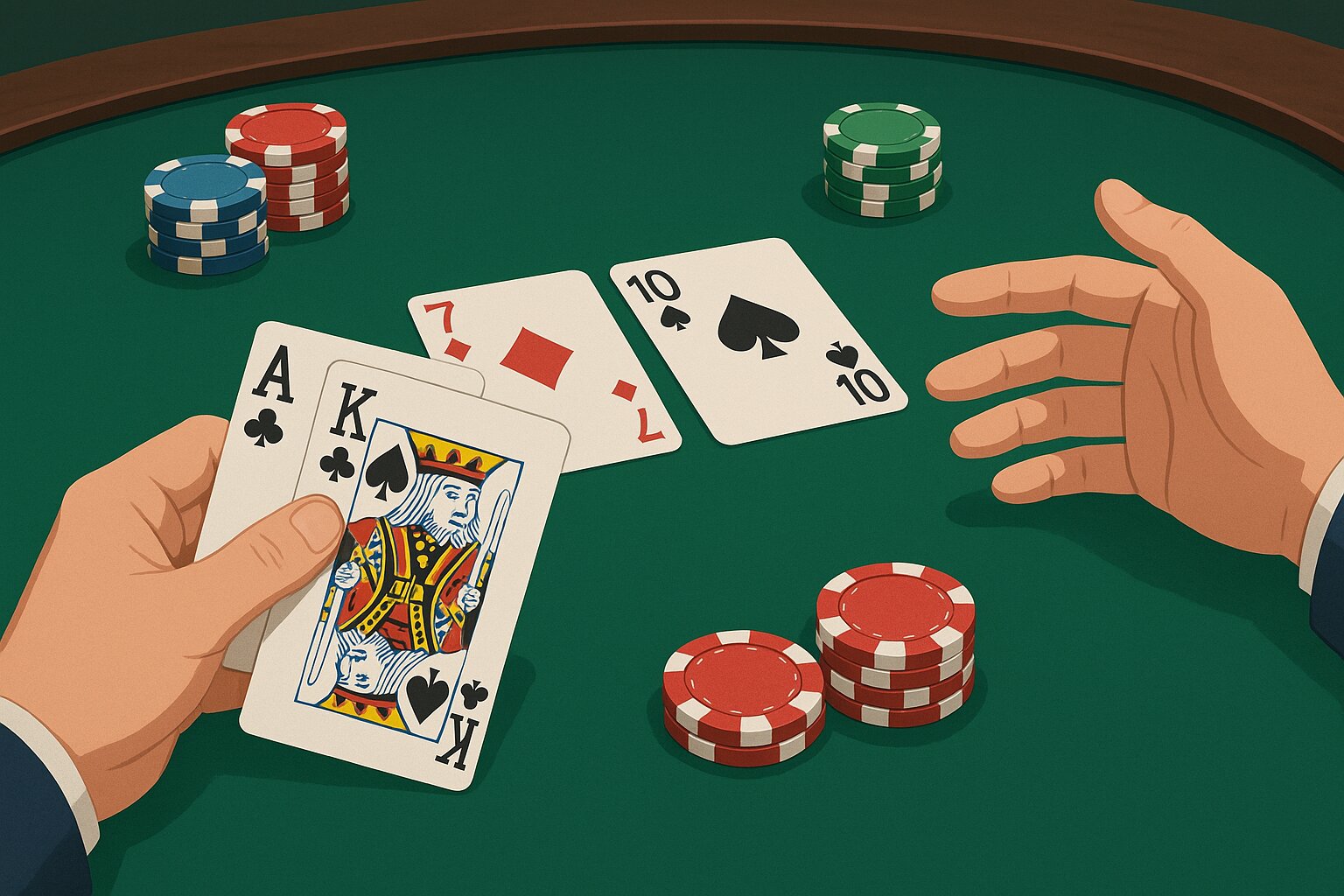
If you’re new to poker or sharpening your game, understanding the difference between a check and a call is a solid place to begin. Both moves are used all the time at the table, but they serve very different tactical purposes.
This article explains what each action means, how they differ, typical situations for using them, common mistakes to avoid, and a few myths that can trip players up. Keep reading to build clearer decision-making at the table.
What Does 'Check' Mean in Poker?
To check is to pass the action to the next player without placing a bet. You stay in the hand but do not add chips to the pot, and checking is only possible when no bet has been made in the current betting round.
Checking offers time to gather information. If you have a marginal hand or want to see how opponents react, checking lets you observe without increasing your stake. It also keeps the pot size smaller when that suits your strategy.
A practical example is holding a low pair on the flop. By checking you can see another card without committing more money, which may reveal whether your hand improves or if someone else shows strength.
What Is a 'Call' in Poker?
To call means to match the amount of the current bet. By calling, you stay in the hand and place chips equal to the largest bet in that round.
Calling is a commitment of funds and signals you are willing to continue at that stake without raising. Players call when they suspect their hand is strong enough to win, or when they need one more card to complete a draw.
For example, if you hold four cards to a flush and an opponent bets, calling keeps you in to see the next card while limiting how much you invest compared with raising.
Check vs Call: What Is the Difference?
The key difference is whether you add money to the pot. Checking does not require any chips and is only allowed when no bet has been made. Calling always involves putting in chips to match a bet.
Beyond the mechanics, checking and calling affect table dynamics in different ways. Checking can invite others to take the lead or let everyone see another card cheaply. It can be used to conceal the strength of your hand, to control the size of the pot, or to induce bluffs from more aggressive players.
Calling maintains the current level of betting and keeps you directly invested in the hand. It signals that you are willing to continue at the existing price, which can deter very loose opponents and help you gather information about their ranges. Repeated calling, however, can make it harder to win large pots if you rarely raise.
When deciding between the two, consider a few practical factors, such as:
- your table position and how many players act after you,
- the current pot size relative to the stakes,
- how much information you already have about opponents’ tendencies.
Balancing these elements will help you choose the action that fits your style and the specific situation at the table.
When Should You Check or Call in Poker?
The choice depends on the hand, the stage of the game, and what opponents are doing. There is no single correct answer, but thinking about the situation helps turn instinct into a reasoned decision.
If no one has bet and you want to continue without increasing the pot, checking is sensible. If someone has bet and you believe your hand has a reasonable chance, calling keeps you in without escalating the contest. Balancing these options across many hands is how sound strategy develops.
Typical Scenarios for Checking
Checking is common when you hold a mediocre hand that might improve on later streets or when you want to conceal the strength of a hand. It can also be used to control the pot size or to avoid committing chips when the odds are unclear.
If, for instance, you have a middle pair on the flop and expect several players to act, checking lets you see how the hand unfolds with minimal exposure.
Situations Where Calling Is Best
Calling suits situations where you want to stay in but are not confident enough to raise. It is appropriate for drawing hands, marginal made hands that might still be best, or when extracting value against opponents who bet thinly.
When you have four to a straight or flush, calling preserves the right to see the next card while keeping your investment moderate compared with a raise.
Is Checking or Calling Better for Beginners?
Both moves are useful learning tools and serve different purposes in developing a solid game. New players benefit from practising each to understand their strengths and limitations.
- Checking helps beginners stay in the hand while they learn to read opponents and the flow of the game. It lets you see more cards without increasing your stake and can reveal useful information about how others are playing.
- Calling teaches restraint, as it requires placing chips but not committing more than necessary. It helps you learn pot odds, judge bet sizes and avoid overcommitting with marginal hands.
New players should practise both in low-stakes settings so mistakes are affordable and learning is gradual. The aim is to develop judgement about when to conserve chips and when to contest the pot, and to build an intuitive sense of timing and opponent tendencies.
Over time, experience and reflection make these choices feel more natural, allowing you to switch between checking and calling with confidence. Always play within your limits and choose stakes you can afford.
Common Mistakes Players Make When Checking or Calling
A common error is checking reflexively without assessing whether checking gives opponents too much freedom. Players who check without thought can cede control of the hand, allowing opponents to dictate the pace and size of future bets.
This can have a number of consequences:
- It lets stronger players take the initiative and pressure others.
- It allows opponents to see cards that may improve their hands.
- It can mask weakness on later streets, making it harder to extract value when you do have a good hand.
Another frequent mistake is calling too often with weak hands, which steadily reduces a player’s stack. Habitually calling small bets or marginal raises without regard to pot odds or stack size chips away at your resources and limits future strategic options.
Two related errors often occur together:
- Not considering table position before acting, because decisions in early position carry different implications from those made later.
- Failing to factor in opponents’ tendencies, pot size and potential implied odds when deciding whether to call.
Avoiding these traps comes down to attention and honest appraisal of each situation rather than relying on habit. Take a moment to weigh the following before you decide to check or call: your position, the size of the pot, the relative strength of your hand, how many players remain in the pot, and what you expect opponents to do on subsequent streets. Small adjustments in thought process can make a significant difference to long-term results.
How Can Understanding Check and Call Improve Your Game?
Knowing when to check or call helps you control pot size, manage risk, and extract value at the right moments. These decisions also sharpen your ability to read the table because both actions reveal information about how other players perceive their hands. Over time this becomes a dependable source of insight that you can use in later hands.
Careful use of check and call reduces unnecessary variance by preventing you from committing too many chips with marginal holdings. It encourages patience and discipline, which are essential for making steady, long-term progress rather than chasing quick wins. It also helps you avoid costly bluffs when an opponent’s actions suggest they have a stronger holding.
Understanding these options improves several practical aspects of your play, including:
- recognising when to keep the pot small and preserve your stack,
- choosing moments to extract value without forcing opponents off hands,
- managing aggression so you maintain control without becoming predictable,
- using checks and calls to gather information for future decisions.
Ultimately, the goal is clearer, more consistent decision making and fewer regrets about missed opportunities or avoidable losses. Play responsibly and focus on steady improvement rather than guaranteed outcomes.
Myths About Checking and Calling in Poker
There are several misconceptions that can derail progress.
One myth is that checking is always the safe choice. In fact, checking can give opponents free cards or allow them to seize control of the pot when you might have been better off betting.
Another is the idea that calling will lead to big wins. Calling simply keeps you in a hand at the current stake; it does not change the underlying odds or guarantee value.
Finally, some think experienced players never check or call. Skilled players use both moves when appropriate. The mark of strong play is adapting to the situation, not adhering to a single style.
Understanding the real effects of checking and calling makes decisions clearer and play more consistent. With practice, these moves become tools you use deliberately, helping you play more thoughtfully and finish hands with greater confidence.
**The information provided in this blog is intended for educational purposes and should not be construed as betting advice or a guarantee of success. Always gamble responsibly.