
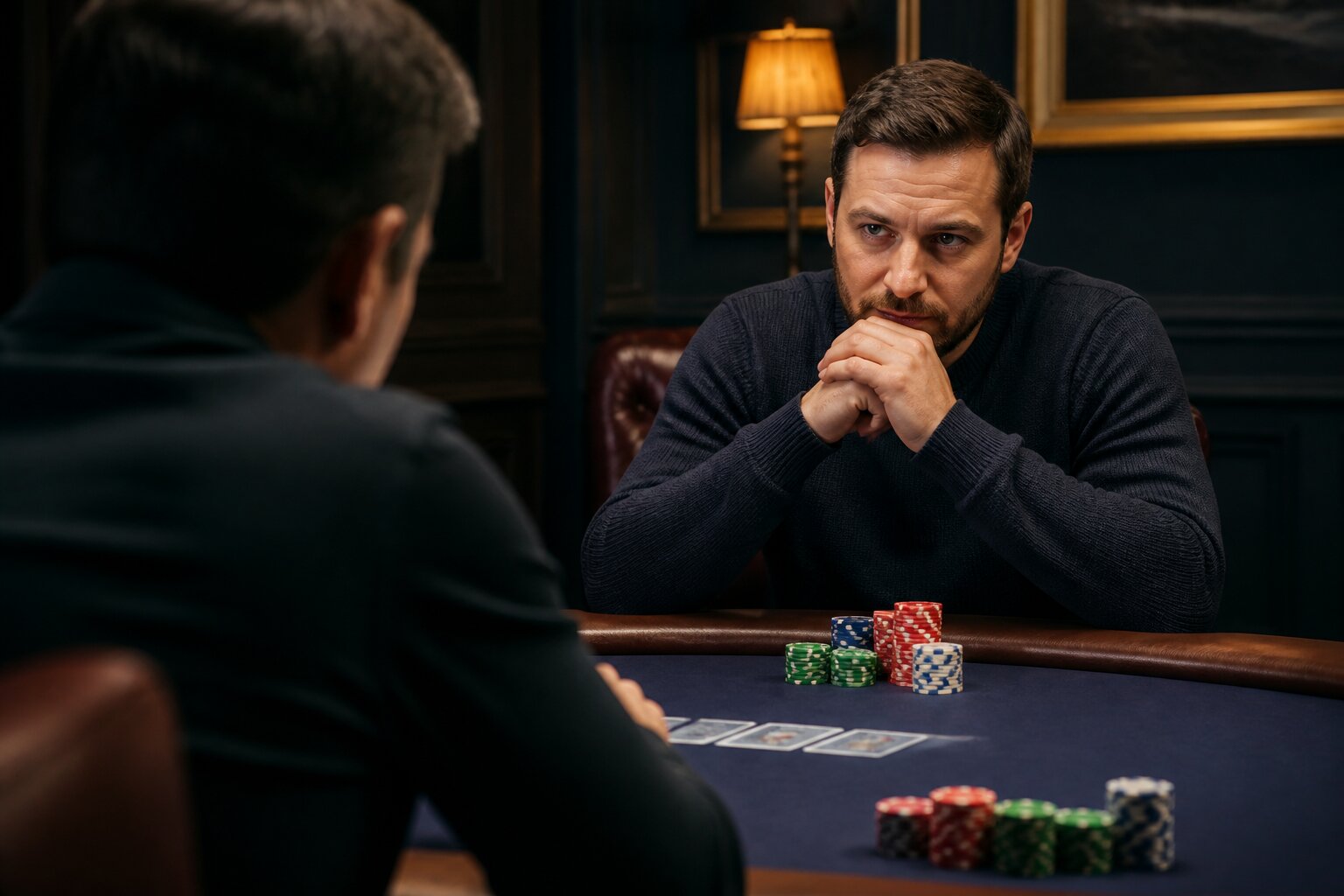
Ever felt on the backfoot at the poker table, unsure how to act first with little information? That’s what playing “out of position” (OOP) is all about, and it’s often where even seasoned players get tripped up.
Understanding how to handle these tricky spots is crucial if you want to protect your chips and sharpen your skills. With the right tactics you can reduce risk and steer many hands into more comfortable territory.
In this guide we’ll explain what being out of position really means, look at practical adjustments you can make, and show how to exploit common opponent habits. Read on to build confidence and make smarter decisions when you act first.
What Does It Mean to Be Out of Position in Poker?
Being out of position in poker means you must act before one or more opponents on every betting round. That typically happens when you are seated to the left of the dealer and therefore make decisions without seeing how later players respond.
Common examples include the small blind and big blind facing a player on the button or cutoff. Because you move first, you have less information about opponents’ intentions, which changes the nature of your decisions throughout the hand.
Acting first affects everything from pre-flop choices to river decisions. You must anticipate likely responses, control pot size where possible, and choose hands that tolerate being played without the benefit of extra information.
Why Is Out of Position Play Considered Difficult?
Out of position play is difficult because every choice is made with incomplete information. Opponents who act after you can tailor their bets and checks in response to your actions, which amplifies their ability to steer the hand.
There is also a strategic cost. If you bet and are raised, you must decide whether to continue without seeing the later player’s full plan. If you check, you may give free cards that let opponents improve hands you cannot comfortably call down.
This environment forces you to manage risk more tightly. You will often have to fold marginal hands that might be playable in position, and you need tighter hand selection plus clearer post-flop plans to avoid bleeding chips.
Key Differences Between In Position and Out of Position Poker
The core difference is the order of play. In position means you act after your opponent, letting you observe their choices before committing. Out of position reverses that rhythm and places the burden of initiating action on you.
Being in position lets you control pot size, use checks as information-gathering tools, and apply pressure with better timing. Out of position requires you to be more proactive about pot control and to avoid speculative hands that create difficult decisions later.
These structural differences change not only which hands you play but also how you size bets, when you build pots, and how often you bluff. Recognising the difference helps you adapt both pre-flop ranges and post-flop tactics.
Common Mistakes Made When Playing Out of Position
A frequent error is entering too many pots with weak or marginal hands. Those hands often force uncomfortable folds or costly calls once the board develops.
Another mistake is inconsistent bet sizing. Oversized bets can commit you to pots you should avoid, while tiny bets can cede control and let opponents dictate terms. Both extremes make it hard to steer a hand sensibly.
Players also tend to bluff more from OOP without sufficient backup plans. Because opponents have the final action, bluffs are easier to counter. Finally, failing to observe betting patterns and opponent tendencies leaves you guessing at critical moments instead of making informed choices.
Stay disciplined about hand selection, keep your bet sizes purposeful, and pay attention to what opponents reveal through their frequency and timing of bets.
How Can You Identify OOP Spots in Real-Time?
Spotting OOP situations is straightforward once you know what to look for. Before the hand begins, note your seat relative to the dealer button. During play, notice whether you are making decisions before a specific player on every street.
After the flop, if you find yourself regularly acting without seeing another player’s decision, you are in an OOP spot. That awareness allows you to simplify your approach: tighten pre-flop ranges, plan for pot control, and be ready to fold earlier than you might in position.
Making a routine of checking your position before action starts reduces surprise and helps you enter each hand with a clearer strategy.
Adjusting Your Bet Sizing and Ranges Out of Position
Out of position play benefits from deliberate adjustments to both hand ranges and bet sizing. Because you will have less information, prioritise hands that do well when you have to play them without seeing an opponent’s reaction.
Smaller, well-judged bets are useful for controlling pot size and avoiding awkward raises that force tough decisions. When you do choose to build the pot, ensure you have a plan for how to continue on future streets and that your hand has real showdown value.
Think of your pre-flop range as narrower and your post-flop actions as more measured; that combination reduces the number of marginal decisions and keeps you in control of losses.
Managing Hand Selection OOP
Hand selection out of position should emphasise robustness. Medium to strong pocket pairs, suited broadways, and hands that can make reliable two-pair or better combinations perform relatively well because they retain value on later streets.
Speculative hands such as small suited connectors become more situational. They can be playable in multiway pots or against opponents who rarely raise, but against aggressive players they often create expensive turns and rivers. Weigh both table dynamics and stack sizes when deciding whether to include these hands.
Post-Flop Play from Out of Position
On the flop, use sizing and lines that keep marginal hands manageable. A modest bet can extract value from worse draws and control the size of the pot against aggressive opponents. If you check, be prepared for a range of responses and plan when you will fold to pressure.
When your hand is strong, you can lean into building the pot—but do so with awareness of potential turn and river decisions. If an opponent shows repeated aggression, reduce bluff frequency and focus on hands that can stand up to calls on later streets.
Transitioning from pre-flop selection to post-flop judgement is where many players improve most rapidly; concentrating on consistent, logical choices here pays dividends.
Exploiting Opponents When They Have Position
When your opponent has position, the best opportunities come from careful observation rather than fanciful plays. Watch how they behave: do they bet heavily when checked to, or do they prefer to probe with small bets? Each habit suggests a different counter.
If an opponent bets whenever checked to, you can defend with a narrower range of hands that have showdown value rather than trying to bluff. Against players who bet sparingly, selective aggression can be profitable, especially with hands that have backdoor prospects.
Adapting in this way does not remove the positional disadvantage, but it changes the match-up into a contest of tendencies and timing rather than pure initiative. Over time, accumulating reads on opponents converts positional headaches into exploitable patterns.
Common Myths About Out of Position Play
A persistent myth is that out of position play is always losing. In truth, it is a more constrained style that rewards discipline, better hand selection, and clearer post-flop plans. Skilled players can win from these seats by adjusting appropriately.
Another misconception is that aggression alone compensates for acting first. Aggression helps when applied selectively, but unfocused or predictable aggression usually backfires because opponents can exploit it with timely checks or raises.
Some think only novices suffer from OOP issues. Even advanced players face tough spots; the difference is how well they adapt. Finally, no single adjustment guarantees success. The strongest approach combines positional awareness, table reading, and consistent application of sensible lines.
When Should You Consider Folding Out of Position?
Folding is often the prudent choice when you hold a weak starting hand or when you are facing substantial pressure and do not have enough information to continue. Stepping away early limits your losses and helps you conserve chips for more favourable spots later in the session.
You should be more inclined to fold when the cost to see further streets is high relative to the strength of your holding. That is particularly true out of position, where you will act before your opponent on later betting rounds and therefore have less control over the pot. Without position, marginal hands lose value because you will often be forced into difficult decisions.
Large bets from opponents should prompt a stricter threshold for calling. Without position, committing large stacks to speculative or marginal hands is typically unsound unless you:
- have a clear plan for how you will proceed on later streets,
- assess that your hand equity against opponents’ ranges is strong enough, or
- can reliably realise your equity given the likely line of play.
Similarly, pay attention to table dynamics. If an opponent’s betting suggests they are polarising their range when they bet, folding marginal holdings can save you from being manoeuvred into costly situations. Reading patterns and timing of aggression will help you identify when a bet represents either a strong hand or a bluff, and when folding is the safer long-term option.
Final Thoughts on Mastering OOP in Poker
Out of position play is a fundamental challenge in poker, but it is also an area where steady improvement yields visible results. By tightening hand selection, applying purposeful bet sizing, and learning to read opponents’ tendencies, you can make many OOP situations manageable and sometimes even profitable.
Keep examining your decisions after sessions, look for patterns in how you respond when acting first, and adapt your ranges to match opponents and stack sizes. Play within limits and treat poker as entertainment; when you keep expectations realistic and focus on sound play, each hand becomes a useful piece of experience.
If you’d like, explore our site for more articles on positional strategy and ways to sharpen your decision-making at the table. Play responsibly and enjoy the learning process.
**The information provided in this blog is intended for educational purposes and should not be construed as betting advice or a guarantee of success. Always gamble responsibly.