
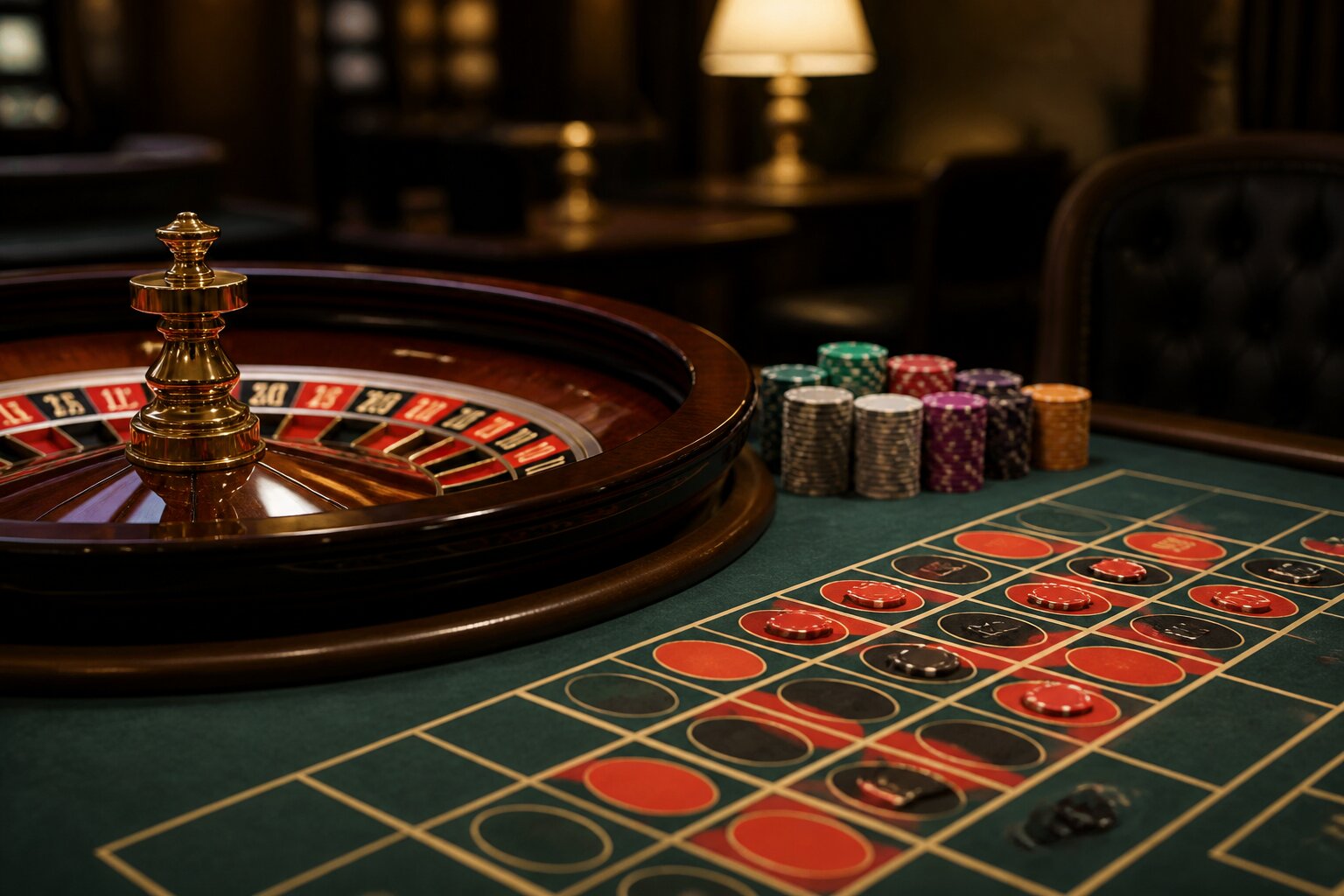
Roulette contains many ways to place bets, and neighbour bets stand out because they cover groups of numbers as they sit on the wheel rather than how they appear on the table. They offer a different way to play that can change how you think about coverage and spread.
This guide explains how neighbour bets work, the rules that apply, clear examples and how they map onto table layouts. Read on to see practical details and helpful context so you can decide whether these bets suit your style.
If you want a quick sense of what to expect, the next section defines neighbour bets simply and precisely, then we’ll move on to how they are placed in practice.
What Are Neighbour Bets in Roulette?
Neighbour bets are a way of backing a chosen number plus the numbers that sit next to it on the physical roulette wheel. Instead of focusing on the betting grid, these wagers reflect the wheel’s actual sequence, which means you are staking on a cluster of adjacent pockets.
Typically you choose one main number and a set number of neighbours on each side. The most common format covers two neighbours either side, producing five covered numbers in total. For example, a neighbour bet on 17 with two neighbours each side would include the five numbers closest to 17 on the wheel. Winnings are paid at the standard straight-up rate for the single pocket that hits.
This style of betting is especially easy to use where a racetrack visual is provided, because that layout shows numbers in their wheel order and makes selecting contiguous groups straightforward. The following section explains how placing these bets actually works in practice, whether online or at a live table.
How Do Neighbour Bets Work?
Placing neighbour bets relies on the wheel order rather than the table grid, so the process centres on picking a main number and deciding how many neighbours to include. The most common choice is two neighbours each side, but some games allow one, three or four.
The total stake equals the amount bet on each individual number multiplied by the number of numbers covered. For example, a bet of £1 per number across five numbers results in a £5 total stake. If one of the covered numbers wins, the payout is the standard straight-up return for that single pocket.
Online, racetrack interfaces usually split the chips automatically across the chosen numbers when you confirm the selection. In a live casino you indicate the main number and the spread to the dealer, who places the chips accordingly. Because the bet spreads your stake over several adjacent pockets, it changes how coverage looks but does not alter the underlying payouts for individual numbers.
With that practical picture in mind, the next section looks at the rules that govern how neighbour bets are accepted and settled.
Neighbour Bets Rules Explained
Neighbour bets follow clear rules designed to keep play fair and transparent. These rules can differ slightly between venues, but the principles are consistent.
You must place neighbour bets before the dealer closes betting. Casinos typically let you choose the number of neighbours on each side—usually from one to four—and require that each chip meets the table’s minimum stake. Maximum stakes per number or per spin may also apply and are usually displayed on the table or in the game information. When a covered number wins, the payout is the standard straight-up rate for that single pocket.
Key points to be aware of before placing a neighbour bet include:
- Bets must be placed before betting closes.
- Minimum and maximum stakes apply per number.
- Each neighbour bet covers the chosen number plus the same number of neighbours on either side.
- Winnings are paid at standard straight-up rates (35:1).
- All bets are subject to the operator’s responsible gambling framework.
For example, a neighbour bet where £1 is placed on each of five numbers creates a £5 total stake; a winning number in that group pays out at the usual single-number rate. The next section provides concrete examples to show how different choices of main number and spread look on the wheel.
Neighbour Bet Examples
Neighbour bets can be tailored by changing the main number or the number of neighbours, which alters how many pockets are covered in each round. Below are typical and less typical configurations that illustrate the variety available.
Common neighbour bets often stick to the five-number format (main number plus two neighbours each side), such as:
- Neighbour bet on 17: covers the five adjacent wheel pockets that include 32, 25, 17, 34 and 6.
- Neighbour bet on 0: covers 26, 32, 0, 3 and 15 with a two-neighbour spread.
- Neighbour bet on 23: includes 10, 5, 23, 8 and 30.
- Neighbour bet on 8: comprises 23, 30, 8, 11 and 10.
Less typical choices use fewer or more neighbours, producing smaller or larger clusters:
- Neighbour bet on 12 with one neighbour each side: 35, 12, 28.
- Neighbour bet on 9 with three neighbours each side: 31, 14, 20, 9, 22, 18, 29.
- Neighbour bet on 1 with four neighbours each side: 33, 16, 24, 5, 10, 23, 8, 30, 1.
These examples show how the same principle can produce different levels of coverage and different totals staked. To see how these bets are selected visually, the next section looks at table layouts and where neighbour bets are placed.
Roulette Table Layouts for Neighbour Bets
There are two layout elements to know about: the standard betting grid and the racetrack. The racetrack mirrors the wheel sequence and is the feature that lets you place neighbour bets accurately and quickly.
Online tables commonly present the racetrack beside the betting grid. Clicking a number on the racetrack brings up options for how many neighbours to include, and confirming the choice divides your stake across the selected pockets. In live casinos the racetrack is often printed on the felt; you indicate the main number and the spread to the dealer, who places the chips on the appropriate wheel-order pockets.
The racetrack’s purpose is to remove confusion between wheel order and table order, so neighbour bets are straightforward to identify and settle. The next section compares how neighbour bets appear in European and French roulette, highlighting the different naming conventions and group bets you might encounter.
Neighbour Bets in European vs French Roulette
Neighbour bets operate the same way in both European and French roulette because both use a single-zero wheel and the racetrack format. The primary differences concern presentation and tradition rather than odds or payouts.
French roulette tables often display named announced bets, sometimes called call bets, that cover larger wheel sections. Examples include Voisins du Zéro, Tiers du Cylindre and Orphelins. These are effectively collections of neighbours arranged into traditional groupings and are a long-standing feature on French-style layouts. European tables tend to focus on individual neighbour bets without those formal named groupings.
Across both versions the racetrack is used to place neighbour bets, betting limits are similar, and the payout for a straight-up number remains the same. With that in mind, the final section offers practical tips for using neighbour bets thoughtfully and effectively.
Tips for Placing Neighbour Bets
Neighbour bets are best used with a clear approach to how much to stake and what you expect from coverage. Start by deciding how much you are prepared to spend on a session and choose stake sizes that fit within that plan. Trying neighbour bets in practice or demo modes is a useful way to see their spread and results without committing real funds.
Because each covered pocket pays the same straight-up rate, consider how many individual bets you are placing when judging the total stake and potential return. Using the racetrack simplifies selection and reduces the chance of mistakes, particularly when larger clusters are chosen. Keep records of bets and outcomes if it helps maintain perspective on spending, and take breaks to avoid rushed decisions.
Avoid relying on prior spins to predict the next outcome and do not escalate stakes to recover earlier losses. The aim is to use neighbour bets as one way to vary coverage, not as a method to chase results. Applied sensibly, neighbour bets provide an alternative way to engage with the wheel while keeping play controlled and clear.
These points should help you use neighbour bets with confidence and an awareness of how they change the shape of your coverage on the wheel.
Play Casino Games at Thor Slots
Discover the fun and excitement waiting for you at our site, where everyone is welcome to enjoy a world of casino games in one place. We pride ourselves on offering a friendly experience where you can play at your own pace.
Getting set up is straightforward – just create an account, make a deposit, and you’re ready to explore everything we have to offer. We look forward to seeing you spin, deal, and win your way at Thor Slots.
**The information provided in this blog is intended for educational purposes and should not be construed as betting advice or a guarantee of success. Always gamble responsibly.