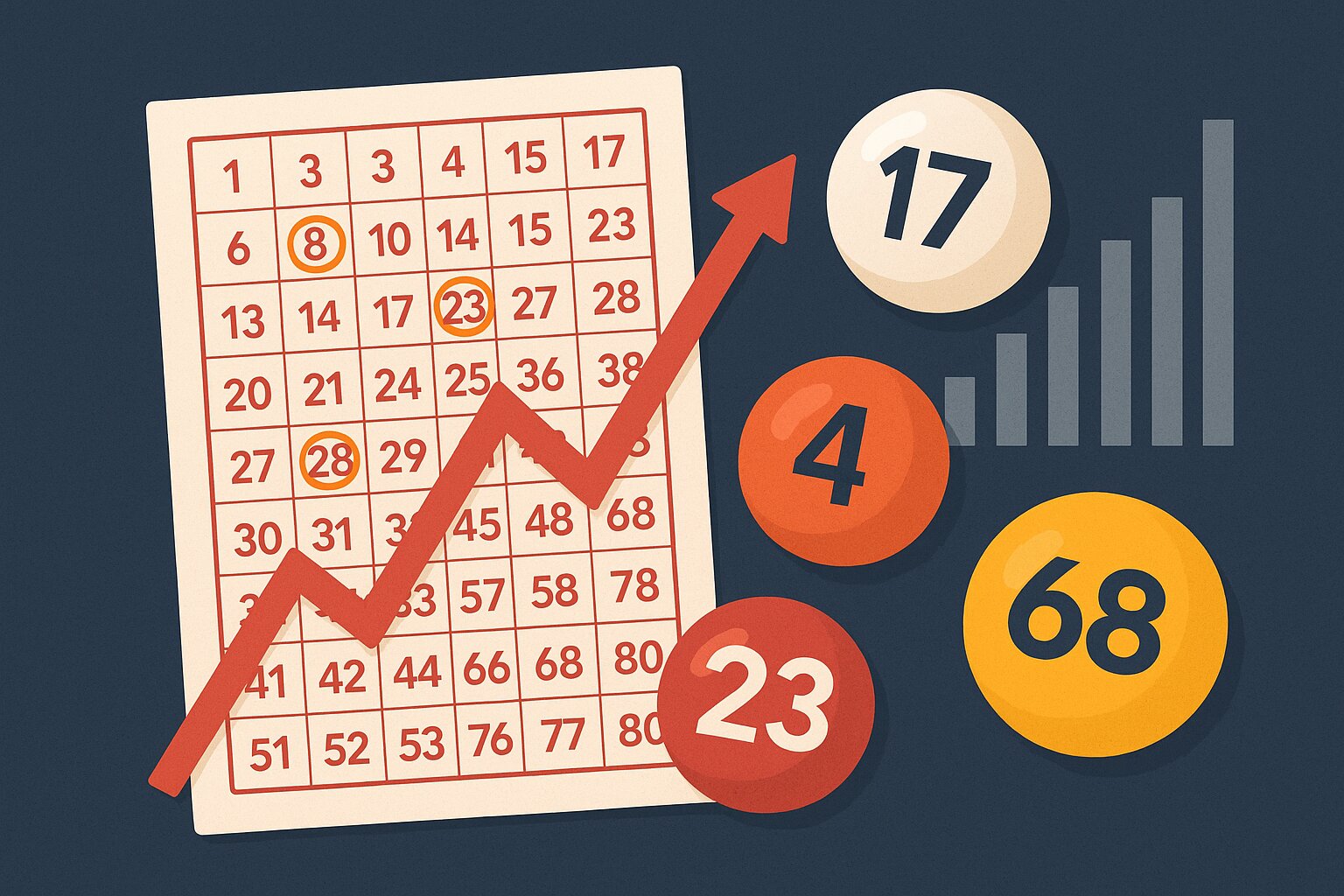
When you play Keno, it’s natural to wonder whether certain numbers or patterns appear more often than others. Many players enjoy tracking recent results and testing out shapes or groups on their ticket to make the game more engaging.
This article looks at how people spot patterns, what those patterns typically are, and what experts and regulators say about their significance. Read on for clear explanations and practical context that will help you understand the topic without overstating what patterns can achieve. Play within your limits and treat the activity as entertainment.
What Are Keno Number Patterns?
Keno number patterns are ways of organising the numbers on a ticket so they form a recognisable shape or arrangement. Players often mark lines, blocks, diagonals or clusters on the slip because these are easy to remember and can make choosing numbers feel more purposeful.
Examples include a horizontal line across the ticket, a square of adjacent numbers, or a zigzag that crosses several rows. These visual patterns are a picking style rather than a method to alter the game itself. The mechanics of Keno mean each ball has the same chance of being drawn, so patterns do not change the mathematics behind the draw.
Using patterns can make the experience more enjoyable, especially when shared with friends. The important distinction is that pattern picking is a personal preference rather than a performance-enhancing technique.
How Are Hot And Cold Numbers Identified In Keno?
When players talk about hot and cold numbers, they are referring to how often particular numbers have appeared in recent draws. Hot numbers are those that have been drawn frequently in the short term; cold numbers are those that have not appeared for some time.
Identification usually involves looking at recent results, sometimes over several draws, and noting which numbers recur. Some players keep simple charts or lists to track appearances purely out of interest. There are also public result pages and basic online tools that show recent history for anyone who wants to review it.
It helps to remember that each draw is independent, and prior occurrences do not change the odds for the next draw. Spotting hot or cold numbers is largely an observational pastime that adds context to past results rather than a technique that affects future outcomes.
Which Number Trends Do Players Notice Most Often?
Players commonly point out a handful of repeatable patterns seen in past draws, which often become topics for discussion:
- Consecutive numbers such as 21, 22 and 23.
- Repeat numbers showing up in several draws close together.
- Clusters of numbers that appear near each other on the ticket.
- Mirror pairs like 17 and 71 or numbers with a visual similarity.
These patterns are examples of the types of things people notice when scanning result sheets. They can be interesting to follow and sometimes form the basis for friendly debates among players. Keep in mind that noticing a pattern in historical draws does not imply it will recur in the future.
If you enjoy tracking trends, treating the activity as observational research rather than a prediction method will keep expectations realistic.
Are There Winning Keno Patterns Or Is It Pure Chance?
Many players hope there might be a technique to improve their odds, but experts and industry bodies are clear: there is no proven pattern or system that reliably changes the chance of a particular number being drawn. Keno draws are regulated to ensure fair play, and the mathematics of the game mean each possible combination has the same statistical treatment.
Common misconceptions include the idea that certain shapes on the betting slip win more often or that a long absence makes a number “due” to appear. These are intuitive but incorrect interpretations of random sequences. Understanding the independence of draws helps set accurate expectations about what patterns signal and what they do not.
Knowing this, you can still enjoy experimenting with different picking styles while keeping your approach grounded in how the game actually operates.
Common Myths About Keno Patterns
There are a few persistent myths that keep circulating among players. One is that certain visual patterns on a ticket confer an advantage. Another is the belief that recently frequent numbers are more likely to appear again, or that absent numbers are overdue. Finally, some people think previous results can predict the next draw. None of these are supported by the statistical rules governing independent draws. Treat such claims sceptically and base your choices on what you enjoy rather than on expectations of improved odds.
Jumping from myths to practical analysis, the next section explains how people commonly look at past results and what that does — and does not — tell you.
How Can You Analyse Recent Keno Results?
Analysing past Keno results is straightforward and mainly serves curiosity. Most result pages list recent draws so you can scan for repeats, clusters or streaks. Some players log results personally to see if any personal patterns emerge, and there are simple charting tools available for visual reference.
This kind of review is an exercise in observation rather than prediction. It can be instructive for understanding frequency over a given sample of draws, but it does not alter the odds for future draws. If you do analyse results, focus on the data you find interesting and avoid treating patterns as guarantees.
Keeping entries brief and maintaining a clear sense of proportion between observation and expectation helps make the activity both informative and enjoyable.
Should You Use Hot Or Cold Numbers When Picking Keno Numbers?
Choosing hot or cold numbers is a matter of personal style. Some players prefer to follow recent trends and select numbers that have appeared often, while others like the idea of picking those that have been absent for longer periods. Both approaches are equally valid as ways of personalising the game.
The key point is that neither choice changes the probability of any individual number appearing next. If you prefer one method because it makes the game more fun or meaningful for you, that is a perfectly reasonable basis for selection. The practical advantage comes from enjoyment and engagement rather than mathematical benefit.
Decide what makes the experience most satisfying for you, and keep limit-setting in mind so the activity remains recreational.
What Do Experts Say About Winning Keno Numbers?
Industry professionals and statisticians consistently emphasise that Keno is governed by random, independent draws. Their advice tends to centre on understanding the maths behind independence and probability, and on approaching the game as a form of entertainment with fixed odds.
Experts suggest choosing numbers for reasons that enhance your enjoyment, such as personal significance or pleasing visual patterns, because those choices do not affect outcomes. They also highlight the value of keeping play within affordable limits and viewing results as the outcome of chance rather than an expectation of gain.
With that realistic framework, players can appreciate the game’s unpredictability while making choices that suit their tastes.
Summary: Understanding Keno Patterns And Trends
Keno patterns and number trends are interesting to explore and can make playing more engaging. Whether you notice consecutive numbers, clusters, repeats or mirror pairs, these observations reflect what has happened in the past rather than what will happen next. Draws are independent and governed by regulations that ensure fair play.
If you enjoy tracking hot and cold numbers or creating patterns on your ticket, do so for the interest it brings. Keep expectations realistic, play within your limits, and treat Keno as entertainment. That way you can appreciate the social and observational aspects of the game while keeping the experience sensible and enjoyable.
**The information provided in this blog is intended for educational purposes and should not be construed as betting advice or a guarantee of success. Always gamble responsibly.