
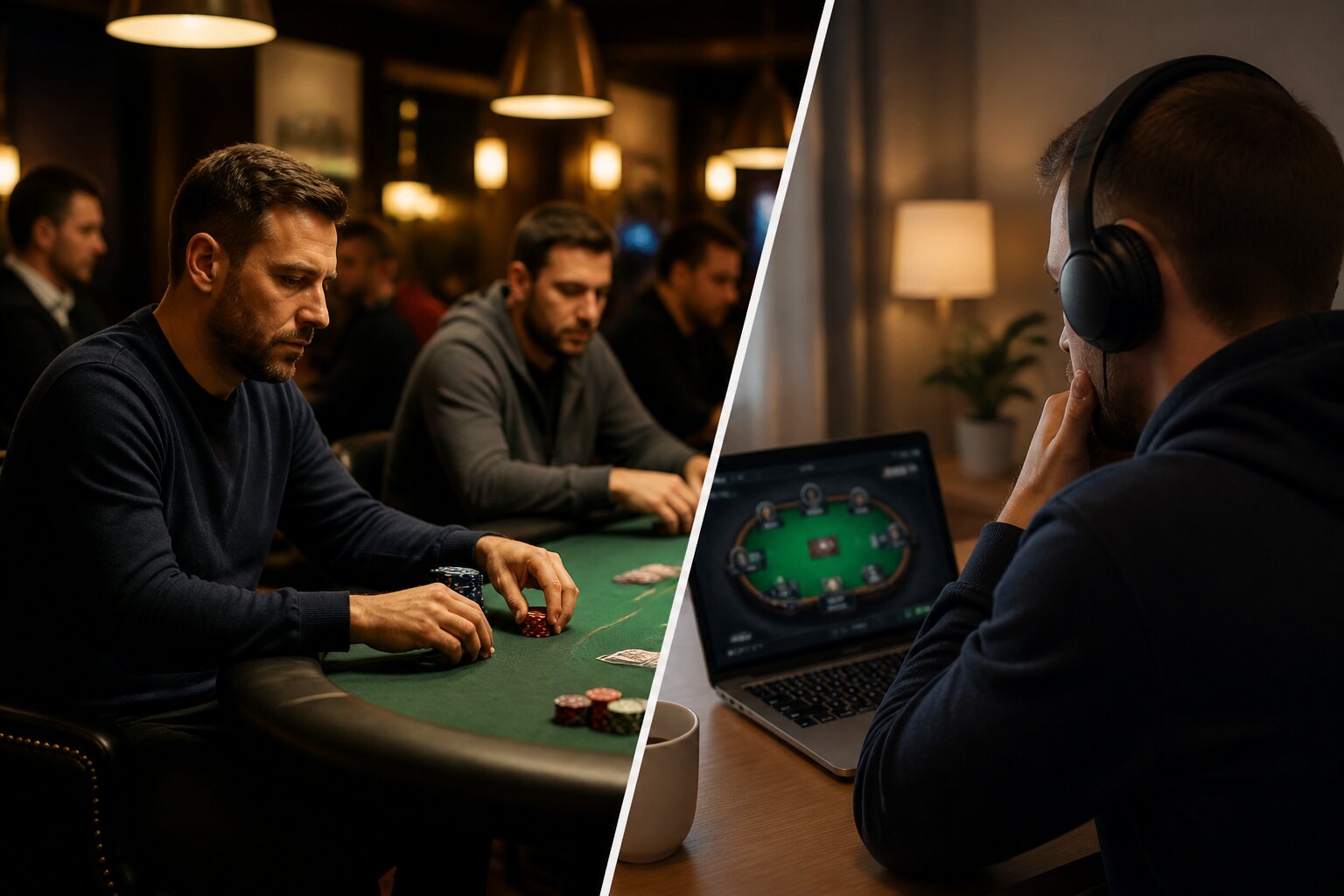
Thinking about jumping from a live poker table to an online game, or the other way round? You might be wondering if one is trickier than the other, or what really sets them apart.
Online poker is fast and often anonymous, while live poker relies more on physical presence and table atmosphere. Each format tests different skills and can suit different players.
Curious which version will test your game more, or what to expect when you switch? Read on as we compare the key differences and help you find the best fit for your style.
What Makes Online Poker Different From Live Poker?
Although the rules are the same, the experience and demands of online and live poker differ in several practical ways.
The pace online is generally much quicker because there is no manual shuffling, dealing or long breaks between hands. That leads to more decisions per hour, which changes how you manage concentration and bankroll. Player interaction is also different: at a real table you can use body language and chat to learn about opponents, whereas online you rely on betting patterns and timing data. Formats vary too — online rooms provide a wider range of game types and schedules, while live venues tend to offer fewer tables and set tournament times. Finally, multi-tabling online lets you play several games at once, increasing action but also adding cognitive load.
Knowing these differences will help you pick the environment that matches your tempo and focus.
The main practical differences include:
- Speed and hand volume, which affect how quickly you make decisions and how many hands you see in a session.
- The nature of reads and information, which changes from physical tells to statistical and timing cues.
- The variety and availability of games, with online platforms offering more options and flexible start times.
- The option to play multiple tables simultaneously, which raises decision frequency and mental strain.
Speed
Online poker moves at a brisker clip, producing more hands in the same time span. That higher volume can accelerate learning by exposing you to more situations, but it can also push you toward quicker, less-considered choices. It is important to monitor your focus and avoid playing when you feel rushed or tired.
Player Interaction
Face-to-face play offers physical tells, conversational clues and the chance to influence the table atmosphere. Online play replaces those cues with statistical information such as bet sizes, timing and sequences of actions. Observation shifts from reading appearances to tracking patterns and adapting to player styles over many hands.
Game Formats
Online platforms host a broader variety of game types and start times, making it easier to find a table at any hour. Live rooms typically run a narrower selection and often require waiting for scheduled events. The choice of format influences session planning, bankroll needs and variance, so pick games that suit your skill level and time availability.
Multi-Tabling
Playing multiple tables at once amplifies variance and decision frequency. It can increase long-term sample sizes and potential learning, but it also demands strong concentration, quick decision-making and careful bankroll management. Only take on multiple tables if you can maintain high-quality play and keep sessions within responsible limits.
Why Do Players Find Online Poker More Challenging?
Many players describe online poker as tougher, and several factors explain why.
The rapid pace reduces time for deep thinking, so habitual decision-making becomes more common. Player pools online are often larger and more varied, bringing a mix of styles that complicates reads and strategy. When multi-tabling, the sheer volume of decisions can produce mental fatigue and errors. Finally, the absence of visual clues forces a greater emphasis on pattern recognition — noting how opponents size bets, which streets they bet on, and how often they check or fold.
These elements make online play more about data and rhythm, while live play offers more interpersonal skills. Balancing intensity with sensible session limits will help you maintain quality decisions whether you play online or live.
Reading Opponents: Online Vs Live
Reading players is central to poker, but the signals you rely on differ between the two formats.
In a live setting, physical tells and table talk provide immediate, intuitive information. Small gestures, chip handling and shifts in posture can hint at confidence or discomfort. Online, visual tells vanish; instead you build reads from behaviour over many hands — frequency of raises, timing patterns, bet sizing across streets, and how often a player calls down with marginal hands. Software can help track these tendencies, though rules on tools vary by site.
Neither method guarantees certainty. Players deliberately mix up patterns in both environments, so the most reliable edge comes from combining behavioural observation with sound game theory and pot-control judgement.
Game Pace: How Speed Impacts Difficulty
The pace of play changes how sessions feel and what skills are most useful.
At live tables, the slower rhythm allows more reflection between hands and more time to manage emotions after a swing. Online, quicker hand rates demand sustained focus and faster pattern recognition. Over a long session, the quicker tempo can cause decision fatigue; you may find your judgement blunting as repeat choices add up. Multi-tabling magnifies this effect, so many experienced players limit the number of tables to preserve decision quality.
Listening to yourself and taking regular breaks helps preserve concentration and prevents poor decisions born from fatigue.
How Do Stakes Vary Between Online And Live Play?
Stakes affect the type of opponents you meet and how you approach the game.
Online platforms typically offer a broader range of limits, from very low-stakes micro games to high-roller tables, making it easier to find a level that suits your budget. Live venues often set higher minimum buy-ins to cover operating costs, which can raise the barrier for casual play. The practical result is that beginners may find it easier and cheaper to practise online, while live games can be better for players seeking deeper structures and social play.
Whatever the environment, matching stakes to your bankroll and skill level remains essential to a sustainable, long-term approach.
Common Misconceptions About Online And Live Poker
There are a few persistent myths worth clearing up so you enter games with realistic expectations.
Some think online poker is unfair; regulated sites use independently tested random number generators to ensure deal integrity, and reputable rooms enforce anti-cheating measures. Others worry that technology gives unfair advantages; while tracking tools exist, sites publish clear rules and monitoring systems to prevent collusion. The idea that live poker is inherently safer is also misplaced — in-person collusion or angle shooting can happen, and live venues rely on staff and surveillance to discourage those behaviours.
Base your choices on how a site or venue operates and the protections they offer, rather than rumours. A measured, informed approach to play reduces surprises and improves results.
Which Is Better For Beginners?
The right starting point depends on what you want to learn and how you feel about social interaction.
If you want to build hand volume and experiment quickly, online play accelerates exposure to situations and opponents. That can speed up skill development, provided you manage session length and stakes. If you prefer learning through observation and conversation, live games let you watch skilled players at work and pick up timing and bet-sizing through direct interaction. Cost is another factor: online low-stakes options are often more accessible for practice, while live games can carry higher buy-ins.
Whichever route you choose, approach it as deliberate practice: play within your means, review hands to learn from mistakes, and keep the focus on steady improvement.
Final Thoughts: Choosing The Right Poker Experience
Picking between online and live poker is a personal choice shaped by how you like to play and learn. Some players mix both to gain the advantages of each: online for volume and data-driven refinement, live for interpersonal skills and table dynamics.
Prioritise enjoyment and sensible limits. If play ever feels less enjoyable or starts to cause concern, take a step back and seek advice or support. If you’d like, we can point you to resources and tools that help you assess limits and track progress so you get the most from your poker, whatever format you choose.
Choose the experience that fits your style, keep your play measured, and enjoy improving your game.
**The information provided in this blog is intended for educational purposes and should not be construed as betting advice or a guarantee of success. Always gamble responsibly.