
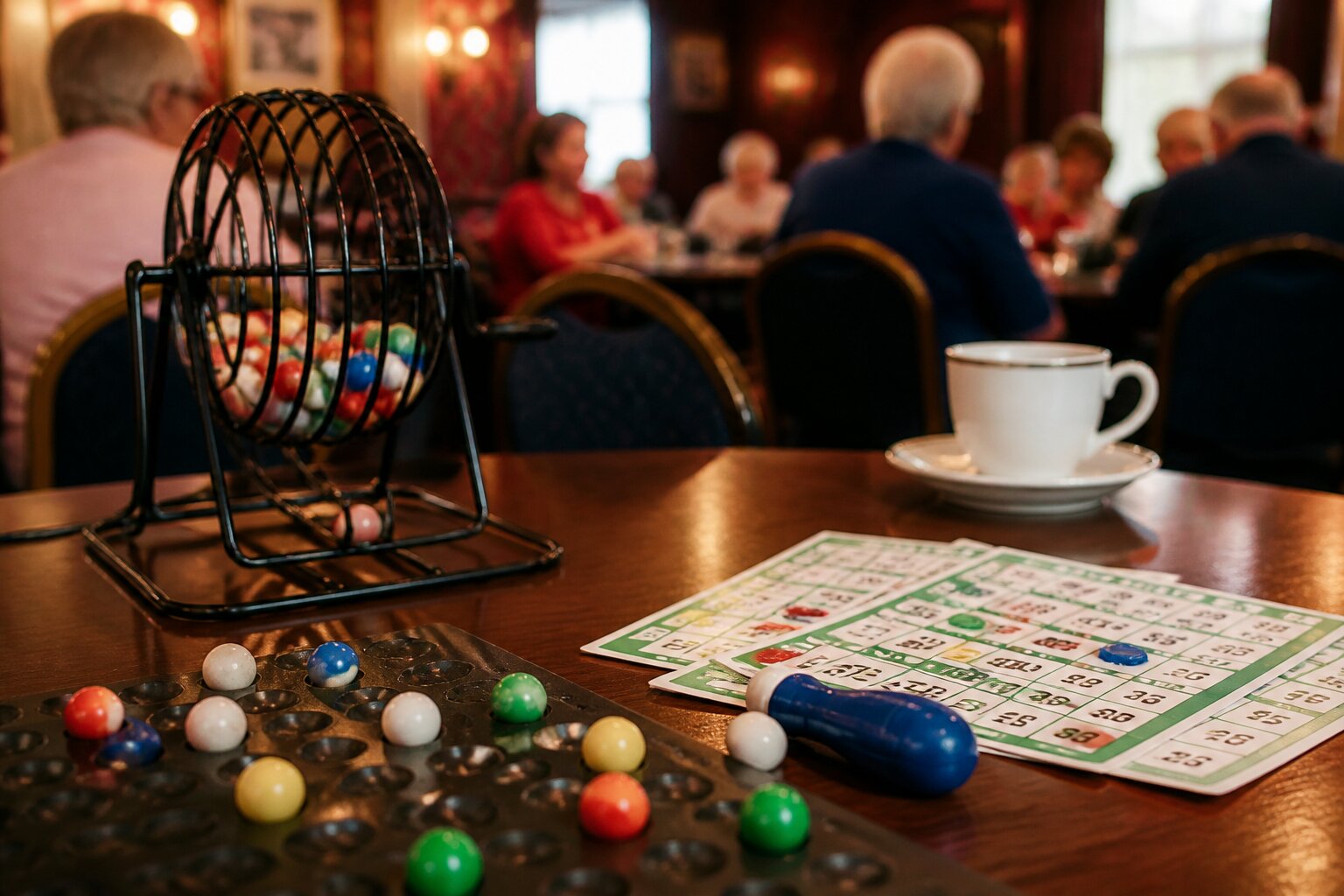
Fancy joining a lively game that blends simple rules with local character? Whether you’re completely new to bingo or curious about what makes the Irish version distinct, this guide walks you through the essentials in a friendly, easy-to-follow way.
You’ll learn how Irish bingo is played, how it differs from other formats, what the well-loved calls mean, and what to expect when a win is claimed. The goal is to give you a clear picture so you can enjoy the game with confidence and be aware of the practicalities involved.
Keep reading to pick up the terminology, common game formats, and how prizes and verification work — all presented so you can follow along whether you’re playing in person or online.
What Is Irish Bingo?
Irish bingo is a regional take on the familiar 90-ball bingo format. Players receive cards with numbers arranged in three rows and nine columns. As numbers are announced, those numbers are marked on the cards, and the object is to complete a specified pattern — often one line, two lines, or a full house.
What sets Irish bingo apart is the atmosphere and the calling style. Callers often use playful phrases and local expressions to announce numbers, which gives the game a chatty, social feel. Sessions are commonly run in community halls and online rooms: the mechanics are the same, but the social energy can be quite different depending on the setting.
Participation is restricted to adults aged 18 and over. The format is straightforward enough for newcomers while still offering variety through themed sessions, faster rounds, and special events.
How Does Irish Bingo Differ From Other Bingo Types?
At its core, Irish bingo follows the same basic mechanics as other 90-ball games, so the differences are largely about presentation and pacing rather than rules. The distinctive features include the colourful number calls and a focus on communal play — callers engage the room with banter and rhythm, which many players enjoy.
Card layouts are usually the standard 90-ball sheet, unlike American bingo which commonly uses a 75-ball grid. Some venues introduce short games or one-line-only rounds to change the tempo, and online platforms may add visual or audio enhancements to replicate the hall experience.
The differences are best understood as variations of style: the gameplay stays familiar, but the tone and pace create a recognisably Irish flavour.
What Are Common Irish Bingo Calls?
Irish bingo is famous for its calls — quick, memorable phrases that help numbers stick in players’ minds and raise the fun factor. These phrases are part of the shared culture of the game and are used to add character rather than change the gameplay.
Number Call Examples And Their Meanings
Below are a few typical calls you might hear and the simple idea behind them. These examples show how language and rhyme are used to make numbers easy to remember.
- Number 8 — “Garden Gate”: a short, rhyming tag that makes the number stand out.
- Number 32 — “Buckle My Shoe”: a playful phrase often heard in bingo halls.
- Number 66 — “Clickety Click”: a rhythmic call that’s familiar to regular players.
- Number 90 — “Top of the Shop”: a straightforward label for the highest number in 90-ball bingo.
These calls serve two purposes: they announce numbers and contribute to the atmosphere. If you play a few sessions, the phrases quickly become part of the experience and help with concentration in a lively room.
Are There Different Game Formats In Irish Bingo?
The standard format is 90-ball, with the familiar structure of one line, two lines, and full house prizes. Occasionally, organisers or online platforms vary the format to introduce shorter games or themed rounds that focus on a single prize tier, such as only a single line.
Special rounds or promotions might alter how many winners there are or how prizes are split, but the underlying mechanics remain the same: numbers are called, cards are marked, and winners are verified before prizes are paid out. These variants add flavour without changing the essentials of how the game works.
If you prefer a faster session, look for one-line or quick-play rounds; if you enjoy the full experience, a standard session with multiple prize tiers will feel more complete.
What Happens When A Player Claims A Win?
When a player believes they have met the winning pattern, they must make the claim immediately so the organiser can check the card. In physical sessions this involves calling out or signalling; online systems often include automatic detection but still allow for manual verification to prevent mistakes.
Verification means matching the called numbers to the claimed card and confirming the pattern is correct. Only after this check is the win confirmed and the prize awarded. This process ensures fairness and avoids disputes.
Claims can occasionally be disputed if a caller or player mishears a number, so being attentive while numbers are announced helps avoid confusion. The verification step is there to protect both players and organisers and to keep the game running smoothly.
How Are Prizes Distributed In Irish Bingo?
Prizes are allocated according to the rules set before the game starts, typically awarding the first player to complete one line, two lines, and a full house. The announcement before play explains how many winners there will be and whether any prizes are shared or fixed amounts.
In special games, organisers might add extra or bonus prizes; these are always described up front so everyone understands the stakes. Once a win is verified, the prize is paid in line with the stated terms — whether that’s cash, vouchers, or a credited amount on an online account.
Fair distribution depends on clear rules and prompt verification. That clarity helps maintain a positive environment for all players and makes the process straightforward.
Can Irish Bingo Be Played Online?
Yes. Online rooms recreate the 90-ball format and the familiar calls, and they include the regulatory safeguards required in the UK. Players must be 18 or over and will usually complete age and identity checks before being allowed to participate.
Licensed operators are required to offer protections such as secure transactions, clear terms, and tools that let players set deposit or play limits. If you’re new to online bingo, a site’s help pages and responsible play tools can explain how its features work and what options are available to manage your activity.
Playing online provides convenience and a range of session types, from quiet daytime rooms to livelier evenings with more banter. Whichever environment you choose, the mechanics of the game and the need for fair, transparent rules remain the same.
Final note: Irish bingo is a social, rule-based game that rewards attention and follows clear procedures for claiming and awarding prizes. If you join a session, you’ll find the combination of straightforward play and familiar calls makes for a friendly experience that anyone aged 18 or over can enjoy.
**The information provided in this blog is intended for educational purposes and should not be construed as betting advice or a guarantee of success. Always gamble responsibly.