Online gaming presents a wide range of choices, and two popular options at many UK sites are Slingo and slots. Each offers a different way to play, so knowing their differences helps you pick what will be most enjoyable.
This guide explains how Slingo works, how slots work, the main differences between them, and what to consider when choosing the right game for you. Read on to find the style of play that fits you best.
What Is Slingo and How Does It Work?
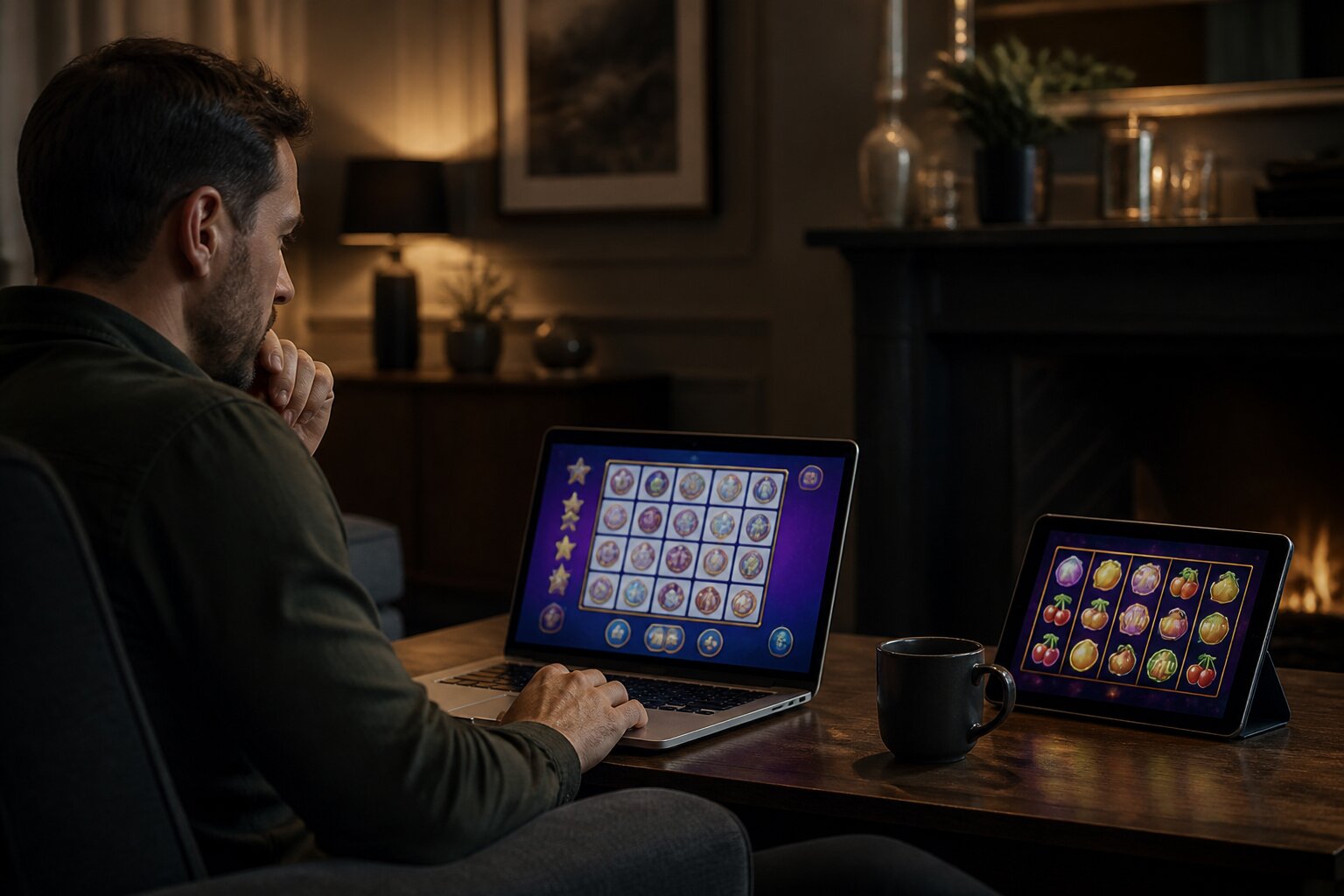
Slingo mixes elements of bingo with slot-style reels. A typical game uses a 5x5 bingo card and a set number of spins. As the reels spin, numbers appear and any that match those on your card are marked off. The objective is to complete horizontal, vertical or diagonal lines, which are called Slingos.
Special symbols add variety: jokers can clear a whole column, free spins extend play, and multipliers increase potential payouts. Different versions may include bonus rounds or progressive jackpots, but the core idea remains marking off numbers within the allotted spins.
Outcomes are determined by certified random number systems and are not influenced by player actions. Slingo is intended for adults aged 18 or over. To get a feel for how this compares with more traditional reel play, next we look at slot games.
How Do Slot Games Work?
Slot games centre on spinning reels decorated with symbols. When the reels stop, the arrangement of symbols across one or more paylines determines whether a payout is awarded. Each spin is governed by a random number system that ensures results are unbiased and independent.
Many slots include features such as wilds that substitute for other symbols, scatters that trigger bonus rounds, free spins and multipliers. Themes vary widely and often include animated sequences or short storylines to enhance the experience. Some slots focus on simple single-line play, while others provide multiple paylines and more complex feature sets.
Like Slingo, slots are designed for adults aged 18 or over and use regulated random-number technology to produce outcomes. With that foundation in mind, the next section compares the two formats across key dimensions.
Comparing Slingo and Slots: Key Differences
Slingo and slots create distinct experiences even though both use similar visual and technical tools. The following points set out where they diverge most noticeably.
Game Mechanics and Formats
Slingo blends a bingo card with spin results, encouraging players to mark off matching numbers and complete lines within a limited number of spins. That card-based element gives a different kind of engagement compared with straight reel play.
Slots focus on matching symbols across paylines. The core action is spinning, and variety comes through differing numbers of paylines, symbol types and bonus features. Some slots prioritise rapid, repeated spins, while others build towards bonus rounds that change the pace. The contrast between the card-based rhythm of Slingo and the reel-based rhythm of slots helps explain why the two appeal to different players. Moving from mechanics to presentation, the next point looks at visual style and theme choices.
Themes and Visual Experience
Both formats come in many themes, but they present them differently. Slingo centres the game around the bingo-style grid, so design choices emphasise clarity of numbers and the layout of the card, while bonus effects tend to highlight changes to the grid. Slots often lean into cinematic presentation: animated reels, layered backgrounds and sound design that supports each theme.
Because slots have a long history, there’s a larger overall variety of visual approaches, from simple retro fruit machines to elaborate video slots that mimic short films. Slingo tends to stick closer to the card-based aesthetic, using animations to spotlight special symbols and line completions.
Social and Community Aspects
Slingo sometimes borrows social features from bingo culture: leaderboards, community jackpots and in-game events that encourage shared engagement. These features can make sessions feel more communal.
Most slots are single-player experiences, though tournaments and timed events can introduce competitive elements. Interaction tends to be less direct, with the emphasis on individual play and personal progression through game features.
Which Offers a Better Player Experience?
What feels better depends on the kind of interaction you prefer. Slingo provides a hybrid experience that brings the pattern-focused thinking of bingo together with the immediacy of spins. That combination can make play feel more varied within a single session.
Slots offer straightforward, often faster gameplay with a broad spectrum of themes and feature designs. Players who value quick rounds and a huge choice of styles generally favour slots.
Both formats can be immersive and entertaining, so the best experience is the one that matches your tastes. With those differences in mind, the next section examines how popularity and reach compare in the UK market.
Popularity of Slingo vs Slots in the UK
Slots remain the most widely played option at online casinos in the UK, supported by decades of development and a vast catalogue of titles. Their variety and familiarity keep them prominent among players.
Slingo has grown steadily, attracting players looking for a familiar bingo rhythm with more instant action. Its hybrid nature makes it appealing to people who enjoy both card-based patterns and occasional bonus features. While Slingo’s catalogue is smaller than that of slots, it is reaching a wider audience as more publishers create new versions.
Participation in both types of game is restricted to adults aged 18 and over. The differing player numbers reflect how straightforward reel play and hybrid bingo approaches meet different entertainment preferences. With common misunderstandings in mind, the next part clarifies a few myths.
Are There Any Common Misconceptions?
Several misconceptions persist about these games. One is the idea that particular behaviours, patterns or timings can affect outcomes. In truth, both Slingo and slots use regulated random-number systems that produce independent results, so no action alters future results.
Another mistaken belief is that longer play or larger bets will necessarily change the probability of a payout. Payout structures are determined by game design and mathematics, not by how much time or money a player spends in a session.
Approaching gaming with clear expectations helps keep it enjoyable: treat it as entertainment, be aware of how the systems work, and avoid chasing outcomes. The next section helps you decide which format may suit you best.
Choosing the Right Game for You
Deciding between Slingo and slots comes down to what you find engaging. If you like pattern-based play and occasional community features, Slingo might be more satisfying. If you prefer simple, quick rounds and a very wide range of themes and special features, slots are likely a better fit.
Consider what you enjoy about games generally: visual spectacle, social interaction, strategic choices within limited systems, or quick play. Also think about session length and how you want to manage your activity. Use available account tools to set limits if you want tight control over time and spending.
Only play if you are 18 or over. Treat online games as entertainment and keep choices aligned with your personal preferences and wellbeing. With that in mind, pick the style that promises the most fun for you and enjoy the experience.
**The information provided in this blog is intended for educational purposes and should not be construed as betting advice or a guarantee of success. Always gamble responsibly.