
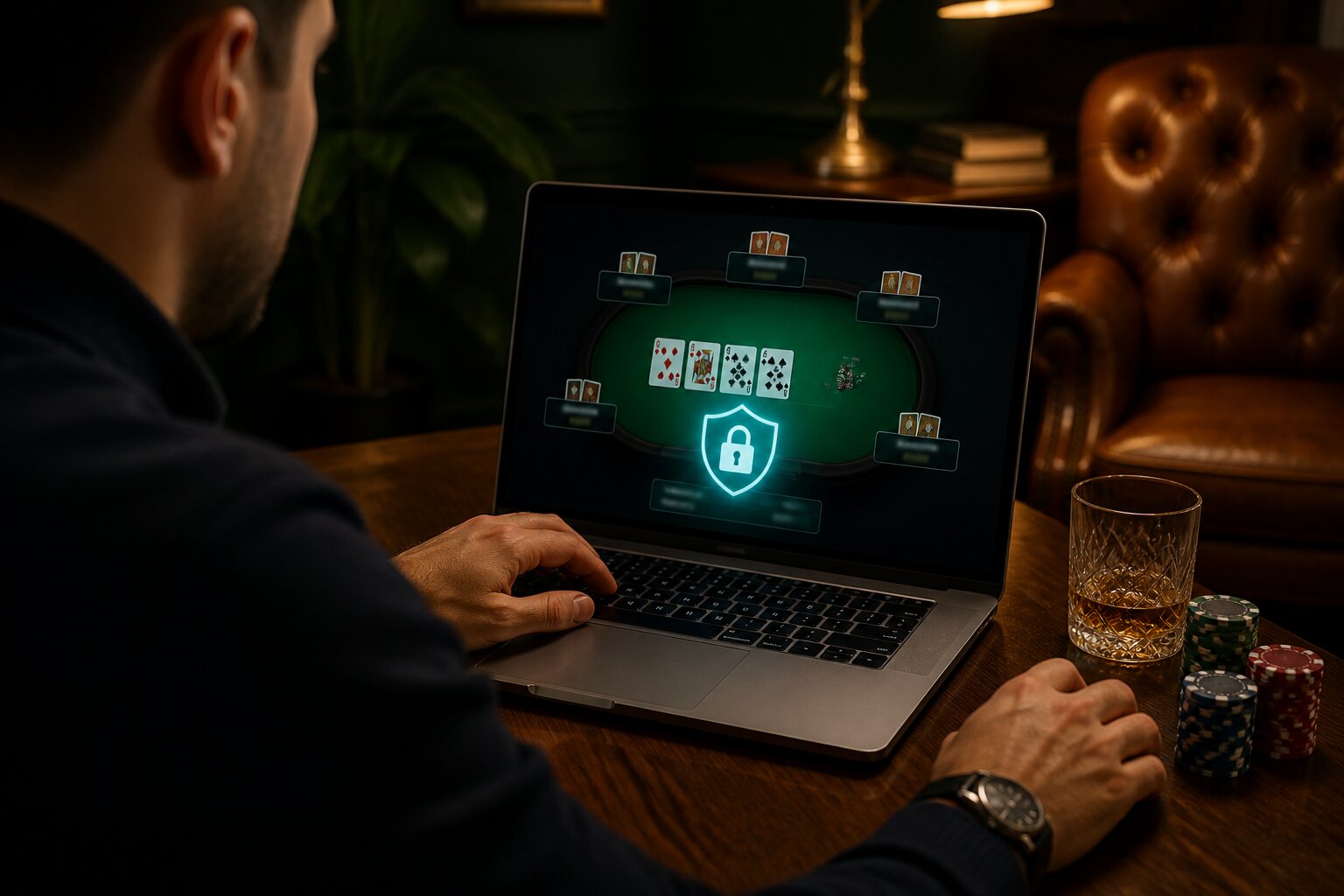
Ever wondered how online poker sites keep games fair and stop cheaters in their tracks? It’s a common concern, whether you play casually or more seriously.
With real money involved, trust matters. Behind every table there are technical systems and human teams working together to protect your money, your data and the integrity of each hand.
Curious about how it all fits together? We’ll take you through the main safeguards, how suspicious behaviour is spotted, and what to look for when choosing a site.
Why Is Security Essential in Online Poker?
Security underpins everything in online poker. Without strong protections, players’ funds and personal details are vulnerable, and the fairness of the games can be questioned.
Good security does several things at once. It prevents unauthorised access to accounts, stops fraudulent financial activity, and makes it much harder for anyone to gain an unfair advantage at the table. That combination keeps players confident that the games are genuine and that everyone is competing on the same terms.
Regulators require operators to maintain these protections, which means sites invest in continual monitoring, testing and independent checks. That ongoing scrutiny helps reduce risk and keeps problems from spreading, so players can focus on the strategy rather than the safety of the platform.
How Do Online Poker Sites Detect and Prevent Cheating?
Operators use a mix of automated systems and specialist teams to detect cheating. Software analyses large volumes of game data in real time, searching for patterns that would be unlikely in normal play, such as repeated coordinated behaviour between accounts or unusual betting sequences.
When the software flags a potential issue, human investigators review the hands, chat logs and account histories to build a fuller picture. Where evidence supports it, sites can pause or close accounts, remove suspect hands and protect affected players.
This layered approach — automated detection followed by human review — is effective because it balances scale with judgement. Machines highlight anomalies; experts decide whether those anomalies indicate wrongdoing or a legitimate strategy.
What Technology Keeps Online Poker Games Fair?
A range of technical measures work together to protect players and maintain fair play.
Encryption keeps personal and financial information private while it moves between your device and the site. Servers are secured to prevent unauthorised access and to maintain the integrity of account balances and transaction records. Anti-fraud tools monitor deposits, withdrawals and account behaviour to spot suspicious activity.
A critical component is the random number generator, which determines the order of cards. Independent testing confirms that these systems behave as expected, producing unpredictable deals that cannot be manipulated by players or operators. Regular audits and security assessments ensure these technologies remain robust as threats evolve.
Together, these systems create an environment where the cards are dealt fairly and your data stays protected.
Why Are Random Number Generators Used in Online Poker?
Random number generators, or RNGs, ensure the deck is shuffled and dealt in a way that cannot be predicted. That unpredictability is essential to replicate the uncertainty of a live table and to stop anyone from knowing which card will appear next. Without RNGs, online poker would be vulnerable to patterns or manipulation that would make play unfair.
Independent testing and certification give players confidence that RNGs operate correctly. These third party checks look beyond the surface and assess both the software and the results it produces. Because the process is reviewed externally, players can be reassured that card order is not controlled or disclosed to any participant.
Typical aspects examined by testers include:
- the algorithms used to generate randomness and how they are implemented
- the statistical distribution of outcomes to ensure hands are consistent with fair play
- the integrity of the system to confirm there is no external interference or unauthorised access
Together, these measures help maintain a level playing field by making sure online dealing behaves like dealing at a real table, subject to the same uncertainty and chance that make poker a game of skill and luck.
How Are Player Actions Monitored for Unfair Play?
Monitoring combines continuous data analysis with specialist review. Software tracks actions such as bet sizes, timing, fold frequencies and interactions between accounts. When unusual combinations of those factors arise, alerts are generated.
Collusion detection tools are a key element. They identify patterns that suggest two or more players are coordinating, for example by avoiding competition with one another or by consistently acting in ways that benefit another account. Tables or hands flagged in this way receive a detailed manual review so investigators can assess intent and context.
Poker bots are another concern. Detection systems look for indicators of automated play, such as perfectly consistent timing or impossibly quick, error-free decisions. If a bot is suspected, an operator will examine session metadata and gameplay to confirm whether automation was used.
These safeguards mean that players who follow the rules can expect their opponents to be human and acting independently.
Collusion Detection Tools Explained
Collusion detection works by comparing many aspects of play across accounts. Algorithms look for repeated pairings of accounts, complementary betting sequences and other statistical oddities. The goal is to separate deliberate teamwork from coincidental similarities, so flagged cases are checked by analysts who can consider context such as table composition and player styles.
Preventing the Use of Poker Bots
Bot detection combines behavioural analysis with device and account checks. Systems examine timing patterns, decision complexity and session lengths. When doubts remain, operators review logs and may request additional verification from the account holder before taking action. Confirmed bot use leads to account suspension and other sanctions to protect the wider player base.
How Do Online Poker Sites Protect Player Data?
Protecting personal and financial information is essential. Most reputable sites use strong encryption to shield sensitive data while it moves between your device and their servers. This typically includes modern protocols such as TLS, which prevent eavesdropping and tampering during transmission.
Payment processing follows secure industry standards so deposits and withdrawals are handled safely. Many operators comply with PCI DSS rules for card payments, work with vetted payment providers, and keep transaction systems separate from other parts of the platform to reduce risk.
Clear privacy policies explain how data is used and when it might be shared, such as to meet legal obligations. Policies should also cover data retention periods, your rights to access or correct information, and how the operator will notify you in the unlikely event of a breach.
Access to personal information is restricted within companies so only authorised staff can view it for legitimate tasks, for example:
- account verification,
- fraud investigations,
- customer support relating to your account.
Beyond these measures, sites commonly use additional security controls such as two-factor authentication, firewalls, intrusion detection systems and regular security audits or penetration tests. They also employ data minimisation and anonymisation techniques so only the information necessary for a given purpose is retained or processed.
Where third-party processors are involved, operators usually put contractual and technical safeguards in place to make sure those providers meet the same standards. Together, these practices align with broader data protection rules and help ensure your information is handled responsibly every time you log in.
What Should Players Look for in a Secure Poker Site?
When choosing where to play, look for a few clear signs of reliability. Licensing and regulation are important because they indicate that a third party reviews the operator’s fairness and security practices. Secure connections and visible encryption help protect your data when you interact with the site.
Transparency matters too. A detailed privacy policy and straightforward terms and conditions tell you how the site handles payments, withdrawals and dispute resolution. Tools that allow players to set deposit limits, session reminders and account controls are useful features that show an operator takes player protection seriously.
By selecting a site with these elements, you reduce the chance of encountering security or fairness issues.
For help choosing a safe site, contact our support team — we can point you to platforms that meet the standards described above.
Common Myths About Online Poker Cheating Debunked
There are a few persistent misconceptions about online poker. One is that sites routinely manipulate outcomes. Independent testing and regulatory oversight prevent that kind of interference, and audits check that the dealing systems behave as required.
Another myth is that cheating or bot use goes undetected. Modern detection systems are specifically designed to spot such behaviour, and suspected cases are investigated and acted upon. Finally, the idea that a site can predict or reveal upcoming cards is incompatible with how RNGs and security controls are validated.
Understanding how safeguards work helps separate fact from fiction and gives a clearer picture of the protections in place.
How Can Players Report Suspicious Activity?
If you notice behaviour that seems unusual, reporting it helps maintain the integrity of the games. Most sites include in-game reporting options and customer support channels that accept detailed accounts of what you observed. When you provide specifics such as usernames, table numbers and approximate times, investigators have the information they need to review logs and hand histories.
After a report is submitted, the site’s security team evaluates the evidence and decides on any necessary action. Outcomes vary depending on the findings and privacy rules, but reporting is taken seriously and handled confidentially. Keeping records of what you saw and when will speed up any investigation.
Raising concerns protects other players and supports the fair operation of the platform.
All these measures work together to make online poker a secure environment where fair play is actively defended. If you have questions about security features or need assistance, our team is here to help.
**The information provided in this blog is intended for educational purposes and should not be construed as betting advice or a guarantee of success. Always gamble responsibly.