
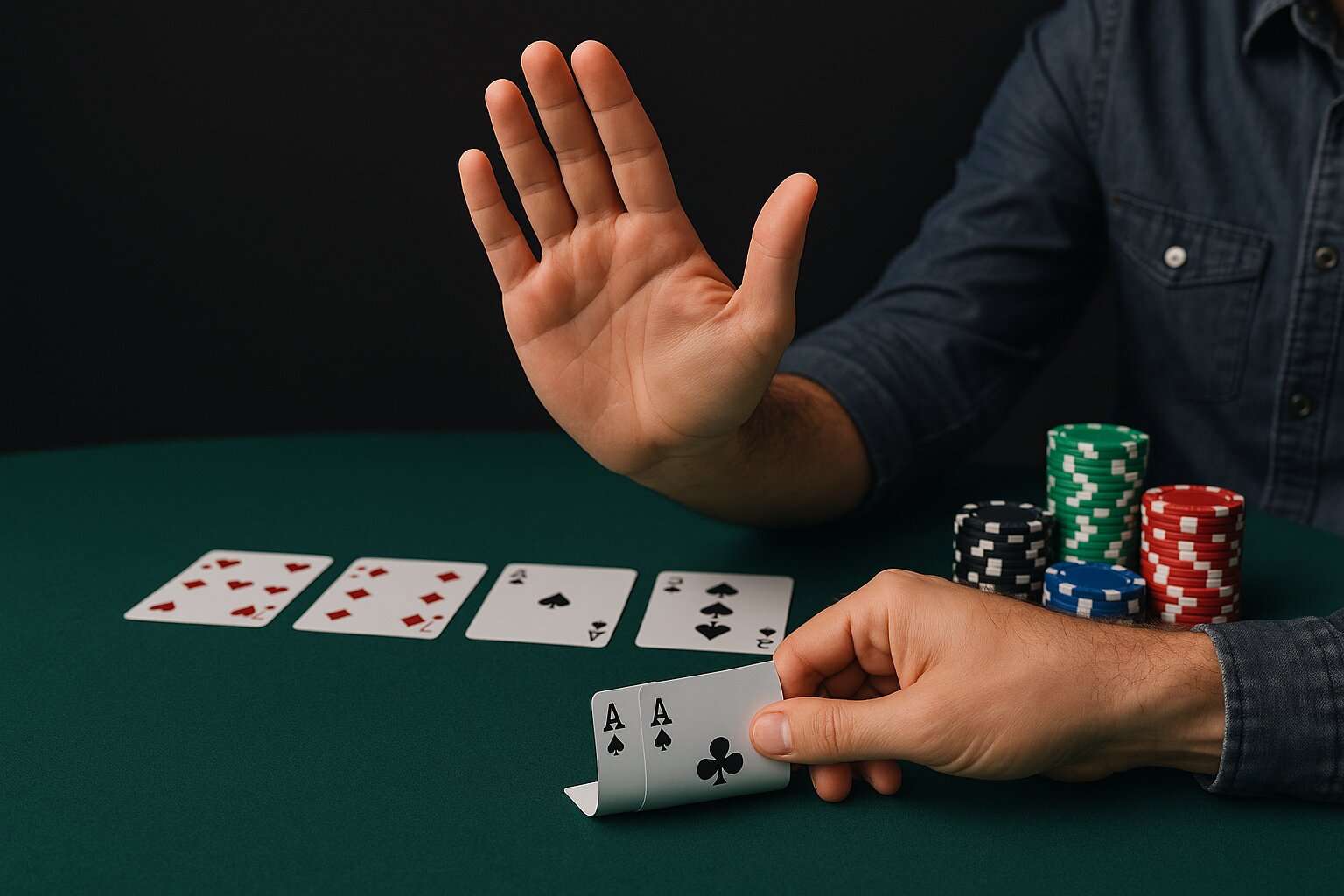
Looking to understand one of poker’s most talked-about moves? The check-raise is a classic tactic often seen in both casual and tournament play. Knowing how it works will help you read the table better and make more informed choices.
This article explains what a check-raise is, how it functions in a hand, when to consider using it, and how opponents might respond. Play within your limits and keep the game enjoyable as you try out these ideas.
What Is a Check-Raise in Poker?
A check-raise is a two-part action within a single betting round. First, a player checks when it is their turn, choosing not to put chips in while remaining active in the hand. If another player then bets, the original player can return to the action and raise that bet. In short, you check first and raise later in the same round.
Players use this move for several strategic reasons: to hide the strength of their hand, to trap aggressive opponents, or to turn a weak-looking street into a larger pot when the situation favours them. It is a recognised part of modern poker and follows the rules of standard betting structures.
How Does a Check-Raise Work in a Poker Hand?
A check-raise unfolds as the betting circle progresses. After a check, if someone else bets, the player who checked evaluates the situation and may call, fold, or raise. When they raise, the action becomes a check-raise for that round.
Imagine four players: Player A checks on the flop, Player B bets £5, and later Player A raises to £15. That sequence is a check-raise. The timing matters because the raiser must wait for another player’s bet to make the move legal and meaningful.
This play interacts with stack sizes, position and the range of hands other players might hold. Those elements determine whether the check-raise aims to extract value, force folds, or disguise intentions.
When Should You Use a Check-Raise?
A check-raise can be effective when the board and player tendencies create opportunities. It is often used when you expect opponents to bet with a wide range, when you have medium to strong hands that benefit from more money in the pot, or when you want to capitalise on aggressive players who bet to take control of the hand.
Position plays a big role. In later position, a check-raise can be more powerful because you will see more action before you return. Conversely, in early position it is riskier because there are more players still to act who could overcall or re-raise.
Assessing opponents’ tendencies is crucial. If a player bluffs frequently, a check-raise can punish them. If they only bet strong hands, you should be more cautious. The decision is a balance of your hand strength, the board texture and who you are facing.
When used selectively and for clear reasons, the check-raise becomes a tool for extracting value and controlling the flow of a hand.
What Are the Main Benefits of the Check-Raise?
The check-raise offers several practical advantages when applied correctly. It can conceal the true strength of your holding, making it harder for opponents to place you. It applies pressure by increasing the pot size suddenly, which may push marginal hands out of contention. And when you do have a strong hand, a well-timed check-raise builds the pot so there is more to win at showdown.
It also serves as an information-gathering device. How opponents react to your raise—whether they fold, call or re-raise—gives you valuable clues about their hand ranges and future tendencies.
These benefits depend on context. The same move can backfire if opponents adjust or if board textures favour calling or trapping lines. That is why moderation and reading the table matter more than relying on the move itself.
Common Mistakes to Avoid With the Check-Raise
One mistake is overusing the check-raise so that opponents pick up on the pattern and counter it. Another is attempting it without considering how many players remain in the hand; the more opponents, the less likely a check-raise will succeed as a fold-inducing play. Players sometimes neglect stack sizes and pot odds, which can turn a seemingly strong play into an expensive error.
Another pitfall is not adjusting when opponents habitually check behind or only bet with very strong hands. In those spots the opportunity to check-raise may not even arise. Finally, using the check-raise as an emotional response after losses can lead to poor decisions. Keep decisions based on the hand and table dynamics rather than impulse.
If you avoid these errors, the move retains its strategic value and fits more naturally into a balanced approach to poker.
Myths and Misconceptions About the Check-Raise
There are a few persistent myths worth clearing up. First, the check-raise is not always a sign of an extremely strong hand. It can represent a range of holdings depending on the player’s objectives. Second, it does not guarantee that you will win the pot; opponents may still call or re-raise, and outcomes remain uncertain. Third, learning this move alone will not make someone a winning player overnight. It is one tactic among many, and its effectiveness depends on application, table reading and overall strategy.
Understanding these points helps set realistic expectations for when and why the check-raise is used.
How to Respond to a Check-Raise From Opponents
When you face a check-raise, pause to consider what the action suggests about your opponent’s range and motives. The correct reaction varies: folding preserves chips when the raiser shows strength, calling keeps the pot manageable when your draw or hand value justifies it, and re-raising can be appropriate against frequent aggressors or when you have a dominating holding.
Consider how the hand has developed. If earlier streets showed weakness from the raiser, they may be attempting a bluff or semi-bluff. If they have shown consistent aggression, they may be representing strong holdings. Your response should account for these patterns as well as stack sizes and pot odds.
Remaining objective and avoiding emotional responses helps you make the best call for that situation.
Is the Check-Raise Allowed in All Poker Variants?
Many popular variants, including Texas Hold’em and Omaha, permit the check-raise and it appears regularly in those games. It is a recognised and legitimate tactic in most cash games and many tournaments where standard betting rules apply.
However, some formats and house rules can restrict or ban it. Examples include:
- certain fixed-limit structures that use "bet and raise" rules to limit how raises are handled;
- home games or casual tables where hosts adopt local rules that disallow check-raises to speed play or simplify action;
- some tournament or casino formats that implement specific betting protocols for the sake of consistency or fairness.
Older or less common variants may also have their own conventions that change how a check-raise works, so the practice is not universal across every form of poker.
Before joining a game, take a moment to confirm the rules that apply at that table. Knowing whether the move is allowed and how betting is structured will prevent surprises and let you adapt your strategy to the correct environment. If you are unsure, ask the dealer or tournament director for clarification so you are not penalised and play remains within the house rules.
Key Terms You Need to Know for Check-Raising
Familiarity with basic terms makes it easier to follow the action and use the check-raise effectively. Below are common words you will encounter at the table.
Check
Choosing not to bet when it is your turn while staying in the hand as long as no one else bets.
Raise
Increasing the current bet so that subsequent players must match the new amount to stay in.
Fold
Giving up on the current hand and forfeiting any claim to the pot.
Pot
All the chips that players have put into the middle during a hand, awarded to the winner at showdown.
Betting Round
One stage of the hand where players act in turn, such as the pre-flop, flop, turn or river in Hold’em.
Call
Matching the current bet to remain in the hand.
These terms provide the vocabulary for understanding check-raises and other strategic choices in poker. If any of them are unfamiliar when you play, a quick clarification from the dealer or rules sheet will keep you confident at the table.
Ready to put this into practice? Try observing a few hands first, then look for spots where a well-timed check-raise could change the dynamic of a round. With attention to context and restraint in its use, the check-raise becomes a useful part of a thoughtful poker toolkit.
**The information provided in this blog is intended for educational purposes and should not be construed as betting advice or a guarantee of success. Always gamble responsibly.