
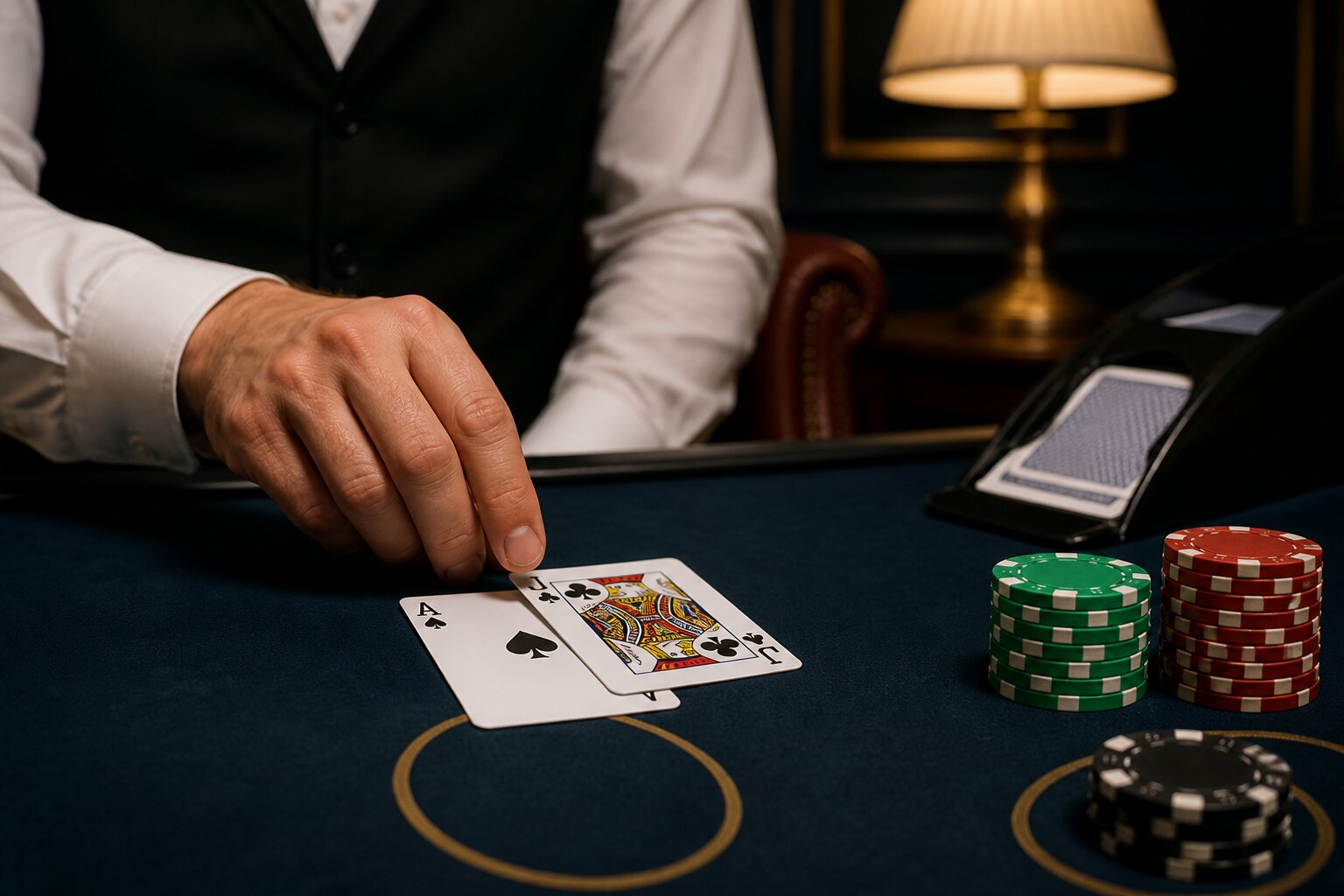
Ever sat at a blackjack table holding a card that looks different from the rest and wondered whether you can end the round on it? That question is common as casinos and game developers introduce new variants that add extra features to classic blackjack.
Understanding what a Power Card does, and whether it can be part of your final hand, can change how you play. This guide walks you through the main points so you know what to expect before you place your next bet. Read on and you’ll be better prepared at the table.
What Is a Power Card in Blackjack?
A Power Card is not part of traditional blackjack but appears in some newer variants and side bets. In those games it is usually a specially marked card or a card that gives the player extra options, such as swapping a card or revealing additional information about the dealer’s hand.
Power Cards are introduced as optional features agreed by the game host and clearly outlined in the rules. They do not alter the basic objective of blackjack, which remains to reach a hand total as close to 21 as possible without going over. Importantly, having a Power Card does not guarantee a particular result. Its purpose is to provide extra decisions or strategic possibilities within the frame of the game’s rules.
If you are unsure whether a specific table includes Power Cards, check the game information or ask staff before playing so you know exactly how those cards work.
Standard Blackjack Rules: How Is the Game Usually Played?
In most casino settings, blackjack is played with one or more 52-card decks. Players and the dealer receive two cards each. Face cards count as 10, number cards count at face value, and an Ace can count as either 1 or 11 depending on what helps the hand most.
Players decide whether to take further cards or stand, and there are additional options such as doubling down or splitting identical cards. Those options carry extra wagers and conditions, so it helps to be aware of the implications before using them.
After players finish, the dealer reveals the concealed card and follows fixed rules to complete the hand. Outcomes are determined by comparing your final total with the dealer’s according to the published rules of the game.
If you want to be comfortable at the table, learn the basic rules of the house game you are joining so decisions you make during play match the way outcomes are settled.
Can You Legally End the Game With a Power Card?
Whether a Power Card can form part of your final hand depends on the variant you are playing. Standard blackjack has no such card, so this question applies only to games that expressly include Power Cards and present the feature in their rules.
When Power Cards are included, the table rules or game instructions specify how and when they may be used, including whether they count as the final card in a hand. In regulated casino environments those rules are published and applied consistently, so you can rely on them to know how a given situation is handled.
If anything is unclear, ask the dealer or check the game’s rule sheet before you play so you know what to expect and can make decisions with confidence.
Are There Any Exceptions or Variations in Home or Casino Games?
Blackjack sees a lot of variation. Casinos, game providers and home groups sometimes introduce house rules or regional tweaks that change gameplay. These changes can affect whether Power Cards appear, how they operate, and whether they may be used to finish a hand.
Some venues publish their own specific rules, covering things such as splitting, doubling down, payout rates and any optional features. Home games can be more informal and may include invented twists not found in commercial settings.
Before you join any game, take a moment to confirm the rules. That avoids misunderstandings and ensures outcomes are resolved according to the version actually being played.
Common House Rules and Regional Differences
Many differences are small but important. For instance, one venue might allow a Power Card to replace a single card in your hand, while another treats it as a separate side feature that cannot form part of the final total. Some regions also offer side bets or variant payouts that change how features like Power Cards affect overall play.
If you plan to play regularly in a particular casino or group, notice the common local practices so you can adapt your decisions to those specific conditions.
Why Do Some Players Think You Can Finish on a Power Card?
New features and informal conversations at tables can create misunderstandings. When Power Cards are introduced, some players assume they give a special ending or advantage, but that is usually a misreading of the rules.
Confusion often comes from mixing up different versions of the game or from incomplete explanations heard in passing. In regulated or well-documented games, the role of a Power Card will be clearly stated, including whether it may be the last card you receive.
If you encounter conflicting information at a table, check the official rules for that game version or ask floor staff to clarify how Power Cards function in that setting.
Myth-Busting: Power Cards and Game Endings
Power Cards are designed to add choices and extra strategy, not to override how results are decided. Whether a round ends on a Power Card depends entirely on the version’s rulebook. The final outcome still depends on the hand totals and the game’s settlement procedures, not on the identity of the last card.
Keeping that distinction in mind helps separate reasonable strategy from table talk that can mislead new or casual players.
What Happens If You Try to Finish on a Power Card?
When you play at a table that includes Power Cards, the house rules will specify the permitted uses. If the rules allow a Power Card to be the final card in your hand, the dealer or the game software resolves the outcome according to those instructions. If not, the Power Card will be treated within whatever framework the rules set out, and normal settlement applies.
If a player attempts to use a Power Card in a way not allowed, staff will explain the correct process and apply the rules consistently. Mistakes are handled through the game’s established procedures rather than by ad hoc decisions, so there is no advantage to attempting a non-permitted action.
Checking the rules in advance avoids surprises and keeps play smooth for everyone involved.
Summary: What Are the Key Takeaways for UK Players?
Understanding Power Cards comes down to the rules of the specific blackjack variant you are playing. For players in regulated settings, the important points are clear:
- Power Cards appear only in certain variants and are governed by published rules.
- Where they are used, those rules determine if a Power Card may be part of your final hand.
- Outcomes are decided by the game’s settlement procedures, not by the mere presence of a Power Card.
- If rules are unclear, ask for clarification before you play so you know how decisions will be handled.
Play in licensed venues, set sensible limits before you start and keep control of your spending. If you ever need help understanding a rule, staff at the table can explain how that version of the game works.
If you’d like, we can point you to common rule variations to watch for or highlight the questions to ask next time you sit down at a table.
**The information provided in this blog is intended for educational purposes and should not be construed as betting advice or a guarantee of success. Always gamble responsibly.