
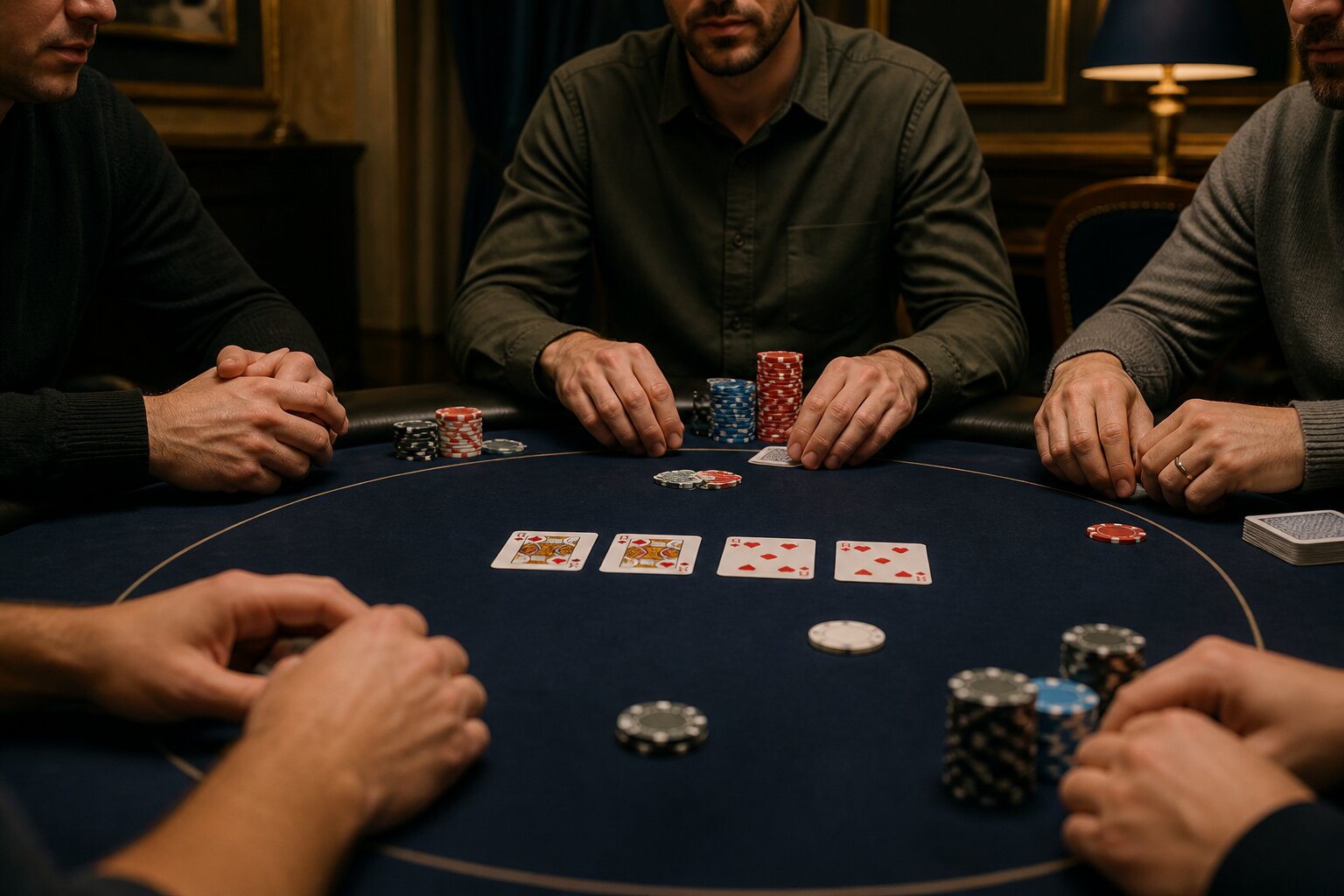
Bomb pot poker is shaking up the tables in card rooms across the UK, offering a lively twist on standard cash games. If you’re curious about hands where everyone contributes and the pot grows before a single decision, this guide will take you through the essentials.
You’ll learn how bomb pots are run, the common variations you’ll encounter, and what to expect at a typical card-room game. Read on to get a clear picture of how these hands play out and how to fit them into your regular poker sessions.
What Is Bomb Pot Poker?
Bomb pot poker is a cash-game variation in which every player at the table adds an extra amount to a special pot before the cards are dealt. That upfront contribution makes the hand immediately more valuable, and it changes some of the strategic dynamics compared with a standard hand.
After the bomb amount is collected, community cards are usually dealt straight away—often starting with the flop. From that point the hand proceeds under the usual rules of the chosen game, whether that is Texas Hold’em or Omaha.
Because the format forces all seated players into the hand, bomb pots speed up action and create big pots more frequently. They are typically introduced at scheduled times during a session and run according to the venue’s house rules, which are explained before play starts.
How Do Bomb Pots Work in Card Rooms?
In a typical card-room environment, a bomb pot is announced by staff or the dealer and then begins when everyone contributes the agreed amount. The bet is compulsory for players who are seated and present.
Once the extra chips are collected, the dealer deals the community cards. Many venues deal only the flop, while others will reveal more cards depending on the variation. Normal betting rounds follow the reveal, with players using their hole cards and the board to make the best hand possible.
Dealers and floor staff manage the process to keep everything transparent and consistent with the house rules. If you are unsure about a local variation, asking before the round starts is the clearest way to avoid surprises.
Key Rules for Bomb Pot Poker
Below are the basic rules commonly used in bomb pot games. Individual rooms may tweak these, so check the house rules on arrival.
- All-in participation: Seated players are required to take part in the bomb pot.
- Mandatory ante: Each player contributes a fixed amount before the deal.
- Dealing the flop: Community cards are revealed immediately after antes are collected.
- Betting after the flop: The first betting round begins once the community cards are shown.
- Standard poker rules apply: After the initial reveal, play follows usual game rules.
- Single or double boards: Some bomb pots use one board, others two separate boards.
- Payouts: Pots are awarded according to hand rankings and any split-pot rules in effect.
These points form the framework for most bomb pots, but small variations can change strategy and outcomes, so always confirm details at the table.
Popular Variations of Bomb Pot Poker Explained
Bomb pots come in several forms, each altering how hands are constructed and how the pot is divided. The choice of variation changes the texture of the hand, the number of possible winners and how much information is revealed at showdown.
Single-Board Bomb Pot
This is the straightforward version. One set of community cards is dealt and every player uses those cards to make their best hand alongside their hole cards. Because all players share the same board, single-board bomb pots often produce multiway showdowns and clear comparisons between hands.
It is the simplest format to follow for both newcomers and regular players. Dealers and players still need to agree the betting structure before the hand, as that will determine how the pot is built and resolved.
Double-Board Bomb Pot
In this variation two independent boards are dealt and each player makes a best hand for each board. The main pot is then usually split between the best hands on the separate boards, though venue rules can vary on exact distribution.
Double-board play increases the number of potential winners and frequently leads to larger, more complicated showdowns. Players may win one board and lose the other, or scoop both boards; these outcomes raise variance and can change how players value particular holdings.
Omaha Bomb Pots
Omaha rules apply here, so players receive four hole cards and must use exactly two of them with the community cards to make a hand. Bomb pots in Omaha can be either single-board or double-board, and the extra hole cards dramatically expand the range of possible combinations.
The requirement to use two hole cards means more ways to make the nuts or to qualify for a low where those rules apply, so outcomes can be very different from Texas Hold’em-style bomb pots. As always, check whether the game is pot-limit Omaha or another betting format before play.
High-Low Variations
Some venues run bomb pots as high-low split games. In those hands the pot can be shared between the highest-ranking hand and a qualifying low hand, according to the house rules announced before play. Common low qualifiers are used in many games, but specific requirements such as the maximum low card rank should always be confirmed at the table.
High-low bomb pots add another layer of decision-making because players may be aiming to scoop the entire pot or to take a portion with a low. This makes hand-reading and table information more significant during resolution.
Ask what variation is in play before joining a hand, because the differences affect both the likely outcomes and how the pot is distributed. Confirming the board format, low qualifiers and betting structure will avoid misunderstandings at showdown.
What Are the Typical Buy-Ins and Stakes?
Buy-ins for bomb pots usually reflect the normal cash-game stakes at the table. For example, at a low-limit table the extra ante will be modest, while higher-stakes rooms may set a larger bomb amount.
Common buy-in ranges vary by venue and by the stakes of the table. Some rooms keep the bomb contribution small to encourage participation; others increase it to create more significant pots. Typical overall buy-ins in card rooms can range from relatively small sums up to several hundred pounds, depending on the game.
Decide in advance what you are comfortable risking and confirm the ante and buy-in structure before the bomb pot starts. Staff can give you the exact numbers for the session you are joining.
How Are Bomb Pot Poker Hands Ranked?
Hand rankings in bomb pots follow the same hierarchy used in the underlying poker variant, such as Texas Hold’em or Omaha. The order from highest to lowest is:
- Royal Flush
- Straight Flush
- Four of a Kind
- Full House
- Flush
- Straight
- Three of a Kind
- Two Pair
- One Pair
- High Card
When a split-pot format is used, the rules announced before play determine how the pot is divided. For instance, in a double-board game the main pot may be split between the winners of each board; in a high-low game the pot can be divided between qualifying low hands and the best high hands.
Familiarity with these rankings is essential, since they determine who takes winnings in every hand.
Player Etiquette and House Rules for Bomb Pots
Respectful conduct keeps the game moving and enjoyable. When a bomb pot is announced, contribute your buy-in promptly and act in turn during betting rounds to avoid delays.
Dealers will outline house rules at the table; listening to those announcements helps prevent misunderstandings. Refrain from discussing live hands and avoid slow rolling when revealing a winning hand, as both actions disrupt other players.
If any dispute arises, involve the floor staff rather than arguing at the table. They will apply the house rules to resolve issues in a consistent way.
Most venues also offer tools to help players manage their play if they wish, such as setting limits or seeking support. If that’s something you want, staff can point you to the available options.
Can Anyone Play Bomb Pot Poker in UK Card Rooms?
To take part you must be at least 18 years old and able to provide acceptable photo identification when requested. Card rooms carry out checks to confirm age and identity in line with regulatory requirements and their own policies.
Common forms of acceptable photo ID include:
- Passport
- Photo driving licence
- National identity card
Verification protects underage people and helps ensure games are open only to those who meet the venue’s entry conditions. Staff may also carry out further checks if something about the documentation is unclear, and they will explain what is needed.
If you have questions about documentation or eligibility, staff will explain the venue’s requirements and can advise on alternative proof where appropriate. Venues may refuse admission or ask a person to stop playing if they cannot satisfactorily verify identity.
Participation is voluntary, and if you prefer not to take part in bomb pots you can choose a different table or time to play. If you have concerns about gambling behaviour, venue staff can point you towards safer gambling information and support services.
Common Misconceptions About Bomb Pot Poker
A few myths tend to circulate about bomb pots. Clearing them up helps set realistic expectations.
- Larger pots do not guarantee larger returns. Bigger pots merely increase what is available to win or lose, but outcomes still depend on the cards and players’ choices.
- Age and identity checks are enforced. Not everyone can join without verification.
- Rules vary between venues. There is no universal bomb-pot rulebook, so differences in dealing and payouts are common.
- Skill still matters. Experience can influence decision-making, but every player faces the same conditions within a bomb pot.
Approaching these hands with clear rules and measured expectations makes them more enjoyable for everyone involved.
You’ve now got a full view of how bomb pot poker is run, the common formats you’ll meet, and what to expect at a card-room table. With the rules and etiquette in mind, you’ll be ready to join the action confidently and make informed choices at the table.
**The information provided in this blog is intended for educational purposes and should not be construed as betting advice or a guarantee of success. Always gamble responsibly.