
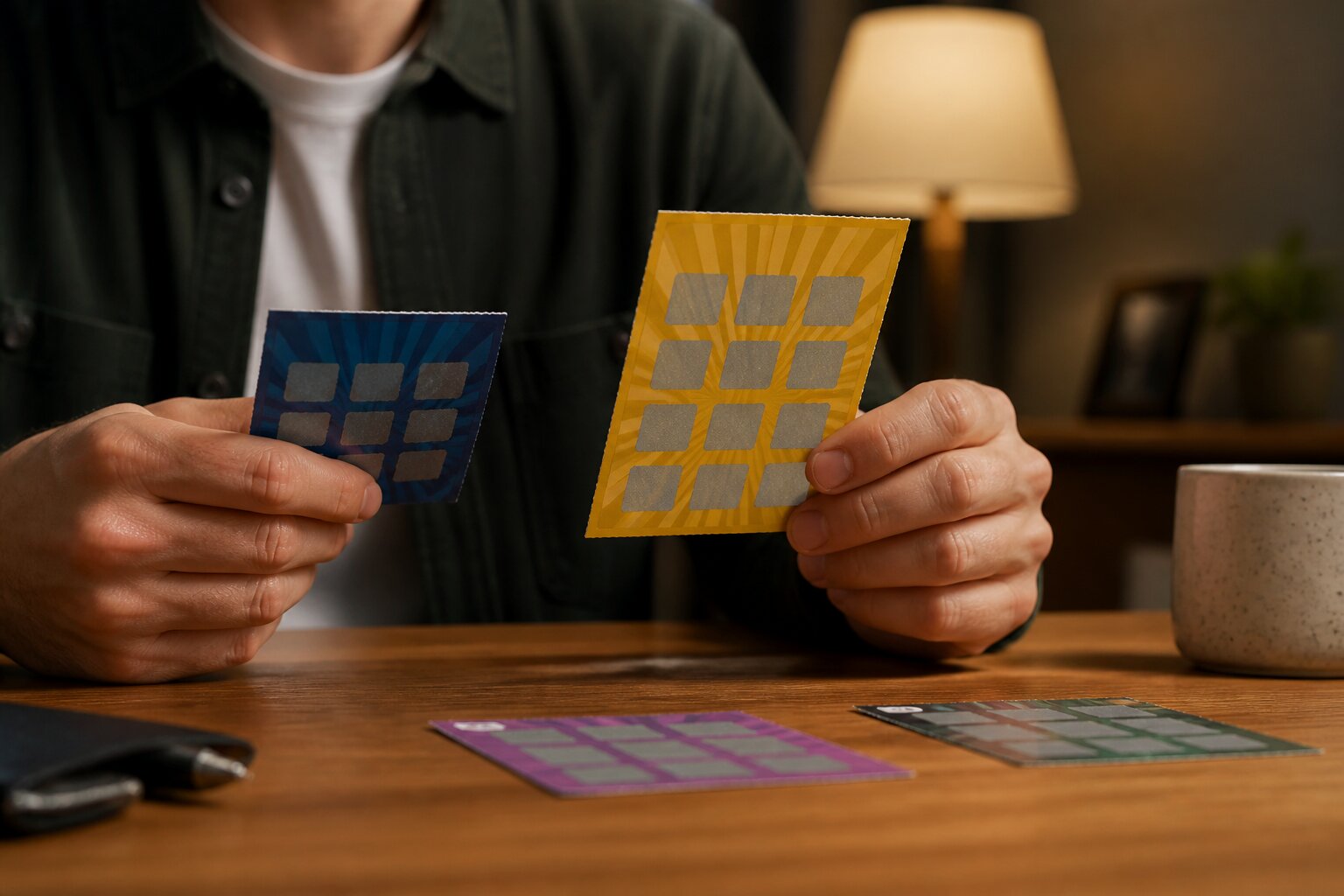
When you’re at the shop counter or scrolling through an app, it’s natural to ask whether a pricier scratch card actually improves your chances. Bigger jackpots and glossier designs make expensive tickets tempting, but what does the price really buy you?
This article explains how scratch cards work, compares what you get at different price points, and clarifies the common misconceptions so you can make an informed choice. Read on to separate the facts from the assumptions.
How Do Scratch Cards Work?
Scratch cards are instant-win games where you reveal symbols or numbers beneath a coated surface. Whether the card is physical or digital, the mechanism is the same: matching the required symbols or numbers wins a prize declared by the game’s rules.
Outcomes are random. Physical cards have their prizes fixed at printing, while digital versions use certified Random Number Generators (RNGs) so each play is independently determined. Players must be 18 or over to buy or play in the UK. Treating scratch cards as entertainment and sticking to a personal budget are sensible ways to enjoy them; support organisations are available if play ever becomes a concern.
Understanding that every play is an independent chance helps when looking at the different formats and price levels that follow.
Types of Scratch Cards Available in the UK
Scratch cards come as physical tickets sold in stores and as digital games accessed through websites or apps. Physical cards are scratched by hand to reveal results printed at the time of manufacture, while online versions show the outcome instantly via software.
Both formats are subject to regulation and independent testing to ensure fairness. They also come in a range of price points and prize tiers, so the choice often comes down to whether a player prefers the tactile experience of a paper card or the convenience of a digital one. With the mechanics established, it’s useful to look next at how odds and payouts change with price.
What Are the Odds of Winning on Different Price Points?
Ticket prices usually range from low-cost options up to premium cards. Each price bracket has its own prize structure and headline odds, but the important detail is how these figures are presented and what they mean for players.
Payout percentages, often shown as Return to Player (RTP), describe the proportion of money returned to players across a whole game. For instance, an RTP of 70% means that, across every ticket printed or every play made in that game, £70 of every £100 taken in would be paid out as prizes. Cheaper cards commonly have lower RTPs than premium ones, but RTP is an average across all plays, not a promise for any single ticket.
Odds of winning specific prizes are normally listed on the ticket or in the game’s terms, allowing players to compare how frequently small, medium or large prizes occur at different price points.
Understanding Payout Percentages
RTP helps to compare how games allocate prize money, but it doesn’t change the fact that each ticket’s outcome is independent. A higher-RTP game pays out a greater share of total sales as prizes overall, which can mean more or larger prizes are available across the entire run of tickets. This often explains why premium cards advertise larger jackpots and sometimes stronger mid-tier prize rates.
Keep in mind that RTP is calculated across the full print or play run, so it’s not a guarantee of personal return. The next section examines how prize sizes and win frequency vary between cheap and expensive tickets.
Is There a Difference in Prize Amounts and Frequency?
Price tends to correlate with prize scale. Lower-cost tickets generally offer smaller top prizes and more frequent, low-value wins, whereas higher-cost tickets feature larger top prizes and a different balance between small and substantial wins. For example, a lower-price game might return many small wins equal to the ticket price, while a premium game may have higher-value prizes but fewer of the smallest payouts.
Despite these patterns, the largest prizes remain uncommon at every price level. Ticket packaging and online descriptions normally display the odds for each prize tier, helping players see how often each size of prize is expected to appear.
Are Payback Rates Higher for Premium Scratch Cards?
Premium cards often show higher RTPs than cheaper cards, reflecting a larger share of revenue returned as prizes. Published figures for premium games commonly sit above those for entry-level cards, meaning that, collectively, premium games hand back more to players across their full run.
However, higher payback rates do not alter the randomness of each play or guarantee that an individual will have better personal results. Whether a game has a 65% or 78% RTP, every ticket remains an independent outcome determined by the game’s design and testing.
Next, we’ll tackle some of the more persistent myths that can colour how players view pricing and odds.
Myths About Scratch Card Pricing and Odds
Several persistent myths surround pricing and winning frequency. One is that buying an expensive ticket makes an individual more likely to win; in truth, while premium games may offer larger prizes and different RTPs, the chance on any given ticket remains governed by the game’s odds. Other myths include the idea of “hot” or “cold” times to buy tickets or that a particular shop sells more winners. These beliefs don’t hold up once the random and independently produced nature of tickets is taken into account.
A related misunderstanding is the belief that repeated purchases from the same batch increase chances. Because outcomes are fixed or generated independently, previous results don’t influence later ones. Clearing up these misconceptions helps set realistic expectations about what price does and doesn’t change.
What Do Industry Regulations Say About Scratch Card Fairness?
Regulation requires transparency and independent checks. Operators must publish the odds and overall payout figures, and both physical and digital games undergo testing to confirm results are random and that the games perform as advertised. Independent test houses and certification bodies assess the randomness and technical integrity of games, and regulators review these reports as part of their oversight.
Records and audits support accountability, and regulators can take action if rules are not followed. Regular audits of financial and operational records help ensure prize reserves and payouts match published information. Where discrepancies or breaches are found, regulators may impose sanctions, require corrective measures, or revoke licences.
These safeguards mean players can review the stated odds and prize structures before choosing which ticket to buy, helping to inform decisions rather than relying on assumptions. For online scratch cards, site operators must also demonstrate fair operation through certified randomness algorithms and clear, accessible game rules. For physical tickets, information on odds is often printed on the back of a ticket or made available at the point of sale.
Overall, the regulatory framework aims to promote clear information, independent verification and enforceable standards so that games deliver the outcomes they promise. Players still face long odds of winning top prizes, but the rules are designed to ensure those odds are accurately represented and independently validated.
Final Thoughts: Are Pricier Scratch Cards Worth It?
Choosing between cheaper and more expensive scratch cards comes down to what you value from the purchase. Premium tickets typically offer larger top prizes and sometimes higher overall paybacks, while lower-price options deliver more frequent, smaller wins. Neither choice guarantees personal success on any single ticket because each play is independently determined by the game's design.
Treat scratch cards as a form of entertainment and set clear spending limits to keep play in balance. If play becomes worrying, support and advice are available from recognised organisations. With realistic expectations and sensible limits, scratch cards can be an enjoyable occasional diversion rather than a financial plan.
**The information provided in this blog is intended for educational purposes and should not be construed as betting advice or a guarantee of success. Always gamble responsibly.