
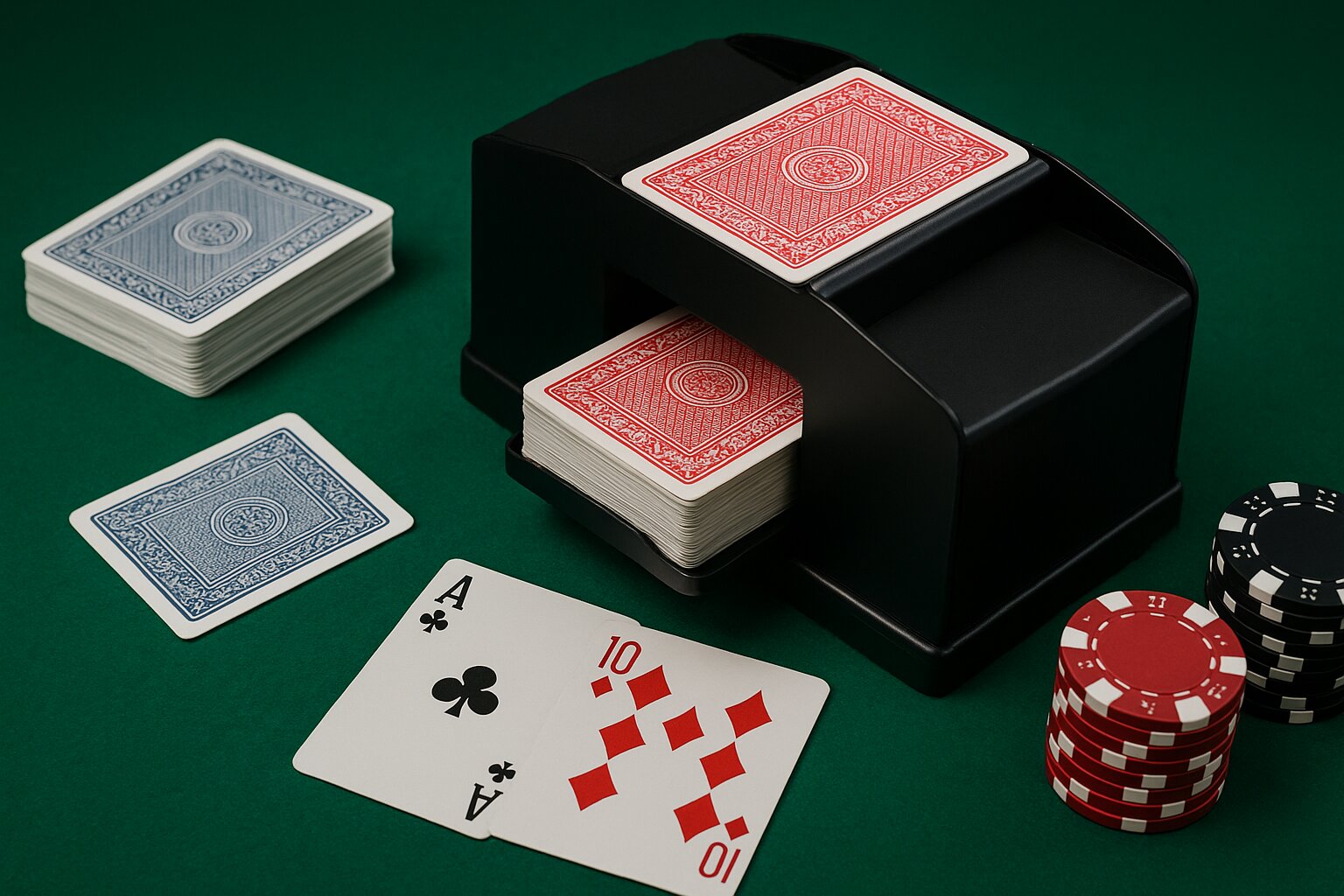
If you’ve ever played cards in a casino, you might have watched the automatic card shufflers in action and wondered whether they can be trusted. It’s natural to question unfamiliar technology at the table, so let’s separate the facts from the rumours.
We operate under strict regulation, and every piece of equipment is subject to independent testing and oversight. That framework provides the basis for the explanations that follow.
Read on to learn how shuffle machines work, how they’re tested and secured, and why they are used in casinos.
How Do Automatic Card Shufflers Work?
Automatic card shufflers are built to mix cards consistently and reproducibly. A dealer loads the deck into the machine and internal rollers and sensors separate and handle each card to avoid cards sticking together. The device then uses mechanical processes to interleave and reorder the cards before returning them as a single stacked deck ready for play.
The mechanics focus on repeatability: the machine performs the same operations every time so shuffles don’t vary by dealer or by fatigue. Sensors ensure cards are fed properly and detect any misfeeds or jams, which are flagged for immediate attention. That combination of physical handling and monitoring provides a reliable method for producing a shuffled deck.
Independent testing verifies the machine’s internal processes produce a wide spread of outcomes, reducing the chance of detectable patterns in card order. Where faults are found, the devices are taken out of service until repaired and rechecked.
Why Do Casinos Use Shuffle Machines?
Shuffle machines serve several practical purposes at the table. They speed up play by cutting out lengthy manual shuffling, which keeps games moving and reduces downtime between hands. They also lower the risk of human error in shuffling that could lead to accidental card damage or misordering.
Security is an important part of the reasoning too. By removing manual handling during the shuffle, it becomes harder for techniques such as sleight of hand or the use of marked cards to affect the deck. That helps protect both the players and the casino’s integrity.
Finally, using the same mechanical process across shifts and dealers creates uniformity. That means the same standard of shuffle is applied each round, which supports consistent gameplay for everyone at the table.
Can Shuffle Machines Be Hacked or Tampered With?
Concerns about tampering are understandable. Casinos use multiple layers of control to prevent unauthorised access to machines and their components. Machines are installed in supervised areas and are monitored continuously, and any servicing is carried out only by approved technicians with restricted access.
Physical security measures make illicit modifications hard to hide. These include:
- physical seals on panels and housings,
- tamper-evident features that show if a machine has been opened,
- serialised components that are tracked and recorded.
Detailed logs record who accessed a machine and when, and standard procedures require signed work orders for maintenance. Closed-circuit television and other surveillance systems provide an additional layer of oversight, and staff undergo vetting and training to reduce insider risk.
Independent inspectors also carry out routine examinations and test the equipment’s performance. These inspections check software integrity, random number generator behaviour and hardware operation. If a device were compromised, discrepancies would normally show up in these checks and the machine would be taken out of service until the issue was resolved.
Taken together, access controls, physical protections, surveillance, staff controls and independent testing reduce the practicality of successful hacking or tampering to a negligible level. While no system can be described as absolutely infallible, these combined safeguards are designed to protect the integrity of the games and players.
Are Casino Shuffle Machines Truly Random?
Shuffle machines are designed to produce card orders that are unpredictable and free from bias. Randomness, in this context, means the machine does not favour particular cards or positions; each shuffle should create a distribution of outcomes consistent with statistical expectations.
Testing focuses on detecting any measurable bias: laboratories simulate many thousands of shuffles and analyse the results for patterns that could be exploited. Technical limitations mean no mechanical system can be proven absolutely unpredictable in every theoretical sense, but certification requires performance that is statistically indistinguishable from a fair randomising process for practical play.
The key point is that independent testing and ongoing monitoring maintain a high standard of randomness that meets regulatory requirements.
How Are Shuffle Machines Tested for Fairness?
Specialist testing laboratories examine shufflers under controlled conditions. Tests include repeated shuffle cycles, measuring card position distributions and checking for mechanical irregularities that might introduce bias. Software and firmware—where present—are also reviewed to ensure they operate within specification.
Manufacturers must provide evidence of these tests before equipment is accepted for use, and regulators or third-party auditors may conduct their own follow-up checks. Routine inspections on the casino floor verify that each machine keeps performing as certified, and any deviations trigger immediate investigation.
These processes create a clear audit trail that establishes and preserves the machine’s integrity.
We’ll now look at where misunderstandings usually start and how to separate fact from fiction.
What Myths Exist About Card Shufflers?
Several myths circulate about automatic shufflers. One is that machines can be programmed to favour the house or specific players. In practice, certified equipment is examined for exactly that risk, and approval requires that no such functionality exists. Another misconception is that machines never fail; while they are reliable, they do need maintenance, and when faults occur they are repaired under supervision.
Some assume shufflers are used primarily to boost casino profits. The reality is they are accepted tools for maintaining game integrity and operational efficiency—benefits that serve both players and operators. Overall, transparency around testing and inspection helps dispel most misunderstandings.
Do Automatic Shufflers Affect Game Outcomes?
Automatic shufflers are not designed to influence who wins or loses. Their purpose is to randomise the deck so that the distribution of cards reflects the intended probabilities of the game. Any effect on outcomes comes from the game rules and the decisions made at the table, not from the shuffler itself.
If a machine were to introduce a measurable bias, testing and oversight would detect it and the device would be withdrawn until corrected. That control keeps the impact of equipment on outcomes within tightly regulated limits.
Let’s turn next to how you can recognise properly certified equipment when you’re at a venue.
How to Tell If a Casino Uses Legitimate Shuffling Equipment
Legitimate venues make information about their licensing and inspection procedures available to the public. On the floor, machines often carry marks or documentation indicating they have been tested and approved. Staff should be able to explain maintenance routines and point you to posted information about the casino’s regulatory compliance.
If you have questions while visiting, ask a member of staff; a transparent venue provides clear, factual answers about the equipment and its checks. Choosing establishments that openly display their compliance records and inspection histories is the most practical way to ensure you are playing in a properly overseen environment.
Bear in mind that this verification complements other safeguards such as staff training and documented procedures for handling equipment.
Summary: Should Players Trust Casino Shuffle Machines?
Taking the evidence together, there are strong reasons to trust automatic shufflers used in regulated casinos. They are engineered for consistent performance, routinely tested by independent experts, and subject to ongoing inspection and record-keeping. Security measures and restricted access make tampering impractical, and any device that fails to meet standards is removed from play.
If you want reassurance while at the table, look for visible certification and ask staff about maintenance and inspections. We are committed to clear information and fair games, and if you have concerns our team is available to help. Play responsibly, set limits that suit you, and enjoy the confidence that comes from regulation and oversight.
**The information provided in this blog is intended for educational purposes and should not be construed as betting advice or a guarantee of success. Always gamble responsibly.