
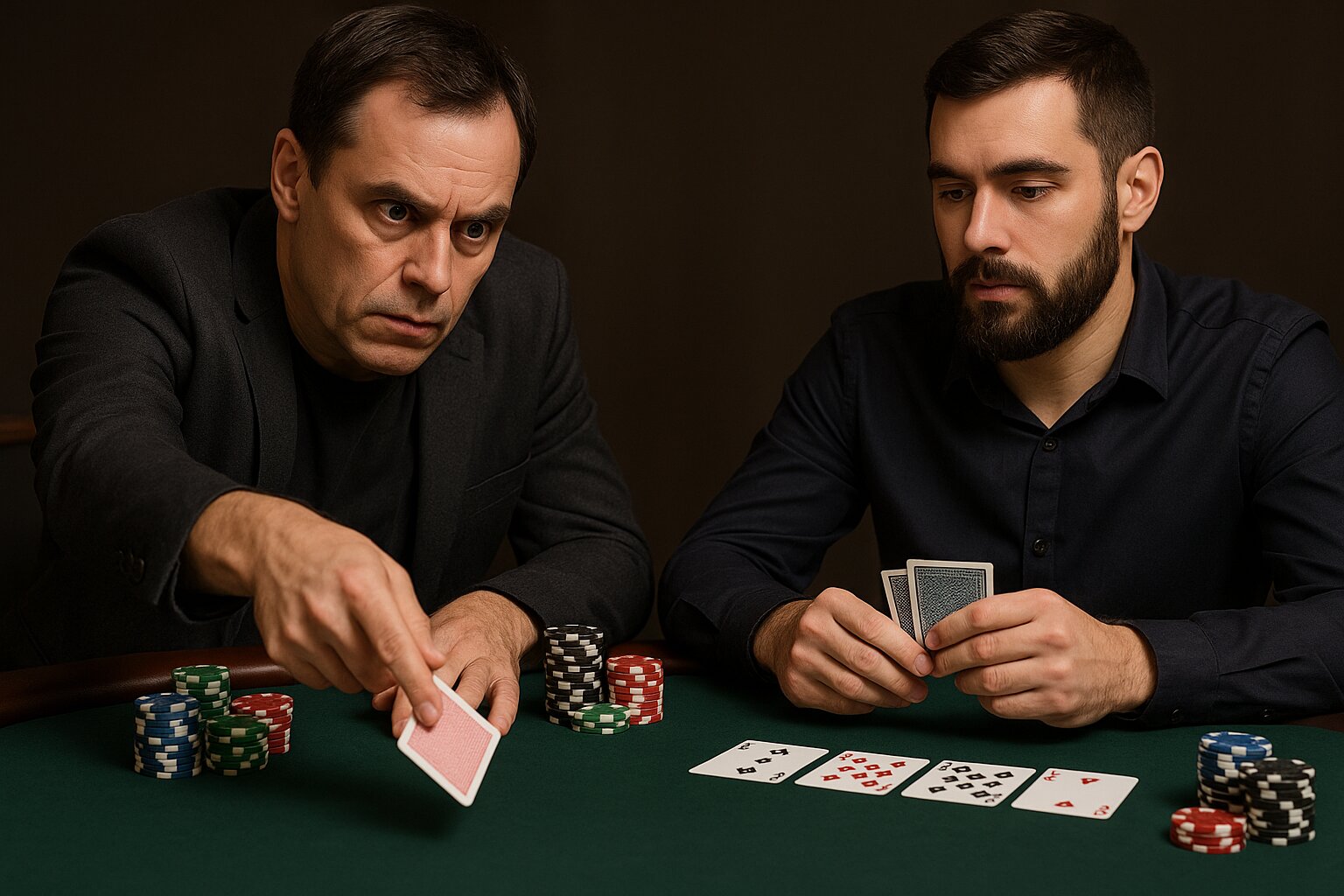
Poker depends on skill, honesty and clear behaviour at the table. Every so often, though, a player will use tactics that aren’t outright cheating but still feel unfair — these are called angle shoots. Understanding them helps you spot them, respond appropriately and keep your games running smoothly.
This article explains what angle shooting looks like, why it matters, and how table manners and staff intervention deal with it. Read on to sharpen your awareness and protect the spirit of the game.
What Does Angle Shooting Mean in Poker?
Angle shooting describes actions that exploit ambiguity in the rules or in-player behaviour to gain an advantage. These moves aren’t always prohibited by the rulebook, but they violate the unwritten standards that let a table function without constant disputes.
Typical examples involve misleading gestures, vague declarations or timing manoeuvres that confuse opponents or the dealer. Because they rely on trickery rather than rule-breaking, they often provoke strong reactions from other players and can escalate into formal complaints.
Recognising angle shooting matters because it’s about preserving fairness and respect. Players who understand these behaviours are better able to keep the game flowing and protect themselves from being disadvantaged by unclear or deceptive actions.
How Do Angle Shoots Differ From Cheating or Breaking Rules?
The key difference lies in intent and method. Cheating involves deliberate rule violations — like marking cards or collusion — where a player uses methods expressly forbidden to alter the outcome. Angle shooting, by contrast, works within the edges of the rules to gain an unfair edge without technically breaking them.
Because angle shooting often exploits ambiguous situations, enforcement depends on context and judgement rather than a clause in a rulebook. That’s why poker etiquette and the responses of dealers or floor staff become crucial: they interpret the intent and decide whether a behaviour undermines the table.
Understanding this distinction helps when you are deciding how to respond. If an action clearly breaks rules, it’s handled as a rules matter; if it’s an angle shoot, it’s treated as an etiquette or integrity issue.
Common Examples of Angle Shooting at the Poker Table
Angle shooting appears in many forms, but they share a common aim: creating confusion that benefits the actor. Often the tactics are intended to extract extra information, disrupt an opponent's decision-making or gain an unfair edge without technically breaking the rules. The following examples show how subtle or blatant these tactics can be, and why they are frustrating for other players.
Pretending to Fold
A player may push their cards forward as if folding, watch others’ reactions, then pull the cards back and continue in the hand. This behaviour manipulates opponents’ reads and upsets the normal flow.
Sometimes the action is fleeting, a quick motion that some at the table may miss. Other times it is deliberate and drawn out, clearly designed to provoke a reaction. Either way it erodes trust and makes it hard for honest players to rely on straightforward tells.
False Declarations
Saying “raise” or “call” without clearly committing to the action can mislead opponents into reacting prematurely. Claiming it was a mistake afterward does not always undo the effect on other players’ decisions.
These ambiguous verbal signals create momentary chaos, particularly in live games where spoken declarations matter. The uncertainty they introduce can cause players to fold or change their bet sizing in ways they would not have done otherwise.
Acting Out of Turn
Deliberately acting before their turn to see how others respond lets a player harvest information they should not have. Even casual-looking actions can shift the balance of information at the table.
Acting out of turn may give the offender knowledge of other players’ intentions or generate table talk they can exploit. The result is an uneven playing field and a breakdown in proper game procedure.
Angle Betting
This covers ambiguous chip moves, for example sliding chips toward the centre without a clear statement of the amount, creating uncertainty about the true size of a bet and influencing others’ choices.
Such moves can be especially damaging during big pots, where a tiny doubt about the bet size can change someone’s decision to call or fold. Clear, unambiguous betting protects everyone and helps prevent these manipulative tactics.
These behaviours can range from a momentary nuisance to something that ruins a session. Spotting them early, calling them out politely and involving the dealer or floor when needed preserves fairness for everyone involved.
Why Are Angle Shoots Frowned Upon in the Poker Community?
At its core, poker relies on predictable, transparent behaviour so players can make decisions based on skill and visible actions. Angle shooting undermines that predictability by introducing deception where clarity is expected.
When angle shooting becomes common, trust erodes. Players start second-guessing routine gestures and dealers spend more time resolving disputes instead of keeping the game moving. That shift reduces the quality of play and can drive people away from a table.
Beyond the immediate effect on a single hand, angle shooting hurts reputations. A player known for pushing boundaries loses goodwill at tables, while venues that tolerate such behaviour risk a decline in regulars who want straightforward, fair games.
How Should You Respond If Someone Angle Shoots?
If you observe angle shooting, stay composed and avoid direct confrontation. Heated exchanges often complicate matters and can make a small issue much larger.
The most effective approach is to call the dealer’s attention quietly and explain what you observed. Dealers and floor staff are responsible for judging intent and resolving disputes; they have the systems and authority to act fairly. If staff aren’t available, calmly note the behaviour and continue focused play, documenting the incident if necessary for later reporting.
Handling the situation through the proper channels protects both you and the integrity of the table, and it prevents a one-off incident from spoiling the session for everyone.
Poker Etiquette: Preventing and Dealing With Angle Shoots
Good etiquette reduces the opportunities for angle shooting by keeping actions clear and consistent. Simple habits — announcing raises clearly, placing chips in full view, and waiting for your turn — remove ambiguity and make deceptive tactics harder to carry out.
If you see something questionable, let staff handle it rather than trying to impose your own remedy. That preserves safety at the table and keeps disagreements from escalating. Encourage other players to adopt transparent practices and treat each other with respect; collective standards are the most effective deterrent to angle shoots.
These measures maintain a game environment where skill, not trickery, decides outcomes. Clear, respectful play benefits everyone and minimises the need for formal intervention.
Can Angle Shooters Be Punished in Poker Rooms?
Poker rooms take a broad view of fairness and have options to deal with players who disrupt it. While not every angle shoot is a formal rules breach, staff can still apply penalties based on the behaviour’s impact.
Consequences for Angle Shooters
Actions may range from warnings to more serious penalties. Staff can impose missed-hand penalties, remove a player from a game or, in repeated or severe cases, bar a player from the venue. The scale of the response depends on the severity and frequency of the behaviour.
Following UKGC Regulations
Where applicable, venues act in line with UK Gambling Commission guidance to ensure responses are fair, transparent and consistent. That regulatory framework supports impartial handling of disputes and protects players’ interests.
Our Commitment
We enforce standards that support fair play and clear conduct at the tables. When players or staff identify behaviour that undermines the game, it will be addressed promptly and proportionately so everyone can enjoy a reliable poker environment.
This final note is your reminder: clear, honest play keeps poker the contest it’s meant to be. If anything feels off at the table, raise it with staff and let the procedures in place restore proper play.
**The information provided in this blog is intended for educational purposes and should not be construed as betting advice or a guarantee of success. Always gamble responsibly.