
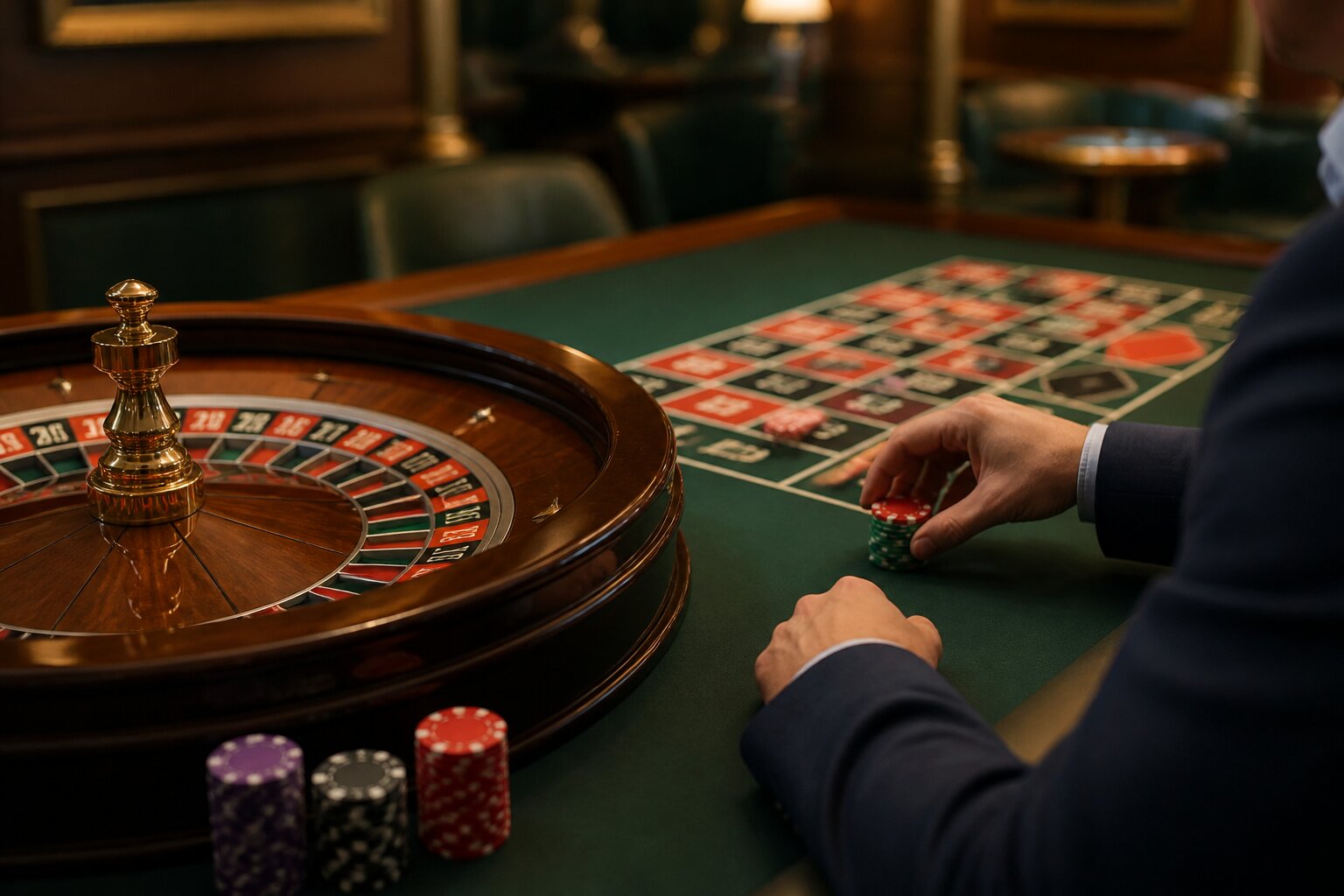
Ever found yourself watching that little white ball whizzing round the wheel, wondering if there could be more to roulette than the usual scatter of shapes and numbers? There’s no shortage of systems promising an edge, but most oversimplify how the game actually behaves.
The 4567 Roulette Strategy has been attracting attention as a structured way to place bets rather than a method that changes the underlying maths of the game. Named for its staking pattern, it appeals to players who prefer a clear plan at the table instead of ad-hoc wagers.
Understanding how the pattern works, what it covers and how it affects your session helps set realistic expectations. Read on to learn the mechanics, how it plays out in practice and what to bear in mind when deciding whether to use it.
What Is the 4567 Roulette Strategy?
The 4567 Roulette Strategy is a staking pattern that spreads chips across the table to increase the frequency of potential payouts while keeping each individual bet modest. The numbers 4, 5, 6 and 7 refer to units placed on four separate betting options each round. The method aims for regular, smaller returns from multiple coverage rather than relying on single big hits.
Typically this involves combining outside bets such as dozens and columns with a few inside bets to add variety. One common layout is 4 units on the first dozen, 5 on the second, 6 on the third and 7 on a column or split bets. That mix produces broad coverage and a range of payout levels from the various bet types.
Because the pattern uses flat staking—keeping the same chip counts each spin—it avoids escalating stakes after losses. That makes the approach primarily about structure and play rhythm, not about changing the game's probabilities. Next, the rules explain exactly where those chips are placed and how the payouts sit against your stake.
How Do the Rules of the 4567 Roulette Strategy Work?
The rules are simple: each round you place four distinct bets following the sequence 4, 5, 6 and 7 units across different sections of the table. A clear example clarifies the usual layout and the financial exposure per spin.
A typical version involves:
4 chips on the first dozen (covering numbers 1–12)
5 chips on the second dozen (13–24)
6 chips on the third dozen (25–36)
7 chips on a particular column, or alternatively split among straight-up bets
Using £1 chips, the total stake per spin in this set-up is £22. The dozens and columns pay 2 to 1, while straight-up bets pay 35 to 1, so returns vary depending on which part of your coverage hits. Importantly, zero remains uncovered by dozens and columns in most layouts, so it represents the main gap in coverage.
All legitimate casino games operate under strict regulation and testing to ensure spins are random and fair. The 4567 pattern does not change the table’s probabilities or the house edge; it simply rearranges how a player’s capital is exposed each spin. The next section describes how a session typically unfolds when using this pattern.
How to Apply the 4567 Strategy Step by Step
Before play begins, set a clear budget for the session and pick a chip size that aligns with it. Choosing £1 chips for illustration is practical, but any denomination that fits the table minimum and your limit works.
Place your bets according to the 4, 5, 6, 7 pattern:
Put 4 chips (£4) on the first dozen (numbers 1–12).
Place 5 chips (£5) on the second dozen (13–24).
Lay 6 chips (£6) on the third dozen (25–36).
Use 7 chips (£7) for a final bet, either concentrated on a single column or split among straight-up bets depending on preferred volatility.
With £1 chips this totals £22 per spin. When the wheel stops, dozens and columns pay 2 to 1, straight-up bets pay 35 to 1, and uncovered outcomes return no stake. If a dozen or column hits, that portion yields a modest payout which helps offset the total stake. Maintain the same pattern if continuing, but keep watching your balance and the session time so you remain within your preset limits. The next section looks at the benefits and trade-offs you can expect from sticking to this pattern.
Pros & Cons of Using the 4567 Roulette System
A major advantage is clarity: the 4567 pattern gives a straightforward routine that makes it easy to manage bets and track outcomes. Because several areas of the table are covered each spin, players often see more frequent, smaller returns which can sustain play and deliver steady moments of engagement.
The system’s flat staking also avoids the rapid escalation of losses found in progressive schemes. That predictability appeals to players who want control over stake size and session duration.
On the downside, the total exposure per spin is relatively high compared with single, conservative bets. Using the £1 chip example, £22 is at risk each round, so a string of non-paying spins reduces the bankroll quickly. Covering more numbers increases the chance of some return that round, but it does not reduce the built-in house advantage or alter long-term expectation. The main gaps—such as the zero and any numbers not included in your straight-up choices—can still produce full losses for a spin.
Ultimately, the 4567 pattern trades big variance for frequency of returns. If that mix fits a player’s tolerance for stake size and session rhythm, it can be enjoyable; if not, smaller or different bet spreads may be preferable. To see how this plays out numerically, the next section gives an illustrative example over several spins.
Real Results: What Can You Expect?
Real sessions using the 4567 pattern typically show mixed short-term outcomes: occasional small profits balanced by losing spins where the entire stake is lost. To illustrate, consider ten spins at £22 per spin, a total outlay of £220.
If seven of those ten spins land on a covered dozen, each dozen win returns £30 (your original dozen stake plus 2 to 1 payout), producing £210. The three losses wipe out £66. That scenario leaves a net result of minus £10 on the session. Variations in which bets hit—columns, straight-up wins or dozens—affect the totals, and single high-payout straight-up wins can swing a session markedly. Conversely, frequent uncovered outcomes will accelerate losses.
On a longer run the mathematical house edge—about 2.7% on European roulette—means expected losses will gradually align with that percentage of total stakes. The 4567 pattern can increase the number of rounds with some return, but it does not alter eventual expectation. Knowing this helps frame whether the system matches personal goals for session length, budget exposure and the kind of risk a player is comfortable accepting.
Next, we clear up common misunderstandings about the strategy so expectations remain realistic.
Common Myths & Misconceptions About This Strategy
“The 4567 strategy guarantees regular wins”
No staking pattern can ensure wins. Even with broad coverage, there are always spins where the bets do not pay.
“Covering more numbers reduces the house edge”
House edge on European roulette stays the same regardless of bet distribution. Wider coverage may make wins more frequent, but it does not change long-term odds.
“Repeating the 4567 pattern will force a win eventually”
There is no mechanism in roulette that ensures a particular sequence of outcomes. Repetition of any pattern does not compel the wheel to produce desired results.
“Certain numbers or dozens are ‘due’ or ‘hot’”
Spins are independent events governed by random processes; past results do not influence the next spin.
“Professional players use strategies like 4567 to beat the wheel”
No staking system provides a durable mathematical advantage over a properly operated table. Professionals focus on bankroll and risk management rather than on systems that promise an edge.
These clarifications help set sensible expectations. With that in mind, the final section outlines practical safeguards to keep play controlled and enjoyable.
Responsible Roulette Play: What Should You Keep in Mind?
Responsible play centres on limits and monitoring. Decide on a session budget you can afford to lose and choose a chip size that makes that budget last for the type of session you want. Use deposit limits or session reminders provided by operators to help maintain those boundaries, and allow regular breaks to keep decisions measured rather than impulsive.
Avoid increasing stakes to recoup losses; chasing usually enlarges the problem rather than solving it. If spending or time spent becomes a concern, tools such as reality checks, time-outs and self-exclusion are available, and independent support organisations offer confidential guidance and resources.
Explore Casino Games at Thor Slots
At Thor Slots, we are all about giving you a great choice when it comes to casino games. Enjoy exploring a wide variety of options at your own pace, and discover what suits your style.
It is easy to begin: create an account, make a deposit and you are set to play. We look forward to welcoming you as part of our community.
**The information provided in this blog is intended for educational purposes and should not be construed as betting advice or a guarantee of success. Always gamble responsibly.